Boom Supersonic unveils AI turbine factory as United CEO doubts Overture's 2029 date
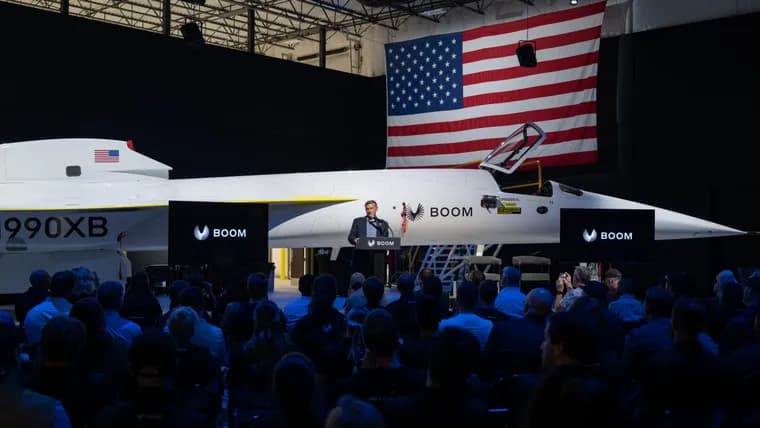
Boom Supersonic CEO Blake Scholl recently declared that "it's time for a renaissance in energy and in supersonic flight", as the supersonic airliner company unveiled a Colorado factory dedicated to making gas turbines for AI data centers. Ars Technica says Boom may be facing turbulence, because early backers of both ventures have questioned the company's delivery timeline or backed out entirely.
One of the company's first customers, United Airlines CEO Scott Kirby, has expressed doubts about Boom's original plan to deliver the first Overture supersonic airliner in 2029. His latest assessment came in an interview with the Office Hours: Business Edition podcast, which appeared on October 28, 2026. "'29 is their official timeline," Kirby told host Monica Langley. "It's not going to happen in '29, it's going to take longer." He gave no new date.
Boom first made headlines by flying its XB-1 demonstrator aircraft in 2024 and 2025 to demonstrate a "boomless cruise" concept that harnesses the Mach cutoff phenomenon. The idea is to fly just beyond supersonic speeds at higher altitudes under specific atmospheric conditions, so that the aircraft's shockwaves refract upward and minimize the impact on the ground.
The plan to revive supersonic air travel has been backed by the Trump administration via efforts to ease regulations. In June 2026, the Federal Aviation Administration (FAA) proposed a new rule overturning a long-standing ban on commercial supersonic flights over the United States, following an executive order from President Donald Trump.
Boom's press releases have previously described achieving aircraft certification and carrying the first paying customers by 2029. The company has conditional agreements with American Airlines, Japan Airlines and United Airlines. They involve non-refundable deposits of unknown amounts and would allow the airlines to fully purchase the Overture once it becomes commercially available.
Key facts
- Boom Supersonic unveiled a Colorado factory dedicated to making gas turbines for AI data centers.
- United Airlines CEO Scott Kirby said on the Office Hours: Business Edition podcast (appeared October 28, 2026) that the first Overture will not be delivered in 2029 and will take longer.
- Boom's press releases have described aircraft certification and the first paying customers by 2029.
- Boom has conditional agreements with American Airlines, Japan Airlines and United Airlines, with non-refundable deposits of unknown amounts.
- In June 2026 the FAA proposed a rule overturning the long-standing ban on commercial supersonic flights over the United States.
Why it matters
Boom is pursuing two ventures at once: a supersonic airliner and gas turbines for AI data centers. One of the airliner's first customers now says publicly that the 2029 delivery plan will slip. Ars Technica says early backers of both ventures have questioned the timeline or backed out entirely. The XB-1 flights in 2024 and 2025 showed the "boomless cruise" concept, and the FAA's June 2026 proposed rule on supersonic flight over the US points the same way, which makes the schedule doubt from a launch customer more notable.
Who it affects
Primarily Boom and its airline customers: American Airlines, Japan Airlines and United Airlines, which hold conditional agreements with non-refundable deposits. It also touches anyone watching the supply of power equipment for AI data centers, since Boom is entering that market with a Colorado factory.
How to use it
There is nothing to adopt yet. Treat Kirby's remark as a signal when judging any Overture timeline: 2029 is described as Boom's official date, and a customer CEO says it will be later. For the turbine business, the article gives no factory capacity, opening date or turbine specifications, so there is nothing to evaluate on the product itself.
How solid is it
The Kirby remarks are a direct quote from a podcast interview that appeared on October 28, 2026, and are reported by Ars Technica. The statement is an opinion about timing, with no new date offered. The article gives no response from Boom or Scholl, does not say which early backers backed out entirely or from which venture, and gives no deposit amounts.
Risks and caveats
Boom's 2029 target for certification and first paying customers may not hold, by its own customer's account. The airline agreements are conditional, so they are not firm purchases. The FAA rule was proposed in June 2026; the article does not say whether it has been finalized. The Trump administration's backing through eased regulation is described, but regulatory support does not settle the delivery timeline.
“It’s not going to happen in ‘29”
— Scott Kirby, United Airlines CEO, on Boom's Overture delivery, Office Hours: Business Edition podcast