After Artemis II, new books ask why humans still go to space
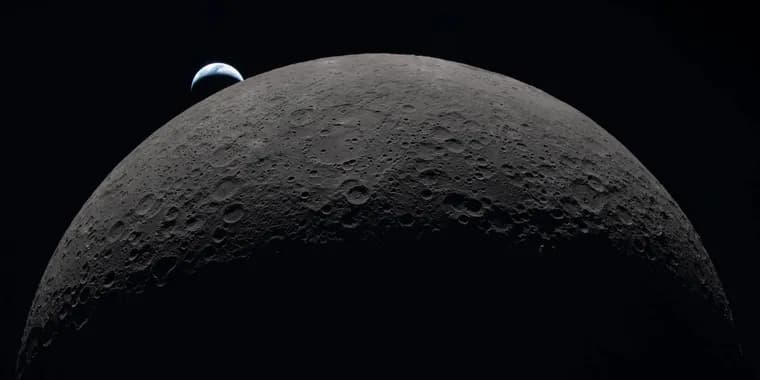
Earlier this year, the four astronauts of NASA's Artemis II swung around the moon and set a new record for the farthest humans have traveled from Earth, beating the distance set by Apollo 13 in 1972 by about 4,000 miles. No mission can match Apollo 11's 1969 landing, which about 20% of the world's population watched live, but Artemis II still drew tens of millions of viewers and set off a wave of what was spontaneously dubbed 'moon joy.'
Artemis II is meant to be the first in a longer series of missions. NASA's Artemis program aims to build a crewed base at the moon's south pole in the 2030s, run by the US with international and commercial partners; China and Russia have paired up to build their own crewed lunar base in the same region on a similar timeline. Separately, Blue Origin and SpaceX are chasing the emerging market for civilian space tourism, with founders talking up longer-term ambitions to fly paying customers to the moon or Mars.
Against that backdrop, MIT Technology Review's essay reviews a cluster of new books that all arrive at the same answer to why people keep risking their lives and money to leave Earth: not geopolitics or science alone, but an old evolutionary itch to roam. Space anthropologist Deana L. Weibel makes this case in her book The Ultraview Effect, framing spaceflight as a modern extension of the pilgrimage impulse that has sent people to hazardous, sacred sites for centuries. Cardiologist Eiman Jahangir, who flew to suborbital space with Blue Origin, tells a personal version of the same story in his memoir A Heart for Space. Former NASA astronaut Leroy Chiao, writing with Victoria Bruce in Dinner with an Astronaut, lands on a blunter formulation: people simply 'need to know what's on the other side.'
The essay traces how the justification for human spaceflight has shifted. During the Apollo era, the rationale was Cold War brinkmanship: the US and USSR each had to prove technological superiority, on rockets that were modified missiles capable of carrying warheads. Chiao, who credits the 1969 landing (watched as an eight-year-old in Wichita) with pulling him into a career that included three space shuttle missions and command of the International Space Station, still frames today's competition with China in similar terms, though the prize this time is described as uncontested access to resources like water ice at the lunar south pole rather than pure prestige. Space law bars any nation from owning part of the moon, but the article notes those rules are about to be tested as both the US and China plan permanently crewed south pole outposts that will run on nuclear reactors, requiring safety exclusion zones around them. Skeptics across legal, political, financial and public spheres, per the article, doubt a real market for space resources will emerge anytime soon.
Commercially, Blue Origin has flown more than 80 civilians on brief suborbital hops, including Star Trek actor William Shatner and pop star Katy Perry alongside Jahangir, whose own flight, a 10-minute trip to 65 miles up in August 2024, followed forty years of dreaming and twenty years of trying to qualify as a NASA astronaut before he won a raffle seat instead. Elon Musk, the article says, ultimately wants SpaceX to fly millions of civilians into orbit and eventually build a permanent Mars settlement, though that remains a stated ambition rather than an accomplished plan. Not every commercial flight has landed well publicly: an all-female Blue Origin flight in April 2025, carrying Perry, journalist Gayle King and Bezos's wife Lauren Sanchez Bezos among others, was branded a feminist milestone and then mocked heavily online, a sign that who gets to fly and why is becoming its own source of friction as commercial spaceflight grows.
The essay closes on Weibel's central concept, the 'ultraview effect,' her cosmic counterpart to the 'overview effect' coined by space philosopher Frank White for the experience of seeing Earth from orbit. Where the overview effect looks back at Earth, Weibel's ultraview effect looks outward into the incomprehensible scale of space, producing a feeling she ties to what 18th-century philosopher Edmund Burke called 'delightful horror.' Artemis II commander Reid Wiseman described something close to this at an April NASA briefing, recalling watching the moon eclipse the sun from lunar space and telling a crewmate he didn't think humanity had evolved enough to comprehend what they were looking at. Weibel traces the feeling back to an Apollo-era command module pilot she calls 'Zack,' who described turning his spacecraft's lights off and staring into the dark as an experience that permanently changed his sense of infinity. Commercial astronauts report milder versions of the same jolt: Shatner called Earth's sky a 'comforter of blue' but the view away from it a 'black ugliness,' and openly wondered aloud whether that was what death looked like. The essay argues that as space fills up with commerce, tourism, military activity and heritage sites, the small circle of nation-states and billionaires currently shaping that future should not be the only ones deciding it.
Key facts
- Artemis II's four astronauts set a new farthest-from-Earth record, beating the Apollo 13 distance set in 1972 by about 4,000 miles.
- New books, including Deana L. Weibel's The Ultraview Effect, Eiman Jahangir's A Heart for Space and Leroy Chiao's Dinner with an Astronaut, converge on the idea that spaceflight is driven by ancient human instinct rather than rational calculation alone.
- The US-led Artemis program and a China-Russia partnership both plan crewed lunar south pole bases in the 2030s, competing for resources such as water ice even though space law bars any nation from owning lunar territory.
- Blue Origin has flown more than 80 civilians on suborbital trips, including Jahangir's 10-minute, 65-mile-high New Shepard-26 flight in August 2024; its April 2025 all-female celebrity flight drew heavy online backlash.
- Elon Musk wants SpaceX to eventually fly millions of civilians into orbit and build a permanent Mars settlement, according to the article's characterization of his stated ambition.
Why it matters
The essay argues that human spaceflight has outgrown its old justifications (Cold War prestige, pure science) and is now being reshaped by a handful of governments and billionaires who are effectively deciding, by default, what an off-Earth future looks like. As Artemis II, competing lunar base programs and commercial tourism all accelerate at once, the piece frames the question of why humans go to space as no longer academic: real decisions about lunar resource access, nuclear-powered outposts and who gets a seat on a rocket are being made now.
Who it affects
Astronauts and civilian space tourists directly bear the cost and risk; nations racing to plant flags near lunar water ice, chiefly the US-led Artemis partners and the China-Russia lunar base effort, face the practical fallout of space law's untested ownership rules; commercial operators like SpaceX and Blue Origin are betting business models on a still-speculative tourism and resource market; and the wider public, per the essay, has a stake in a future currently being shaped by a small circle of players.
How to use it
The piece is a review essay, not a how-to: it is most useful as a guide to a specific reading list for anyone following the philosophy and culture of the new spaceflight era, pointing to Deana L. Weibel's The Ultraview Effect, Eiman Jahangir's A Heart for Space, and Leroy Chiao and Victoria Bruce's Dinner with an Astronaut as the books it draws its argument from.
How solid is it
The essay is interpretive rather than empirical: its central claim rests on the author's reading of several new memoirs and one anthropological study, plus original interview material with Weibel and Chiao, rather than on new data. Where it does cite figures, such as Apollo 11's 20% live global viewership, Blue Origin's 80-plus flown civilians, or the specifics of Jahangir's August 2024 flight, those are stated plainly and consistently. The claim that a market for space resources will materialize is explicitly hedged: the article notes many skeptics across legal, political, financial and public spheres doubt it will happen soon.
Risks and caveats
Space law currently prohibits any nation from owning lunar territory, but the article flags that this rule is about to be tested as the US and China both build permanently crewed south pole bases; those outposts will run on nuclear reactors and require safety exclusion zones, a concrete near-term hazard rather than a hypothetical one. The essay also points to real reputational risk in commercial spaceflight's marketing: the April 2025 all-female Blue Origin flight, framed as a feminist milestone, was met with heavy public mockery, a sign that questions about who flies and why are becoming contentious as flights grow more frequent. Separately, the original article cuts off mid-sentence partway through Jahangir's description of his view of Earth, so his account is only partially represented here.
“We go into space because we want to explore. We want to see what it's like to walk on another world.”
— Deana L. Weibel, space anthropologist and author of The Ultraview Effect, in an interview with the article's author