Amazon triples Nvidia GPU orders with 2 million more chips
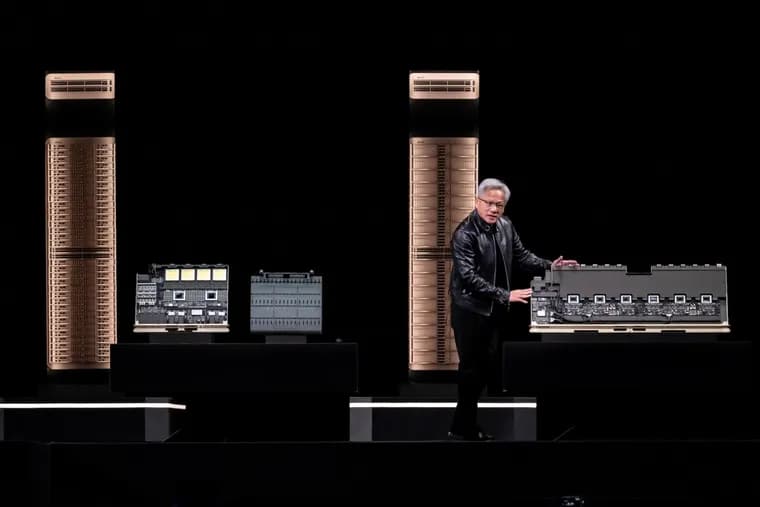
Amazon and Nvidia announced an expanded partnership on Wednesday, during Nvidia's quarterly earnings call. The centerpiece is a deal to add another 2 million Nvidia GPU chips, spanning the Blackwell Ultra, Rubin and Rubin Ultra families, to Amazon's data centers, with deliveries running through 2027 and 2028 and shipments beginning in the third quarter. That is on top of an earlier deal, struck just five months before, in which Amazon agreed to deploy more than 1 million Nvidia GPUs across AWS infrastructure starting this year. Nvidia said in a statement that "demand has exceeded those expectations," and the two companies jointly attributed the expansion to "surging demand" from startups, enterprises, AI labs and governments. Neither company disclosed financial terms; TechCrunch's own estimate, based on GPU unit costs, put the new deal at tens of billions of dollars.
The partnership goes beyond raw chip volume. Nvidia said its networking hardware, which links thousands of GPUs into a single system, along with its open models, CPUs, data processing software and robotics platform, will be integrated across AWS. Nvidia CFO Colette Kress said Nvidia also plans to send AWS an unspecified number of Vera CPUs, "some integrated with Rubin, others standalone." Kress said Nvidia expects Vera to be deployed by "every major hyperscaler, neocloud, AI lab, and system OEM, with shipments already underway to our lead partners," naming Oracle and SpaceXAI among them. CEO Jensen Huang had said in May that he saw a "brand-new $200 billion TAM" for Vera. On the robotics side, Kress said Amazon plans to adopt Nvidia's full physical AI stack, Omniverse, Cosmos, Isaac and Jetson, to power its warehouse robot fleet; Nvidia also introduced a new, more accessible version of Jetson this week aimed at entry-level edge AI. On the enterprise side, AWS will serve Nvidia's Nemotron family of open models through Amazon Bedrock and SageMaker.
The expansion arrives even as Amazon keeps building chips of its own to reduce its dependence on Nvidia. Amazon's AI chief, Peter DeSantis, has said AWS is in talks to sell its Trainium chips, a direct alternative to Nvidia's H100 or Blackwell for deep learning workloads, to other companies for their own data centers. Amazon's Arm-built Graviton CPU is also positioned as a challenger to traditional server chips from Intel and AMD. Amazon has said its custom chip business crossed a $25 billion annualized revenue run rate on its last earnings call, driven by $225 billion in total commitments from AI labs including Anthropic and OpenAI.
The deal landed alongside a strong Nvidia earnings report. The company posted $96.2 billion in second-quarter sales, beating analyst estimates, with data center revenue making up the bulk of that at $89 billion, up 117% from a year earlier. Nvidia guided third-quarter revenue to $108 billion, partly on the strength of its next-generation Rubin GPUs, for which it said production shipments began this quarter. Nvidia also said it has committed $279 billion to secure supply and manufacturing capacity for current and future data-center projects, up sharply from $119 billion the prior quarter, including $92 billion in spending planned for the rest of this fiscal year and $87 billion in fiscal 2028. "The thing that matters for the industry is that AI is now doing productive and useful work," Huang said on the earnings call. "AI is generating profitable tokens. If we had more compute, we could generate more profitable tokens, which results in more profit for all of the services. This is the exact phase where we're at, which is the reason why everybody's leaning in."
Key facts
- Amazon is adding 2 million more Nvidia GPUs (Blackwell Ultra, Rubin, Rubin Ultra) to AWS data centers for 2027 to 2028, on top of the 1 million plus GPUs it agreed to deploy five months earlier.
- Neither company disclosed financial terms; TechCrunch estimates the new deal at tens of billions of dollars based on GPU unit costs.
- Nvidia's networking hardware, CPUs, open models, data processing software and robotics stack (Omniverse, Cosmos, Isaac, Jetson) are being integrated across AWS, including Nemotron models on Bedrock and SageMaker.
- Amazon keeps building its own chips in parallel: its custom chip business hit a $25 billion annualized run rate, driven by $225 billion in commitments from labs like Anthropic and OpenAI, while AWS is reportedly in talks to sell Trainium chips externally.
- Nvidia posted $96.2 billion in Q2 sales (data center revenue $89 billion, up 117% year over year) and guided $108 billion for Q3, while raising its total supply and manufacturing commitment to $279 billion.
Why it matters
This is Nvidia and Amazon locking in supply and integration at once, not just another chip order. Five months after Amazon committed to more than 1 million Nvidia GPUs, it is adding another 2 million, and Nvidia is folding in its networking gear, CPUs, open models and robotics stack across AWS rather than selling Amazon chips alone. Both companies frame it as a response to demand that has already outrun what they expected, from startups, enterprises, AI labs and governments alike. It is also a signal about where AI spending stands: Nvidia's data center revenue is up 117% year over year and it just raised its own supply commitment to $279 billion, so a deal of this size from Amazon reads as confirmation that the buildout is still accelerating rather than leveling off.
Who it affects
AWS customers running AI workloads, from startups to large enterprises to government agencies, gain access to more Nvidia compute and to Nvidia's Nemotron open models through Bedrock and SageMaker. Nvidia investors get a concrete data point on Q3 and beyond, tied to Rubin's first production shipments. Amazon's own chip units are affected in a more complicated way: Trainium and Graviton, which Amazon is pushing as alternatives to Nvidia and even talking about selling externally, now have to coexist with an AWS that is simultaneously buying millions more Nvidia GPUs. Other Nvidia partners named as early recipients of its new Vera CPUs, including Oracle and SpaceXAI, sit in the same queue as Amazon for that hardware.
How to use it
There is no product here for an individual to buy. For teams building on AWS, the practical hooks are Nvidia's Nemotron open models becoming available through Amazon Bedrock and SageMaker, and the new, more accessible version of Jetson Nvidia introduced this week for entry-level edge AI and robotics work. Companies evaluating long-lead GPU capacity can read the 2027 to 2028 delivery window, with shipments starting in the third quarter, as a rough marker for when this specific wave of Blackwell Ultra, Rubin and Rubin Ultra supply lands at AWS.
How solid is it
The core facts, that Amazon is adding 2 million GPUs and that Nvidia is integrating more of its stack into AWS, come from a joint announcement made on Nvidia's quarterly earnings call, so they are on the record from both companies. The financial scale of the new deal is not: neither company disclosed terms, and the tens of billions of dollars figure is TechCrunch's own estimate from GPU unit costs, not a confirmed number. Nvidia's own quarterly figures, $96.2 billion in sales, $89 billion in data center revenue, and the $279 billion supply commitment, are company-reported earnings-call numbers rather than estimates.
Risks and caveats
The headline number of 2 million GPUs is a chip count, not a dollar figure, and the actual value of the deal is an outside estimate rather than something Amazon or Nvidia confirmed. The split between Blackwell Ultra, Rubin and Rubin Ultra units within that 2 million is not broken out, and the number of Vera CPUs Nvidia will send is explicitly left unspecified. There is also a structural tension worth watching: Amazon is expanding its Nvidia order at the same time it is growing its own competing chip business and reportedly shopping Trainium to other companies, so how the two efforts sit alongside each other inside AWS's infrastructure plans is not fully spelled out in this announcement.
“The thing that matters for the industry is that AI is now doing productive and useful work. AI is generating profitable tokens. If we had more compute, we could generate more profitable tokens, which results in more profit for all of the services. This is the exact phase where we're at, which is the reason why everybody's leaning in.”
— Jensen Huang, Nvidia CEO