Anthropic's Claude finds a novel CRISPR-like enzyme system
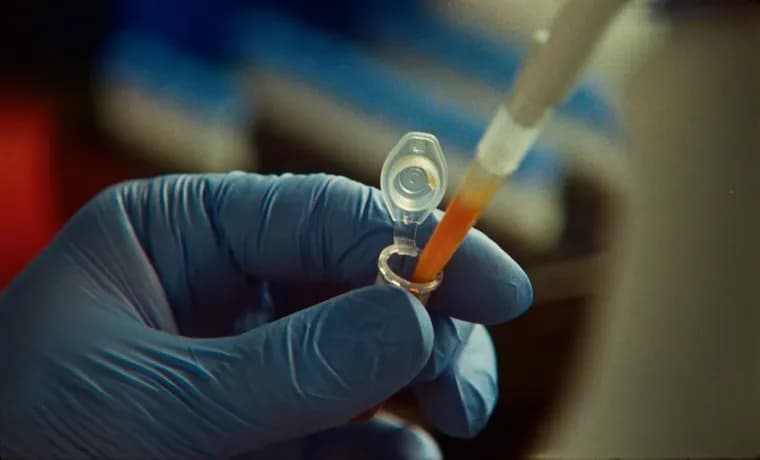
Anthropic announced the formation of a new life sciences research group and laboratory that uses Claude for fundamental biology research. The team's first reported result is a previously uncharacterized enzyme system found in bacteriophages, which they call array-associated reverse transcriptases (ART). The system shares properties with CRISPR systems and consists of three components: a reverse transcriptase enzyme, an associated partner gene, and an array of evenly spaced DNA repeat sequences.
According to the announcement, Claude agents worked through a database of reverse transcriptases largely on their own: "Claude agents combed through the database, investigated the distinct RT families, and used their own judgement to identify interesting candidates." The process started from roughly 200,000 reverse transcriptases, which Claude narrowed to 3,500 candidate systems and then to 20 compelling options before landing on the ART system. Anthropic says the research consumed 21 hours across roughly 950 agents, using 210 million tokens in total.
Feng Zhang, a CRISPR pioneer at MIT and the Broad Institute, reviewed the work and commented: "This is an exciting example of how AI agents can contribute to biological discovery. The identification of RNA-repeat arrays associated with reverse transcriptases is genuinely intriguing."
On methodology, Anthropic says the team operates through Claude Science and Claude Code tools, with human scientists carrying out all physical laboratory work. The facility runs at BSL-1 and BSL-2 biosafety levels and does not handle human pathogens. Human scientists review Claude's hypotheses, carry out laboratory validation, and feed findings back to refine the AI's future instructions, which Anthropic describes as an iterative human-AI collaboration model. The announcement does not name the new research group or lab, does not say when the discovery itself took place, does not describe what the ART system does biologically or how it might be used, and does not mention any peer review or publication venue for the finding.
Key facts
- Anthropic has formed a new life sciences research group and laboratory that uses Claude for fundamental biology research.
- The team identified a novel bacteriophage enzyme system, array-associated reverse transcriptases (ART), with CRISPR-like properties, made up of a reverse transcriptase enzyme, a partner gene, and an array of evenly spaced DNA repeats.
- Claude agents narrowed about 200,000 reverse transcriptases to 3,500 candidates, then to 20, before identifying the ART system, using roughly 950 agents and 210 million tokens over 21 hours.
- CRISPR pioneer Feng Zhang, of MIT and the Broad Institute, called the discovery genuinely intriguing.
- The lab runs at BSL-1 and BSL-2 biosafety levels, does not handle human pathogens, and pairs Claude's hypotheses with human laboratory validation.
Why it matters
This is Anthropic positioning Claude not just as a coding or research assistant but as an active participant in fundamental biology, credited with independently surfacing a previously uncharacterized enzyme system from a large database of reverse transcriptases. Pairing the announcement with an endorsement from Feng Zhang, one of the scientists behind CRISPR gene editing, is meant to lend outside scientific credibility to the claim that an AI agent contributed meaningfully to a biological discovery.
Who it affects
The announcement is aimed at the biology and biotech research community, and at anyone tracking how AI labs are moving from software and text tasks into wet-lab science. It also matters to Anthropic's own positioning as a company doing original scientific research, not only building models.
How to use it
Anthropic frames the setup as Claude Science and Claude Code tools directing the search and generating hypotheses, while human scientists carry out all physical laboratory work, validate results, and feed findings back to refine Claude's future instructions. No product, access details, or pricing for outside researchers are described in the announcement.
How solid is it
The account comes directly from Anthropic's own announcement, so it is a first-party description of Anthropic's own research program. Its one outside validation is a quote from Feng Zhang. The announcement does not name the new research group or lab, does not give a discovery date, does not describe what the ART system actually does biologically or its potential use, and does not mention peer review or a publication venue for the finding.
Risks and caveats
Because the piece is Anthropic's own announcement rather than a peer-reviewed publication, the biological significance and reproducibility of the ART discovery remain unverified from outside sources. Key details are also missing, including the identity of the research group, when the discovery actually happened, what practical role the ART system might play, and which Claude model version carried out the analysis.
“This is an exciting example of how AI agents can contribute to biological discovery. The identification of RNA-repeat arrays associated with reverse transcriptases is genuinely intriguing.”
— Feng Zhang, CRISPR pioneer at MIT and the Broad Institute