Anthropic's IPO puts its safety-first pitch under pressure
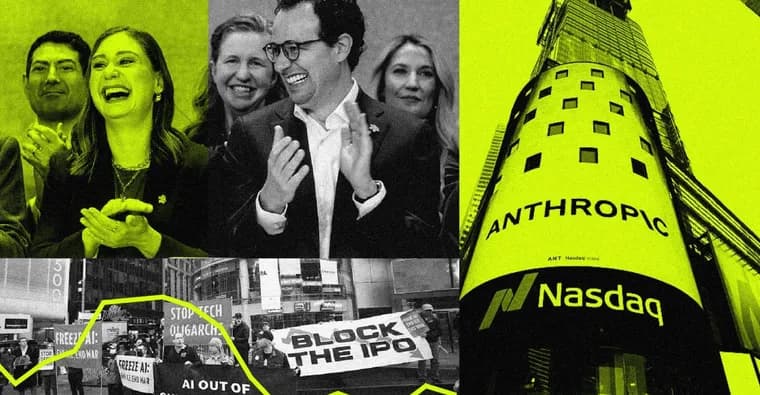
The Verge's Decoder podcast devoted the third and final episode of its series on AI in real life to the Anthropic IPO. The host talks with Hayden Field, The Verge's senior AI reporter. The intro says the AI lab behind Claude went public on the Nasdaq last Thursday and calls the numbers gigantic. The real question, it says, is whether Anthropic can keep caring about and investing in AI safety while being a public company that answers to shareholders and must keep growing revenue to pay compute bills of roughly $900 billion over the coming years.
The interview was recorded on IPO day. The host says Anthropic is the first pure AI lab to go public. It priced the IPO at $83 a share and reached $111 at its high that day. Asked whether this means the AI bubble will not pop, Field says the listing gives no new information on that. In her view it is peak AI hype: the company had been on track to break records for months, and people expected it to beat Musk, which it did. She says she has heard the IPO will create thousands of new millionaires and hundreds of new centimillionaires, and she adds that tech workers at several companies told her they are being told to do more and more AI even when it makes them less productive. She expects a reckoning eventually. She also says Anthropic markets its business as safe AI well, and that the term will now come under more pressure than ever.
On OpenAI, the host says he saw Sam Altman and OpenAI CFO Sarah Friar at the Semafor conference, and Altman and Greg Brockman at DealBook, and got the sense that OpenAI is happy Anthropic went first. Field agrees. She says she heard that at some point in the past year Altman was obsessed with beating Anthropic to go public. After a year of bad press, setbacks and public hostility toward OpenAI, she says, it chose to step back. Now it can ride on Anthropic's coattails, and she doubts it would beat Anthropic's record.
On the economics, Field says Anthropic has a long way to go. She cites an estimate from Steve Rattner that it must raise revenue roughly 17-fold within the next 10 years to deliver a comparable return to some of its tech competitors. Public investors want to see profits rise, or at least enough revenue growth that profit looks near.
On governance, Field says corporate governance experts and law professors told her that Anthropic, like OpenAI, has an unusual structure, so it is not beholden to shareholders as some public companies are. Shareholders can never vote out executives and have little power to influence anything. The founders and a special trust hold the power. Field says reading the S-1 again showed her that the founders have more control than it may seem. Even so, the experts told her it does not matter who votes: Anthropic will be under heavy pressure to make money, buy compute and catch up with OpenAI on it. Her prediction is that a lot will fall by the wayside, maybe even some expensive safety efforts.
The host then presses on token economics. Anthropic rents capacity from hyperscalers and must sell tokens for more than their input costs. He says Satya Nadella told him and others at Microsoft Ignite that Microsoft will try to bring token prices down and make AI vendors fungible underneath Copilot, picking the cheapest good-enough model for each task. That seems at odds with Anthropic's need for margin.
Field says the answer is a bit of both more usage and higher prices. She recalls an industry-wide outcry over costs being passed to consumers, with Anthropic bearing the brunt. Individual customers felt prices were rising for the same or worse quality. Anthropic issued a public statement, which Field paraphrases as "Look, we're going to work on this," and rolled prices back a little, but she says it will have to keep pushing in some way. The second plan is a moat: models good enough that people form an attachment and find it hard to port their work elsewhere, so they keep paying. The third is enterprise and government contracts, which could make up a large share of revenue and reduce the need to nickel-and-dime. The host starts to say that big business customers are sensitive to price differently from consumers, and the available transcript ends there.
Key facts
- Anthropic went public on the Nasdaq; the host calls it the first pure AI lab to do so. The IPO priced at $83 a share and hit $111 at its high on IPO day.
- The intro says Anthropic's compute bills total roughly $900 billion over the coming years, so revenue must keep growing.
- Hayden Field relays an estimate from Steve Rattner that Anthropic must grow revenue roughly 17-fold within 10 years to match some tech competitors' returns.
- Governance experts told Field that shareholders can never vote out executives; the founders and a special trust hold the power. She still predicts some expensive safety efforts may fall by the wayside.
- Field says Anthropic is leaning on pricing changes, customer lock-in and enterprise and government contracts, while Microsoft's Nadella aims to push token prices down.
Why it matters
Anthropic's listing is described by the host as the first IPO of a pure AI lab, and the episode asks a concrete question: can a company built around AI safety keep that priority once it answers to public markets and owes about $900 billion in compute over the coming years? Field does not treat the IPO as a verdict on whether the AI bubble will pop. She calls it peak AI hype, and says the safe-AI marketing will now face more scrutiny than before.
Who it affects
Anthropic's investors and staff, first. Field says she has heard the IPO will create thousands of new millionaires and hundreds of new centimillionaires. Consumer customers, who complained about rising prices, are affected by how Anthropic tries to raise revenue. Enterprise and government buyers are the customers Field says Anthropic hopes will make up a bunch of its revenue. OpenAI is affected because it can now watch how markets value its rival before telling its own IPO story. Microsoft appears as a counterweight, since Nadella wants to lower token prices and make AI vendors interchangeable under Copilot.
How to use it
This is an interview, not a product or a release, so there is nothing to adopt. As a reading aid, it points to the signals Field names: further pricing moves aimed at consumers, how heavily Anthropic leans on enterprise and government contracts, and whether safety spending holds up under revenue pressure. The episode is on Decoder, which publishes on YouTube every Monday and Thursday; Verge subscribers get an ad-free feed.
How solid is it
This is an analysis interview with a Verge reporter, not a filing or a data release. The hard figures are the $83 IPO price, the $111 high, and the roughly $900 billion compute total from the intro. The 17-fold figure is one estimate attributed to Steve Rattner, and Field says the conclusion holds without it. The millionaire counts and the claim that Altman was obsessed with going public first are things Field says she heard. The governance points come from experts she spoke with. The transcript ends partway through the discussion of big business customers, so the rest of the conversation is not covered here.
Risks and caveats
Much of the argument is prediction. Field says a lot may fall by the wayside, maybe even some expensive safety efforts, and that is a forecast, not a documented decision. The quoted line "Look, we're going to work on this" is Field's paraphrase of Anthropic's public statement on pricing, not a verbatim statement. The IPO-day price is a high, not a closing price, and the host notes the price may differ by the time listeners hear it. No valuation, revenue or profit figures for Anthropic are given. The special trust and the founders' control are only mentioned, not detailed.
“We’re probably going to see a lot of things fall by the wayside, maybe even some expensive safety efforts.”
— Hayden Field, The Verge's senior AI reporter, on Decoder