APNIC: fishing and anchors cause most undersea cable faults
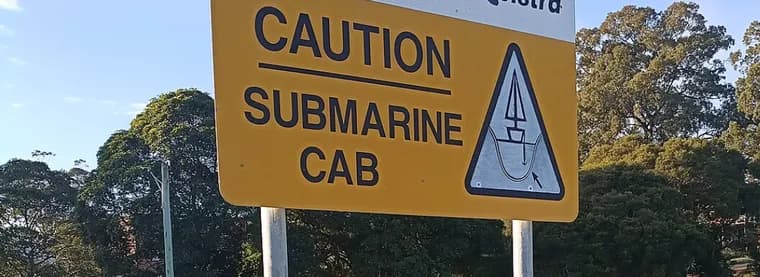
An APNIC blog article published on 14 October 2026 surveys how resilient the world's submarine communications cables are. It opens with the Matsu Islands, an archipelago of 36 islands in the East China Sea off the southeastern coast of mainland China, administered by Taiwan since 1949. They are linked to Taiwan's main island by two submarine cables, Taima No.2 and Taima No.3, with Taima No.4 coming soon. The Taiwan Strait is shallow, with an average depth of 70m, and the cables are exposed to fishing gear and anchors. Between 2018 and 2022 the Taiwan-Matsu cables were cut 27 times, and there were four major outages in the three years from 2023 to 2025. The Baltic Sea, which holds a dozen or so communications cables plus undersea electricity and gas pipelines, has seen 11 disruptions to those systems since 2023.
The article puts the stakes in scale: an estimated 1.5M kilometres of subsea communications cable, used by 607 in-service systems. If they were put out of service, the author writes, satellite systems could not replace them, and some communities would be totally isolated. Deliberate disruption is an old tactic. On the night of 4 August 1914 the British cable ship HMTS Alert sailed from Dover into the English Channel, hauled up five German transatlantic and European telegraph cables and cut them. Germany had to fall back on wireless radio, which British intelligence could eavesdrop on, and that helped in capturing messages such as the Zimmermann Telegram. The British repeated the move in September 1939, cutting German cables to Lisbon and New York.
On protection, the article explains that steel armour is mostly meant to reduce vulnerability to shipping accidents, but the familiar cross-section diagram shows only the segments near the landing station. Deep-sea segments have no external armour: optical fibre, a single thin steel thread in silicone gel, a copper sheath that powers the repeaters, and polyethylene, about 20mm across, the size of a garden hose. Landing stations are preferably placed at coastal points with little fishing or maritime traffic and a steep rise from the deep seafloor, so the cable spends less distance in the risky shallows. Many jurisdictions also declare Cable Protection Zones, warning ships to avoid fishing and anchoring there.
Routing is a trade-off. Routes should be short, to limit cost and signal delay, avoid tectonic boundaries and rifts, and run deep, though extreme depth makes repairs harder. Choke points concentrate risk. The Bab al-Mandab Strait carries 16 cables; in September 2025 several were severed there, disrupting an estimated 25% of cable capacity between Asia, Europe and the Middle East, and Houthi-controlled waters remain effectively ungovernable for cable protection. The Singapore Strait is a junction for 35 cable systems. The Luzon Strait carries 18 cables, and an earthquake and submarine landslides in December 2006 severed all of them and buried many under sediment; it took 11 repair vessels 49 days to restore every system. In the Black Sea mine risk is confirmed, but no cable faults have been directly documented in the war in Ukraine. Politics matters too: cables landing in US territory face Federal Communications Commission constraints, and the FCC has refused landings by cables that also land in a territory the US deems a foreign adversary.
The fault statistics are the core of the piece. Around 200 faults are reported worldwide each year, a count the International Cable Protection Committee notes has stayed broadly steady even as the cable inventory grows. The author calls the cables themselves remarkably reliable; the maritime traffic above them causes most problems. 86% of faults are likely due to fishing or anchoring, with fishing around twice as prevalent as anchoring. Geological events account for about 7%, cable abrasion 4% and repeater component failure 4%. Just under one half of faults occur in territorial waters, most of the rest in exclusive economic zones, and just 2% on the high seas.
That geography shapes repairs. The 1982 UN Convention on the Law of the Sea defined territorial waters as a 12-mile zone; coastal economies hold exclusive seabed resource rights up to 200 nautical miles, or the edge of the continental margin if further, capped at 350 nautical miles (650km) from the coast. From the point a cable enters territorial waters, any physical activity on it needs the authorities' permission. Locating a break is straightforward, since an optical pulse reflects at the break and gives the distance precisely, but then it becomes a marine operation. A specialist repair ship must obtain permission, hook the cable with a grapnel, cut it, recover both ends, splice in a new section aboard and relay the cable with slack. USD 500k to USD 1M is a representative cost of one repair. Industry data indicate repair response times have more than doubled over the past decade, and the longest single repair recorded in 2023 took 947 days, many spent waiting for permission. The industry has roughly 60 ships able to repair a cable, operated under maintenance agreements that pool running costs.
Key facts
- Around 200 submarine cable faults are reported worldwide each year, a count the International Cable Protection Committee notes has stayed broadly steady even as cable inventory grows.
- 86% of faults are likely due to fishing or anchoring, with fishing about twice as prevalent as anchoring; geological events account for about 7%, abrasion 4% and repeater failure 4%.
- Just under one half of faults occur in territorial waters and only 2% on the high seas, so repairs usually need a government's permission first.
- Taiwan-Matsu cables were cut 27 times between 2018 and 2022, with four major outages from 2023 to 2025; the Baltic Sea has had 11 disruptions to cables and pipelines since 2023.
- A representative single repair costs USD 500k to USD 1M; repair response times have more than doubled in a decade, and the longest repair recorded in 2023 took 947 days.
Why it matters
About 1.5M kilometres of subsea cable across 607 in-service systems carry the world's communications, and the article argues satellites could not take over if they failed. The recent record on the Taiwan-Matsu cables and in the Baltic shows that faults cluster in shallow, busy water. The piece's useful contribution is the breakdown: ordinary fishing and anchoring cause most faults, far more than component failure, while deliberate sabotage is one of several risks it lists next to geology and accidents.
Who it affects
Cable owners and operators, repair-ship operators and the governments that grant repair permissions are the direct players. Communities that depend on a few cables, such as the Matsu Islands, are most exposed; the article says some would be totally isolated if cables were lost. Anyone relying on routes through choke points like the Bab al-Mandab Strait (16 cables), the Singapore Strait (35 systems) or the Luzon Strait (18 cables) shares that concentrated risk.
How to use it
This is an explainer, not a product or tool. It works as a reference for reasoning about cable risk: faults are mostly near shore, in shallow water and in territorial waters, so route diversity, landing station location and Cable Protection Zones matter more than the cable's internals. The figures on fault causes, repair cost (USD 500k to USD 1M) and permission delays are handy benchmarks for anyone assessing a regional outage.
How solid is it
The numbers are specific and the article cites the International Cable Protection Committee for the steady fault count and industry data for the repair-time trend. The author is not named in the text. The 86% figure is hedged with "likely", and the 25% capacity disruption in September 2025 is labelled an estimate with no source named. The version available ends partway through the discussion of repair vessels, so the fleet section is incomplete.
Risks and caveats
The text gives no cause for the Taiwan-Matsu cuts or the Baltic disruptions and names no culprit, so it should not be read as attributing them to sabotage. It also does not say whether the four major outages of 2023 to 2025 are counted within the 27 cuts, since the periods differ. No Black Sea cable fault has been directly documented in the war in Ukraine, though mine risk is confirmed. Percentages for fault causes come from reported faults and are broad shares, not measured counts for any one region.
“The cables themselves are remarkably reliable. It is the maritime traffic above them that is the cause of most of the problems.”
— APNIC blog, "Submarine cable resilience"