Apple details how the Secure Exclave keeps Watch audio private
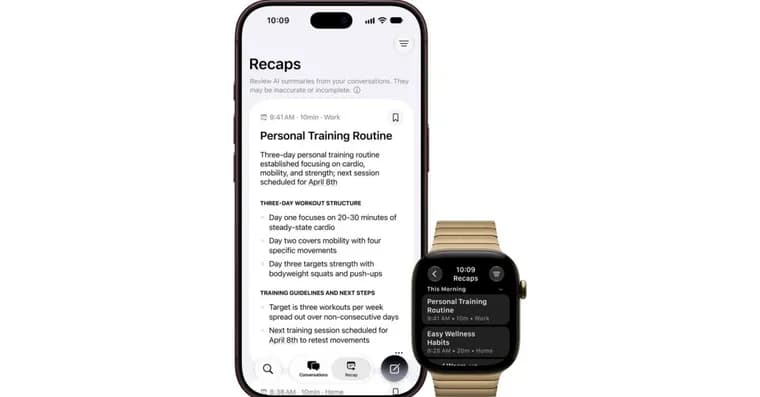
At Apple's Wednesday iPhone Duo launch event, the company announced a set of new Siri AI Audio Intelligence features: Siri Recap, Live Rewind, Sound Recognition, and Music Recognition. Alongside the announcement, it released a document laying out how it plans to balance the "ambient listening" these features require with user privacy.
The document's central claim is that raw audio from the new features is handled within dedicated hardware, is not saved as a file, and is not accessible to the operating system, apps, or Apple. That claim rests on the Secure Exclave inside the S11 chip that powers the new Apple Watch Series 12 and Apple Watch Ultra 4. Apple describes the Secure Exclave as a hardware-isolated compartment built into the silicon that processes sensor data separately from the rest of the system, and it says data processed there cannot be accessed by watchOS, apps, the user, or Apple.
Audio from the microphone enters the Secure Exclave first, where it is processed for speech, sounds, or music without being transcribed or stored as raw audio. Apple describes the result as a continuously overwritten buffer that exists only inside the protected hardware and never becomes an audio recording.
Apple also says users control whether and when Audio Intelligence runs. Live Rewind, for instance, needs a double-tap of the Digital Crown every time someone wants to turn it on. When Audio Intelligence data has to move to a paired iPhone, the transfer is encrypted through the Secure Exclave on both devices. Users choose what text to keep from Siri Recap and Live Rewind, and that kept text syncs with end-to-end encryption when the device has a passcode set and iCloud two-factor authentication turned on.
Key facts
- At Apple's Wednesday iPhone Duo launch event, the company unveiled a handful of new Siri Audio Intelligence features: Siri Recap, Live Rewind, Sound Recognition, and Music Recognition.
- Apple's privacy document says raw audio from these features is handled within dedicated hardware, is not saved as a file, and is not accessible to the operating system, apps, or Apple.
- The privacy design rests on a Secure Exclave inside the S11 chip in the new Apple Watch Series 12 and Apple Watch Ultra 4, which processes microphone audio for speech, sounds, or music without transcribing or storing it as a recording.
- Live Rewind requires a double-tap of the Digital Crown every time it's activated, and any Audio Intelligence data transferred to the iPhone moves encrypted through both devices' Secure Exclaves.
- Text kept from Siri Recap and Live Rewind syncs with end-to-end encryption when the device has a passcode set and iCloud two-factor authentication turned on.
Why it matters
Ambient-listening AI features like Siri Recap and Live Rewind mean a device is capturing and interpreting audio continuously, which is exactly the kind of capability that draws privacy scrutiny. Apple's response is to publish the specific hardware mechanism behind it: a Secure Exclave in the S11 chip that keeps that audio processing walled off from the operating system, apps, and Apple itself. Publishing the isolation architecture, rather than asking users to trust a policy statement, is what makes this more than a routine feature announcement.
Who it affects
The people this reaches first are buyers of the new Apple Watch Series 12 and Apple Watch Ultra 4, the two models built around the S11 chip that hosts the Secure Exclave described in Apple's document. Their paired iPhone is also part of the picture, since Audio Intelligence data is transferred there when needed. Anyone deciding whether to use Siri Recap, Live Rewind, Sound Recognition, or Music Recognition is the direct audience for the privacy explanation.
How to use it
Users decide whether and when Audio Intelligence runs. Live Rewind specifically requires a double-tap of the Digital Crown each time someone wants to activate it. For Siri Recap and Live Rewind, users also choose which text they want to keep, and that saved text syncs across devices with end-to-end encryption when the device has a passcode set and iCloud two-factor authentication turned on.
How solid is it
Every claim in this account comes from a document Apple wrote and released alongside the launch; The Verge's role here is relaying Apple's own account of its hardware, not reporting independent testing. No Apple spokesperson or executive is named: every statement is attributed to Apple or its document generically, not to a person. That makes the description credible as a record of what Apple says it built, but it is the company's own account of its own system, not an outside audit.
Risks and caveats
Apple's document does not say whether the raw audio, or anything derived from it, is ever used to train the company's AI models. It also gives no release date, iOS or watchOS version, or availability timeline for when these Audio Intelligence features ship, and no calendar date for the launch event itself beyond "Wednesday." Once data reaches the iPhone, the source confirms only that the transfer is encrypted through both devices' Secure Exclaves; what happens to the data after that is not described. And while Live Rewind's double-tap requirement is explicit, the source does not say whether Siri Recap, Sound Recognition, and Music Recognition need the same activation step or how they are triggered.
“is handled within dedicated hardware, is not saved as a file, and is not accessible to the operating system, apps, or Apple.”
— Apple, in its privacy document