Blackstone's Jas Khaira says AI-buildout debt fears are overblown
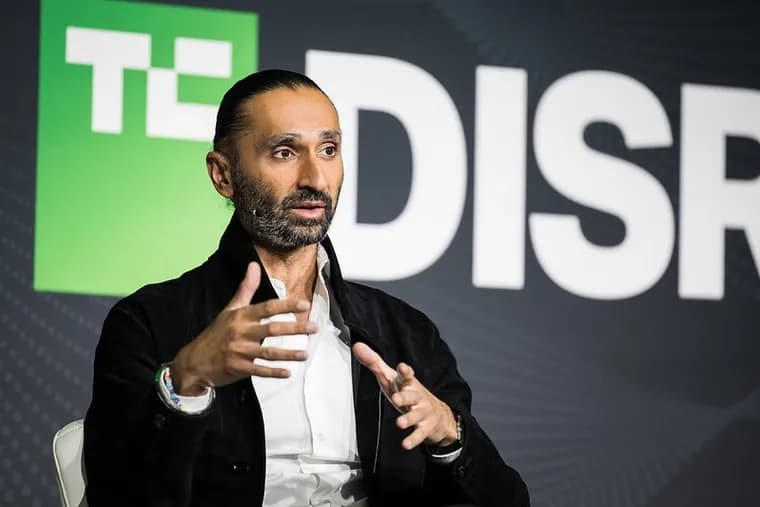
Private equity firm Blackstone, which has $1.3 trillion in assets under management, is putting itself at the center of the AI boom, firm veteran Jas Khaira said on stage at TechCrunch Disrupt last week. Khaira leads Blackstone N1 (BXN1), a San Francisco-based hub for the firm's AI initiatives, launched earlier this year; he relocated from New York to run it. Blackstone writes checks across the field, from large loans to data centers to investments in frontier AI models and applications. Khaira said it differs from traditional venture capitalists through its focus on compute financing and its ability to offer flexible capital structures, from debt to equity. "We're the largest owner of compute outside of the hyperscalers today," he said.
BXN1 played a key role in several compute deals. One is Crux AI, a neocloud launched with Google to commercialize its custom TPUs, to which Blackstone committed $5 billion as an investor. It also backed four-year-old chip startup Etched. Neoclouds are cloud providers that rent out AI GPU infrastructure.
The article says Blackstone pioneered a financing structure that let it lend large sums to venture-backed neoclouds by analyzing committed customer contracts and taking GPUs pledged as collateral. The first such deal came in 2023 with CoreWeave, soon after demand for the neocloud exploded following the launch of ChatGPT. By Khaira's account CoreWeave then had only "30 million of revenue and minimal profitability", yet it asked Blackstone for a $2.3 billion loan. CoreWeave was borrowing against its large stock of Nvidia GPUs (Nvidia is also an investor), and Blackstone grew more comfortable because CoreWeave had contracts with blue-chip customers such as Microsoft. The deal became the template for how Blackstone and other credit institutions provided billions in follow-on debt to CoreWeave and rival neoclouds. Khaira's test is the customer: if it is investment grade, such as Microsoft or Meta, the risk is priced relative to that customer. Blackstone later struck other neocloud deals, including co-leading, with Coatue, a $10 billion credit facility for Australian GPU provider Firmus earlier this year.
Khaira acknowledged that in recent weeks the large debt burdens of these companies have begun to raise red flags. CoreWeave's debt has since ballooned to about $50 billion, and Altimeter Capital founder Brad Gerstner said in a recent CNBC interview that the collateral CoreWeave puts up, "really only GPUs", is not good enough anymore and was used in the past to get cheap debt.
Khaira said the credit-side jitters come from a combination of factors. Interest rates ticked up in September, and hotter-than-expected inflation signals that borrowing costs may keep climbing; the flood of AI infrastructure debt offerings is not helping. "We're also seeing higher credit spreads," he said, meaning lenders charge higher premiums on top of already higher base rates. Even for Meta or Microsoft, the cost of capital to price in debt has widened out. The worry has reached the stock market: CoreWeave shares dropped over 20% in recent days, and Firmus scrapped its planned IPO on the Australian Securities Exchange, which had a target valuation of roughly $30 billion. "Ultimately, the market wasn't there at that valuation," Khaira said of the cancelled listing, adding that the market is asking what the right price for neoclouds is while interest rates are moving up.
Still, the article notes that AI companies cannot get enough compute, and their appetite keeps driving data center buildout. Khaira downplayed the fears of doom-mongers that the pile of AI infrastructure debt could cause a widespread credit crisis or crash the economy. "This doesn't feel like something where you've got 2008 banks that are shaky credits," he said. His argument: because most data centers are built for hyperscalers, the debt financing them is ultimately backed "by the most creditworthy companies in the world."
Beyond data centers, Blackstone is helping companies adopt AI through a $1.5 billion joint venture, "Ode with Anthropic", formed this year with Anthropic and Hellman & Friedman. Ode supplies forward-deployed engineers to help companies adopt AI and integrate it into their operations, starting with Blackstone's 280 portfolio companies. Asked whether those companies see tangible gains from AI, Khaira conceded that "there is definitely ROI, but it is uneven." He described technology adoption as moving in a "sawtooth-type pattern", which, to skeptics, can look like an oversupply of compute before adoption catches up.
Key facts
- Blackstone's Jas Khaira, who leads the firm's San Francisco AI hub BXN1, said at TechCrunch Disrupt that fears of an AI-debt-driven credit crisis are overblown, because most data centers are built for hyperscalers and the debt is ultimately backed by the most creditworthy companies in the world.
- He conceded real pressure: higher credit spreads, interest rates that ticked up in September, CoreWeave shares down over 20% in recent days, and Firmus's scrapped IPO at a roughly $30 billion target valuation.
- Blackstone's first neocloud deal was a $2.3 billion CoreWeave loan in 2023; CoreWeave's debt has since ballooned to about $50 billion.
- Other Blackstone compute bets: a $5 billion commitment to Crux AI (a neocloud launched with Google for its TPUs), backing for chip startup Etched, and co-leading a $10 billion credit facility for Firmus with Coatue.
- On AI adoption at Blackstone's own portfolio companies, Khaira said there is definitely ROI, but it is uneven; the $1.5 billion Ode joint venture with Anthropic and Hellman & Friedman starts with 280 of them.
Why it matters
Blackstone, with $1.3 trillion in assets under management, is among the biggest lenders to the neoclouds that rent out AI GPU capacity, and its first deal, the 2023 CoreWeave loan, became the financing model other credit institutions followed. When such a lender says the debt is safe, that is a data point on how the AI buildout is being funded. It is also an interested party's view. Khaira's case rests on who ultimately pays: hyperscalers with strong credit, not shaky borrowers of the 2008 kind.
Who it affects
Neocloud operators such as CoreWeave and Firmus, whose borrowing costs and public-market pricing are under pressure. Lenders and credit institutions that followed Blackstone's template. Hyperscalers such as Microsoft and Meta, which the article says are also paying more to borrow. Investors weighing neocloud valuations. And Blackstone's own 280 portfolio companies, the first customers of the Ode adoption venture.
How to use it
This is an interview, not a product, so the practical value is in the signals Khaira names. He says the main thing lenders look at is the nature of the customer: investment-grade customers such as Microsoft or Meta set how the risk is priced. Readers tracking the sector can watch the pressures he lists: interest rates, inflation, credit spreads, the supply of new AI debt offerings, and whether neocloud listings such as Firmus's go ahead at their target valuations.
How solid is it
The account comes from a conference appearance, and the debt-is-safe thesis is Khaira's own argument as a senior figure at a major lender; the article presents it as his view. The deal facts (the $5 billion Crux AI commitment, the $2.3 billion CoreWeave loan, the $10 billion Firmus facility, the $1.5 billion Ode venture) are stated by TechCrunch. The 2023 CoreWeave revenue figure is Khaira's own description, and the article gives no unit for it. The article does not say whether CoreWeave's roughly $50 billion debt includes Blackstone-provided loans, and it does not state Blackstone's total exposure to CoreWeave or to neoclouds overall.
Risks and caveats
The article itself lists warning signs: higher credit spreads, rising rates with inflation running hotter than expected, a CoreWeave share drop of over 20% in recent days, and Firmus's cancelled IPO. Gerstner's remark concerns CoreWeave's GPU collateral specifically; the source does not say he predicts a wider credit crisis. The article does not quantify the 'uneven' ROI at Blackstone portfolio companies, and it notes that the sawtooth adoption pattern Khaira describes can look to skeptics like an oversupply of compute before adoption catches up.
“This doesn’t feel like something where you’ve got 2008 banks that are shaky credits”
— Jas Khaira, Blackstone, at TechCrunch Disrupt