Bodycam footage shows the Flock search a federal judge ruled unconstitutional
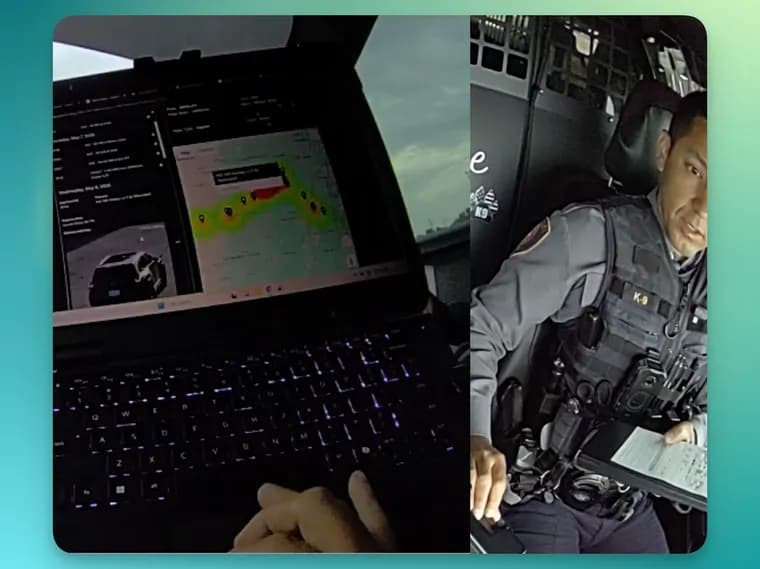
404 Media has published details of body camera and in-vehicle footage from the case behind a recent federal ruling on license plate readers. On Friday it reported that a federal judge had called the use of license plate reader (ALPR) systems in the arrest of Melissa Kyle an "unconstitutional warrantless search" and "indiscriminate mass surveillance", and a violation of her Fourth Amendment rights. The judge held that even though Kyle had more than 91 pounds of meth in her vehicle, police had no justifiable reason to search Flock for her plate and no reason to think her travel, as shown in Flock, was suspicious. So the Flock evidence and the evidence from the vehicle search must be thrown out.
404 Media got the footage, plus Flock and Motorola ALPR records, with the help of a reader who went to the U.S. District courthouse in Tulsa and bought it from the clerk. The court did not post the footage online even though it was entered as evidence.
The footage comes from the body camera of Tulsa County deputy sheriff Freddie Alaniz. It shows him driving 60 miles per hour, one hand on the wheel and one on his laptop, searching Flock before he had fully pulled the car over. The court determined he had seen California plates on the car Kyle was driving and decided to pull it over for no reason other than that. He told colleagues he was sitting on the highway, "saw her go by, and I just started running her info on Flock and Vigilant" (Motorola's ALPR system). She "didn't have any [Flock] hits until just west of Amarillo," he said, "so I thought I'd drive up." He added: "I got her for a lane violation."
Alaniz told Kyle he stopped her for changing lanes without a signal. She said the car was a rental, and he had her sit in his car while she looked up the rental details. He told her she would only get a warning, but went on to question her about her travel while scrolling the car's driving history on his in-car laptop. Kyle said she had been visiting family in California from Missouri for a few days after separating from her husband. The laptop listed every time the car passed a Flock or Motorola camera over the last 30 days: 79 hits in total, roughly 50 of them during the few days Kyle had the rental. The hits traced a route from Missouri through Oklahoma, Texas, New Mexico and Arizona into California (a Motorola camera in Topock, Arizona, on the California border), then back the same way. Alaniz had no access to ALPR hits from California. 404 Media says this may be because Flock sharply limited nationwide sharing from California cameras after illegal searches for immigration violators and a woman who had an abortion.
Alaniz clicked individual hits on a map, each showing a photo of her car, a location and a timestamp, and quizzed her on dates, such as what day she left Missouri. The government's lawyers later argued in court that small discrepancies between her account and the ALPR data meant she was lying about where she had been on which days, and so gave Alaniz probable cause to search.
Alaniz then said he was giving her a warning, closed the laptop and said he had a few more questions. "I know from my training and my experience that people who do very short trips to California and come right back are transporting large amounts of drugs," he said, adding "not everybody, but some people do," and asked to search the car. She said no. He called for backup and told her: "You are being detained. You are not free to go." He told a colleague she went to California for two days and was "kind of making stuff up" about where she stayed. He cited her travel history, her "nervousness" and her imperfect recall of travel details as probable cause. The search turned up 91 pounds of meth, which he called "a motherlode" and "a shit-ton of meth."
U.S. District Court Judge Sara Hill ruled last week that the way he got there was unconstitutional, and that all the evidence, including the car's travel history and what police found in the search, must be disregarded in court as "fruit of the poisonous tree." Hill wrote that the factors the government relied on "are the same type of circumstances that everyday Americans encounter on long road trips for many legitimate reasons," listing driving long distances, losing track of the day of the week, crossing state lines, packing or buying too much, smoking, renting cars and getting nervous around law enforcement.
The court filings show the full Flock and Motorola records: timestamped, mapped images of the car several times a day across the country. They also show how many jurisdictions and businesses run ALPR cameras and how the data forms a nationwide network. Alaniz had photos of the rental from cameras owned by a Lowe's store in Missouri, various Texas state police units, New Mexico State police and the Kingman police department. In a five-day period the car was scanned more than 50 times by 11 law enforcement agencies. Hill wrote that Alaniz's ALPR search alone gave him "more than 50 individual records of Kyle's whereabouts across the country for an entire month." The ruling held that because the systems intruded on her reasonable expectation of privacy in the whole of her physical movements, the search was a search under the Fourth Amendment; the only reason for it was the California plate; it lacked probable cause and a warrant. After the car was impounded, the Motorola record shows it was scanned two more times on the back of a tow truck later that day.
Key facts
- A federal judge, Sara Hill, ruled that a Tulsa County deputy's Flock/ALPR search of Melissa Kyle's rental car was an unconstitutional warrantless search; the Flock evidence and the vehicle search evidence must be thrown out.
- Body camera footage shows deputy Freddie Alaniz searching Flock on his laptop while driving 60 miles per hour, before the car was fully pulled over; the court found the only reason for the stop was the California plates.
- Alaniz's laptop showed 79 ALPR hits over 30 days, roughly 50 during the few days of the rental; he used the travel history to question Kyle, then cited it with her nervousness as probable cause.
- In a five-day period the car was scanned more than 50 times by 11 different law enforcement agencies; records include cameras owned by a Lowe's store in Missouri and several state and local police.
- The search found 91 pounds of meth, but Hill held that the evidence, including the car's travel history, must be disregarded as fruit of the poisonous tree.
Why it matters
The footage turns an abstract legal ruling into a concrete sequence. 404 Media says it shows license plate readers being used to create probable cause from a person's driving patterns, and turning an ordinary traffic stop into an interrogation. The judge's ruling treats a historical ALPR lookup that reveals the whole of someone's movements as a search under the Fourth Amendment, and describes the Flock searches as unconstitutional. 404 Media calls these the first Flock camera searches ruled unconstitutional by a federal judge. The case also shows the scale of the network: one rental car, a few days, more than 50 scans by 11 agencies.
Who it affects
Any driver whose plate passes a Flock or Motorola camera, which the court records show includes cameras owned by agencies across several states and by businesses such as a Lowe's store. The ruling's reasoning, that ordinary long road trips, nervousness and fuzzy recall of dates are not suspicious, bears on how police can use ALPR history during stops. Police departments and prosecutors who use Flock or Motorola ALPR data are also in the frame, since in this case the government's whole evidentiary chain was excluded.
How to use it
This is reporting on a court case, not a product to adopt. The practical points come from the story itself: the footage was entered as evidence but not put online, and 404 Media got it when a reader bought it from the clerk at the U.S. District courthouse in Tulsa. The judge's quoted reasoning, covering the reasonable expectation of privacy in the whole of one's movements, the lack of any reason for the Flock search beyond California plates, and the absence of a warrant, is the part to read for how a court analyses ALPR lookups.
How solid is it
The account rests on footage, Flock and Motorola records and court documents that 404 Media says it obtained, plus direct quotes from Judge Hill's ruling and from Alaniz on camera. Some details are 404 Media's own description or inference: the suggestion that Alaniz lacked California hits because Flock limited sharing from California cameras is offered only as something that "may be" the reason. The article states the meth amount as "more than 91 pounds" in one place and "91 pounds" in another, and does not say which is exact. It gives 79 hits over 30 days (about 50 during the rental) while the judge's quoted ruling says "more than 50" records for an entire month; the source does not reconcile these.
Risks and caveats
No response or comment from Flock, Motorola, the Tulsa County Sheriff's Office or Alaniz is quoted. The article does not say whether the government will appeal, whether charges against Kyle were dismissed, or what happens to her case next. It gives no absolute dates for the stop or the ruling, and no case name or number. The article does not say that Flock itself did anything wrong. Much of the narrative of the stop is 404 Media's description of the footage, and the government's probable cause argument is relayed only as 404 Media summarised it.
“That search was not supported by probable cause, and it was done without a warrant in violation of Kyle’s Fourth Amendment rights.”
— Judge Sara Hill, U.S. District Court, ruling quoted by 404 Media