Chinese AI firms build their own data centers in Inner Mongolia
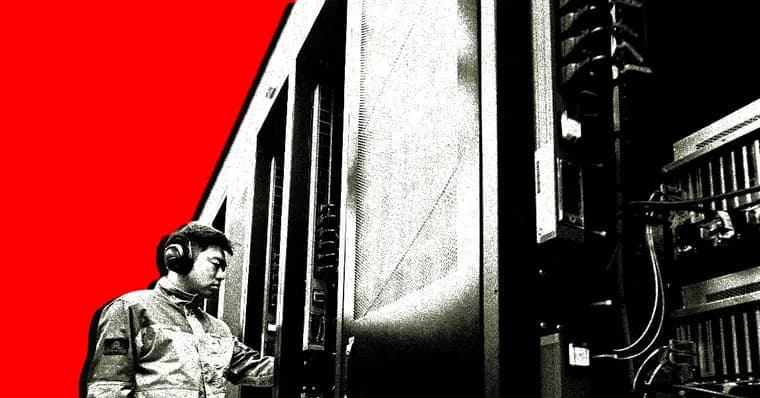
Wired's Made in China newsletter reports that Ulanqab, a city of about 1.5 million people in China's Inner Mongolia region, has become the country's hottest location for AI data center construction. Nearly 100 data centers have been opened or begun construction there since 2016, and Chinese companies have pledged projects with a combined estimated capacity of 12.5 gigawatts, with over 70 percent of those commitments announced in just the last year, according to a Goldman Sachs research note published last week. For comparison, OpenAI's $500 billion Stargate Project is set to reach only 10 gigawatts of total capacity once complete. Companies are drawn to Ulanqab for several reasons: its high elevation and long, cold winters cut cooling costs, it sits close enough to Beijing for low-latency data transfer, and electricity is cheaper there than almost anywhere else in China, thanks to both cheap coal and growing wind and solar supply. What is new is who is building: for the first time, Chinese AI companies are investing heavily in their own physical infrastructure rather than renting compute from cloud providers. DeepSeek is reportedly building a large data center in Ulanqab, and ByteDance, Alibaba and Xiaohongshu are doing the same. Huawei opened the first Ulanqab data center in 2016, and Apple followed three years later. In 2021 the region was designated a hub of the government's "Eastern Data, Western Compute" program to build data centers in western China. Early facilities were mostly used for backup storage because of high latency to China's populous east coast, until two dedicated fiber optic cables built in 2017 and 2019 cut average latency to under five milliseconds, making the region viable for AI training and, more recently, inference. Andrew Stokols, a professor at Singapore Management University who studies China's compute infrastructure, says Ulanqab's growth has been driven more by commercial demand from AI companies with paying users than by government-led investment, unlike other Chinese data center hubs. The boom has an environmental dimension. Damien Ma, director of Carnegie China, notes that regions in China with the most unused renewable energy tend to have built the most data centers, and this month Envision, a major Chinese wind turbine manufacturer, announced it will build its own 2 gigawatt AI data center in Ulanqab powered by its own clean energy supply. But Stokols's research found that about 37 percent of Ulanqab's electricity still comes from coal, since data centers need round-the-clock reliability that operators have traditionally sourced from fossil fuels. The bigger constraint may be water: Ulanqab gets only about 14 inches of rain a year, roughly as dry as Denver, and the local water company was forced last month to shut off several waterworks for seven hours a night to manage peak demand, even before most planned data centers are running. Government weather data shows the centers need extra cooling water only two months out of the year, but the scale of new construction could still strain the region's water supply.
Key facts
- Ulanqab, a city of about 1.5 million in Inner Mongolia, has nearly 100 data centers opened or under construction since 2016, with pledged capacity of 12.5 gigawatts, over 70 percent of it committed in the last year alone (Goldman Sachs).
- That pledged capacity already exceeds the 10 gigawatts planned for OpenAI's $500 billion Stargate Project.
- DeepSeek, ByteDance, Alibaba and Xiaohongshu are building their own facilities there, marking a shift from renting cloud compute to owning infrastructure.
- About 37 percent of Ulanqab's electricity still comes from coal despite the region's wind and solar growth; Envision is building a separate 2 gigawatt data center run on its own clean power.
- Ulanqab gets only about 14 inches of rain a year, and the local water utility already had to shut off waterworks for seven hours nightly last month to handle demand.
Why it matters
For years, Chinese AI companies built capable models while spending far less than their US counterparts on physical infrastructure, typically renting compute instead. The Ulanqab buildout, with 12.5 gigawatts pledged versus 10 gigawatts for OpenAI's Stargate, signals Chinese AI companies are now investing directly in owning their own data centers at a scale that rivals the largest US projects.
Who it affects
DeepSeek, ByteDance, Alibaba and Xiaohongshu are the companies named as building facilities in Ulanqab. Local residents and the regional water utility are affected by rising demand competing with existing water needs. Researchers Andrew Stokols (Singapore Management University) and Damien Ma (Carnegie China) provide the analysis behind the piece, and Envision, a major Chinese wind turbine maker, is building its own data center there.
How to use it
This is a reporting piece, not a product or service; there is nothing to buy or deploy. It is useful as a data point for anyone tracking where Chinese AI compute capacity is concentrating and which companies are moving from renting cloud infrastructure to owning it.
How solid is it
The reporting cites a named Goldman Sachs research note for the capacity and growth figures, on-record quotes from two named researchers, and specific government weather data for the water-use figures. The claim that DeepSeek is building in Ulanqab is flagged in the source itself as reported rather than confirmed.
Risks and caveats
Water scarcity is the clearest constraint: Ulanqab already struggles to meet demand, with nightly waterworks shutdowns reported before most planned data centers are even operational. Coal still supplies about 37 percent of local electricity, complicating the region's clean-energy narrative, and the article does not state a completion timeline for the 12.5 gigawatts of pledged capacity or a specific capacity figure for DeepSeek's facility.
“Inner Mongolia has long been the West Virginia of China. It's a coal country.”
— Damien Ma, director of Carnegie China