Cisco gives a 27-year-old unlimited AI tokens to refactor legacy code
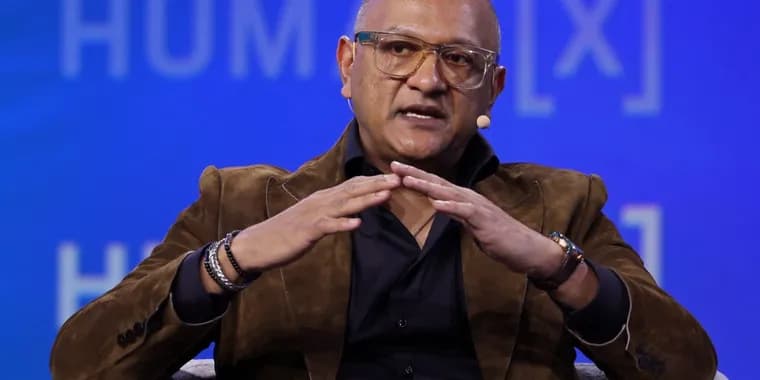
Fortune reports that Jeetu Patel, Cisco's president and chief product officer, has given one of the company's biggest jobs to a 27-year-old he found "five levels" below him in the org chart. "I've given him unlimited tokens because he's going to refactor code," Patel told Fortune at a small roundtable dinner. "So I'm like, you can go, you can go nuts."
The engineer is Padmanabhan Krishnamurthy, called "Paddy" by Patel. He joined Cisco in 2025 after the company acquired EzDubs, the real-time translation startup he cofounded in 2023. Despite arriving as a former founder with CEO experience, he was, in Patel's words, "buried away in the organization doing something unstrategic."
That changed when Patel dropped into Cisco's San Francisco office and the two got talking. Krishnamurthy reckoned he could rewrite Cisco's legacy code with a two-person team. Patel says even the most AI-forward people on his own team weren't thinking that way. The article says the trial period is four weeks, with a final goal of refactoring 98% of Cisco's legacy code within 24 months. Fortune describes Cisco as a "$429 billion tech giant" without naming the metric.
Patel is now looking for more "Paddys": young hires who will "challenge the system and the status quo." His argument is that if companies stop hiring early-career people, there is nowhere for fresh ideas to come from. Seasoned staff can still have new ideas, he says, but they cannot ask the questions that only someone with no experience would think to ask. He admits that putting a Gen Zer in a room with people who have been at Cisco for decades can create friction, but says that is the point: "Tension is good." He wants friction on ideas, not on people and personalities.
He also calls every intern "a reverse mentor" and gives talks at colleges to find students who are "hungry." One of those talks, to 17- and 18-year-old Stanford scholarship students, produced his latest bet. A student named Baya stood off to the side and listened until the others had finished. Patel told her to email him monthly about what she had learned about AI, as a test of follow-through. She never missed one, landed an internship at Cisco, and redesigned "something" that experienced staff hadn't been able to crack. Patel says he did not bring her in for grunt work or data entry, but so she could teach Cisco's people to think differently. He now wants to recruit her.
The piece opens with a backdrop: entry-level jobs are vanishing, and some 40% of bosses say they plan to hire fewer grads because AI can do the job cheaper (no survey is named). Against that, Fortune quotes other bosses who prefer young hires. Thrive Capital founder Josh Kushner, described as an OpenAI investor, likes to hire people with under four years of industry experience. He launched the firm at 26 and says "anyone who has experience that is talented will never want to work with a 26-year-old," so he recruited the smartest people he knew of his own age. Alon Chen, founder and CEO of the generative AI platform Tastewise, hires entry-level because they "have no boundaries or limitations in how they think about the world." Will.i.am, the Black Eyed Peas frontman and investor, says young people at MIT and Stanford are "native to this" and that hunting for them is the only thing he is focused on.
Patel told Fortune the trend toward hiring Gen Z will only continue, thanks to AI. He describes his team as roughly one-third experienced, scaled operators who understand how the Cisco engine works, one-third systems thinkers from the market, and one-third entrepreneurial founders, CEOs and AI-native engineers who operate in founder mode. In his words, none of the groups is nearly as potent alone as when all three work together.
Key facts
- Cisco president and chief product officer Jeetu Patel told Fortune he has given 27-year-old Padmanabhan "Paddy" Krishnamurthy unlimited AI tokens to refactor Cisco's legacy code.
- Krishnamurthy, who joined in 2025 via the EzDubs acquisition, reckoned a two-person team could rewrite the legacy code; the article gives a four-week trial window and a goal of refactoring 98% within 24 months.
- Patel wants more young hires who "challenge the system and the status quo" and accepts friction with long-tenured staff as the point.
- Patel says roughly one-third of his team is experienced operators, one-third systems thinkers from the market, and one-third AI-native founders and engineers.
- Josh Kushner, Alon Chen and Will.i.am also tell Fortune they favour young, inexperienced hires, while the article cites an unsourced figure that some 40% of bosses plan to hire fewer grads because of AI.
Why it matters
Most coverage of AI and junior jobs is about entry-level roles disappearing. This story is the opposite case, told by a senior executive: a 27-year-old gets open-ended AI token access and a legacy-code rewrite that, Fortune says, most companies would give only to someone with decades of experience. The stated ambition is large: 98% of Cisco's legacy code refactored within 24 months, starting from a two-person team.
Who it affects
Engineers and managers at large companies with old codebases, and early-career workers weighing how AI changes their prospects. Within Cisco, it affects long-tenured staff who Patel says will share rooms with younger hires and face friction by design. Fortune also quotes other bosses (Kushner, Chen, Will.i.am) who say they are hunting for young talent.
How to use it
There is no product or tool to adopt here. The pattern Patel describes is to find capable people buried in the org chart, give them an ambitious AI-assisted project and generous AI access, and set a short proof period. He also tests follow-through (Baya's monthly emails), treats interns as reverse mentors, and mixes three kinds of people on a team: experienced operators, outside systems thinkers and AI-native founders.
How solid is it
It is a Fortune report based on Patel's own remarks at a roundtable dinner, plus separate comments from the other bosses. The article does not say which tool, model or vendor supplies the AI tokens, nor any cap or cost of the "unlimited tokens". It gives no result yet from the four-week trial; it reports only the plan and goals. It does not say which Cisco codebase or products the legacy code belongs to. The 40% figure has no named survey or source, and the $429 billion figure is not labeled as market cap or any other metric.
Risks and caveats
The headline claim is a plan, not an outcome: no refactoring results are reported. The sentence on the four-week deadline does not clearly name whether Patel or Krishnamurthy set it. Patel himself admits that pairing Gen Z hires with veterans creates friction. The article is a profile built around bosses who favour young hires, so it does not weigh counterarguments, and it reports no Cisco layoffs, hiring numbers or official company comment beyond Patel's remarks.
“I’ve given him unlimited tokens because he’s going to refactor code”
— Jeetu Patel, Cisco president and chief product officer, to Fortune