Cloudflare co-founder Lee Holloway diagnosed with dementia at 36
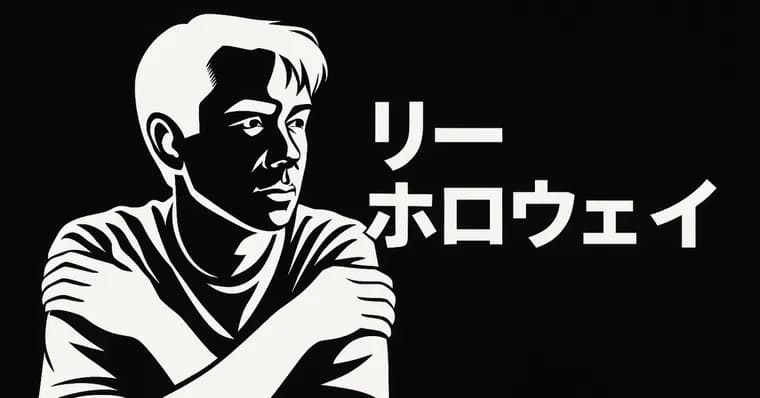
Lee Holloway was born in California in 1981 (estimated) and grew up in Cupertino, where his father's job at Apple gave him early access to computers. After high school at Monte Vista, he worked as an engineer at the startup HomeWarehouse.com, which Walmart acquired in 2000, then studied computer science at UC Santa Cruz. Through professor Arthur Keller, he met Matthew Prince, an entrepreneur working on anti-spam software with an idea close to Holloway's own lab project. Prince hired him on the spot, and in 2004 Holloway joined Prince's new company, Unspam Technologies, in Park City, Utah, living in Prince's basement and taking food and housing in place of a salary while serving as Chief Software Architect. There he co-founded Project Honey Pot, an open-source project tracking online spammers that is still active today.
When Prince left for Harvard Business School in 2007, Holloway returned to California. As Prince's MBA neared its end, he pitched Holloway on a new venture with his Harvard classmate Michelle Zatlyn: turning Project Honey Pot's spam data into a service that would not just monitor but block internet threats. After Prince spoke for about an hour, Holloway reportedly said only, "That's interesting, let's do it!" and joined. The three co-founded Cloudflare in 2009, with Holloway as lead engineer and architect building the company's first prototype, including its Anycast network and same-IP access mechanism. He was known internally as the "resident genius," and in 2010 he worked through the night fixing bugs so the company's TechCrunch Disrupt demo would succeed. His platform became the foundation letting Cloudflare process over 10% of all internet requests and block billions of threats daily. In 2014, working through the night before a deadline for a project to give every website free encrypted (SSL/TLS) connections, he wrote the needed code in a single sitting; the source reports that encrypted web traffic doubled overnight as a result.
Around 2011, when Holloway was about 30, colleagues and family began noticing changes: extreme fatigue, collapsing at home after work, withdrawal from his once-active social life, and apathy toward his young son. His first wife, Alexandra Carey, whom he had known since university, initially suspected the couple were drifting apart and suggested counseling. In 2012 she separated from him and took their son; Holloway asked for divorce papers without objection. Colleagues assumed success and financial freedom had made him selfish, not recognizing a disease at work. He later became involved with Kristin Tarr, who handled communications at Cloudflare, and the two got engaged in Rome in 2014 and remarried.
In January 2015, on a doctor's recommendation at Stanford University Hospital, Holloway underwent six-hour surgery for a congenital heart condition, aortic valve regurgitation, that had been suspected as a cause of his headaches. The surgery succeeded, but his mental state changed markedly afterward: he grew listless, played games on his phone during meetings, stopped responding to colleagues, and stubbornly resisted their suggestions. Prince and Zatlyn repeatedly tried to address it with him without effect; Prince later recalled "tremendous anxiety, like losing a best friend" as he watched his co-founder change. In 2016, the company decided Holloway could no longer stay, and he left Cloudflare at age 36; the source reports that during Prince's tearful farewell speech, Holloway stood by smirking, holding a beer bottle.
Holloway planned to become a stay-at-home father for his second child, with Kristin, but his behavior worsened at home too: he reportedly slept through part of his wife's labor and then argued with hospital staff against an epidural, showed no interest in the newborn, watched the film Home Alone repeatedly alone at night, and wandered the house all day wearing a beanie pulled over his eyes. Kristin took him to multiple hospitals; doctors and family initially suspected effects of the heart surgery, burnout, or depression. In March 2017, a neurologist found unexpected brain atrophy on MRI, and further evaluation at the UCSF Memory and Aging Center led to a diagnosis of behavioral variant frontotemporal dementia (bvFTD) at age 36. Unlike Alzheimer's, the disease affects personality and behavior before memory and typically strikes people decades older; doctors said it has no cure and would progressively take his speech, mobility and ability to swallow, eventually threatening his life through infection or accident. The source reports that Holloway alone received the news calmly, at one point complimenting his doctor's wedding ring while his family wept. Kristin quit her job to spend more time with him. The article, credited to Masaichi Urabe and marked as Part 1, ends mid-sentence describing the disease's progression, with Holloway's subsequent condition left for a later installment.
Key facts
- Lee Holloway co-founded Cloudflare in 2009 with Matthew Prince and Michelle Zatlyn, building its Anycast network and same-IP access mechanism as lead engineer and architect.
- The platform Holloway designed underpinned Cloudflare's ability to process over 10% of all internet requests and block billions of threats daily.
- In 2012 his first wife separated from him after a personality change that colleagues attributed to success and wealth rather than illness.
- Cloudflare decided in 2016 that Holloway, then 36, could no longer stay at the company after years of worsening behavior.
- A neurologist found brain atrophy in March 2017, leading UCSF's Memory and Aging Center to diagnose behavioral variant frontotemporal dementia (bvFTD) at age 36.
Why it matters
Holloway is credited as the technical architect behind Cloudflare's core infrastructure, including its Anycast network, work that the source says still underpins a service handling more than 10% of global internet requests. The biography matters beyond one company's history because it documents, in granular detail, how an early-onset neurodegenerative disease can present first as personality change rather than memory loss, leading colleagues and even a spouse to read illness as selfishness for years before any medical diagnosis.
Who it affects
The story centers on Holloway, his first wife Alexandra Carey and their son, his second wife Kristin Tarr and their child, and Cloudflare co-founders Matthew Prince and Michelle Zatlyn, who had to manage a deteriorating co-founder inside a growing company. It also speaks to anyone who has watched a family member or colleague change in ways initially blamed on stress, success or personal failings.
How to use it
The account is a case study in how behavioral variant frontotemporal dementia can be missed: fatigue, apathy, social withdrawal and defiance at work began around 2011, years before a 2017 diagnosis, and were initially attributed to burnout, depression or the aftereffects of a 2015 heart surgery. Readers in similar situations, watching an otherwise capable person's personality shift without clear cause, may take from it that early neurological evaluation is worth pursuing rather than defaulting to explanations like stress or character change.
How solid is it
The piece is a narrative biography by journalist Masaichi Urabe, published as Part 1 of a series and ending mid-sentence, so it does not yet cover Holloway's subsequent condition or outcome. Several dramatic scenes, including Prince's farewell speech and Holloway's reaction to his diagnosis, are qualified in the original with phrases like "it is said" and "it is reported" rather than presented as directly witnessed by the author, indicating secondhand or reconstructed accounts rather than confirmed primary reporting.
Risks and caveats
The source explicitly does not claim a confirmed medical link between Holloway's January 2015 heart surgery and his subsequent personality changes, describing them only as sequential in time. It also does not name the specific Cloudflare project (described only as free SSL/TLS encryption for all websites) that Holloway coded overnight in 2014, nor give an exact figure for daily blocked threats beyond "billions." As Part 1 of a longer piece, it leaves Holloway's current status and the disease's ultimate outcome unaddressed.
“tremendous anxiety, like losing a best friend”
— Matthew Prince, Cloudflare co-founder