Crusoe raises $3.9B Series F, valuation hits $30.9B
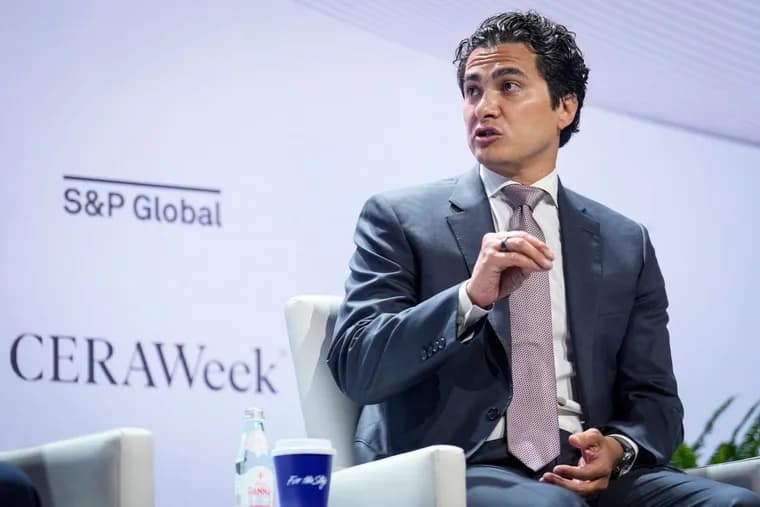
Crusoe said Thursday it raised $3.9 billion in a Series F round, taking its valuation to $30.9 billion. The round was co-led by Atreides Management, Mubadala Capital, and Valor Equity Partners, with Founders Fund, GIC, Nvidia, Qatar Investment Authority, Radical Ventures, and TPG also participating, according to Crusoe. It comes 10 months after Crusoe raised $1.38 billion at a $10 billion valuation last October, so the company's valuation has roughly tripled in under a year.
Alongside the raise, Crusoe named three new board members: Cloudflare CFO Thomas Seifert; Bill Stein, partner and CIO at Primary Digital Infrastructure; and JB Straubel, founder and CEO of Redwood Materials, who also sits on Tesla's board. Straubel already had ties to Crusoe: he personally invested in the company in 2021, and Crusoe later became the first customer of Redwood's energy storage business.
The eight-year-old company plans to use the new capital to finance existing data center projects, including a large site in Abilene, Texas, used by OpenAI, plus smaller modular units it calls Spark. These are AI factories that can be transported by truck and connected to large power sources almost anywhere. Because Crusoe manufactures the Spark units at its own facilities, it says it can deploy compute capacity quickly without large construction crews, and the smaller footprint can also help it avoid some of the local community backlash that has hit larger data center complexes.
CEO and co-founder Chase Lochmiller said in a statement that he believes AI will usher in an era of abundance, but that reaching it means "controlling the infrastructure from electrons to tokens, and we're grateful to have investors who share that conviction."
Crusoe makes money three ways: leasing data center space to customers that bring their own GPUs, renting out its own GPUs, and selling compute power for running AI models, known as inference. That model has helped make it one of the most valuable AI infrastructure companies. Bloomberg has reported that Crusoe recently signed a $13 billion, five-year cloud contract to supply quantitative trading firm Jane Street with GPUs and AI infrastructure, and Axios reported last month that Crusoe has met with investment bankers, including Goldman Sachs and Morgan Stanley, to discuss a potential IPO.
Crusoe was founded in 2018 as a crypto mining operation powered by flared natural gas, before pivoting to AI infrastructure as compute demand grew. Its customers include Meta, Microsoft, and Oracle, alongside OpenAI and Jane Street.
Key facts
- Crusoe raised $3.9 billion in a Series F round, pushing its valuation to $30.9 billion; the round was co-led by Atreides Management, Mubadala Capital, and Valor Equity Partners, with Founders Fund, GIC, Nvidia, QIA, Radical Ventures, and TPG also participating.
- Three new board members joined: Cloudflare CFO Thomas Seifert, Primary Digital Infrastructure's Bill Stein, and Redwood Materials founder and CEO JB Straubel, who also sits on Tesla's board and personally invested in Crusoe back in 2021.
- The capital will fund existing data center projects, including an Abilene, Texas site used by OpenAI, plus truck-transportable modular "Spark" AI factories built to connect to power sources almost anywhere.
- Bloomberg has reported Crusoe signed a $13 billion, five-year cloud contract to supply Jane Street with GPUs and AI infrastructure, and Axios reported the company has met bankers, including Goldman Sachs and Morgan Stanley, about a possible IPO.
- The raise comes 10 months after Crusoe's $1.38 billion round at a $10 billion valuation last October; the eight-year-old company started in 2018 as a crypto mining operation before pivoting to AI infrastructure.
Why it matters
Crusoe's valuation has roughly tripled in ten months, from $10 billion last October to $30.9 billion now, at a moment when investors are increasingly betting on the physical layer of AI (power, data centers, and modular compute) rather than only on models. The size of the round and the roster of co-leads and participants, including Nvidia and sovereign funds like Mubadala Capital and the Qatar Investment Authority, signal continued confidence in AI infrastructure spending even as build-out costs and power constraints grow more visible across the industry.
Who it affects
OpenAI relies on Crusoe's large Abilene, Texas site; Jane Street is tied to Crusoe through a reported $13 billion, five-year GPU and infrastructure contract; and Meta, Microsoft, and Oracle are named customers as well. The three new board members bring finance, infrastructure, and materials expertise: Cloudflare's CFO, an infrastructure-fund CIO, and Redwood Materials' CEO, who also sits on Tesla's board and has personal investment ties to Crusoe going back to 2021.
How to use it
Crusoe's pitch to potential customers is speed and flexibility: its modular Spark units are manufactured in-house, can be transported by truck, and connect to large power sources almost anywhere, letting Crusoe stand up compute capacity without the large construction workforce a traditional data center build requires. Companies that need to add AI compute quickly, or in locations where a full-scale complex would draw local opposition, are the ones this model is built for; Crusoe itself already leases space to customers who bring their own GPUs, rents out its own GPUs, and sells inference compute directly.
How solid is it
The figures on the raise, the new board members, and the business model come directly from Crusoe's own statement to TechCrunch. The Jane Street contract and the IPO talks are secondhand: TechCrunch attributes them to earlier reporting by Bloomberg and Axios respectively, rather than confirming them independently, so those two claims carry the reliability of their original outlets.
Risks and caveats
The source does not break out how the $3.9 billion will be split between the Abilene project and the Spark rollout, nor does it give a location, size, or headcount for the Spark factories beyond their being truck-transportable. The IPO is exploratory only: Crusoe has met with bankers to discuss the idea, not announced a decision or a timeline. No revenue, profit, or employee-count figures for Crusoe are given, so the scale of the business behind the valuation is not independently visible from this report.
“controlling the infrastructure from electrons to tokens, and we're grateful to have investors who share that conviction.”
— Chase Lochmiller, Crusoe co-founder and CEO