Exoskeletons are moving into rescue, factory and military use
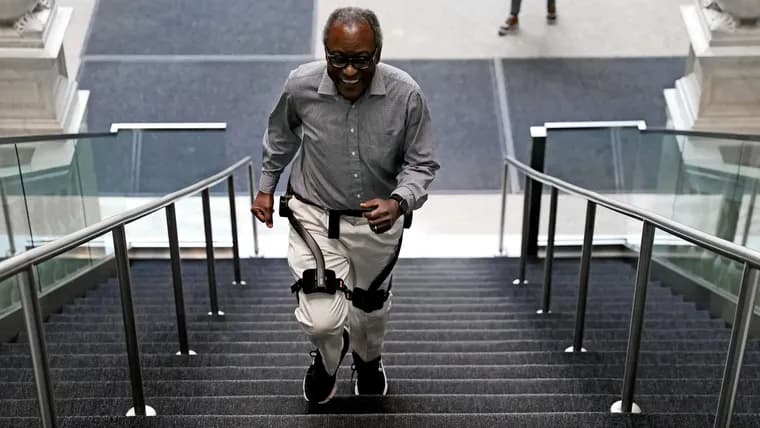
An Ars Technica feature argues that human exoskeletons, powered frames worn on the body to enhance physical capability, are moving into real-world use.
It opens with Seattle Mountain Rescue. This year, members have been hiking into the wilds of the US Pacific Northwest wearing powered assistive devices attached to their hips and legs. The devices are designed to increase lower-body strength when climbing or carrying heavy loads. They are being tested to see whether they can boost rescuers' speed and endurance during searches for stranded people.
The article explains that such devices attach to parts of the body to create an external, or "exo", mechanical structure, and that this powered frame enhances the wearer's physical capabilities.
Industry is already using them, it says. In physically demanding fields, workers are increasingly wearing these devices during strenuous tasks. IKEA has used SuitX exoskeletons for several years to help warehouse workers handle heavy materials. Ford, Boeing and "Mazda Toyota" (the article's wording) have also adopted the technology on some of their assembly lines.
In Finland, a recent project called ExoPELA assessed whether exoskeletons could reduce muscle load and strain in rescue and firefighting work. The article says it found noticeable benefits for users in certain real-world tasks.
The military angle: in early 2026 the Ukrainian military revealed that its soldiers had been using Hypershell exoskeletons on the front lines to help carry artillery shells. Colonel Vitalii Serdiuk told the newspaper Ukrainska Pravda in March that, according to test results, soldiers wearing the devices "become less fatigued, work faster, and maintain combat effectiveness for longer."
There is also a consumer and clinical market. Multiple devices designed for everyday assistance, rehabilitation and exercise are now available. Some estimates value the whole sector at around $500 million (£370 million) currently and predict it could double or triple in size by the mid-2030s.
The article says exoskeleton technology has progressed significantly over the past decade, largely because robotic motors, sensors and control systems became more affordable and accessible. It adds that the idea of augmenting human performance with exoskeleton-like devices is much older than that.
Key facts
- Seattle Mountain Rescue members are testing powered hip and leg devices in the US Pacific Northwest this year, to see whether they boost rescuers' speed and endurance during searches.
- IKEA has used SuitX exoskeletons for several years in warehouses; Ford, Boeing and "Mazda Toyota" (as the article writes it) use the tech on some assembly lines.
- Ukraine's military revealed in early 2026 that soldiers use Hypershell exoskeletons to carry artillery shells; Colonel Vitalii Serdiuk cites test results showing less fatigue and faster work.
- A Finnish project, ExoPELA, found noticeable benefits for users in certain real-world rescue and firefighting tasks.
- Some estimates put the sector at around $500 million now and say it could double or triple by the mid-2030s.
Why it matters
The article's case is that exoskeletons have moved from a long-standing idea to something people wear at work. It credits the past decade's progress largely to robotic motors, sensors and control systems becoming more affordable and accessible. The same hardware trend that drives wider robotics is making wearable strength aids practical, and the examples span rescue, retail logistics, car and aircraft assembly, and the front line.
Who it affects
Workers in physically demanding fields are the main group: warehouse staff handling heavy materials, assembly-line workers, and rescue and firefighting crews. Soldiers carrying heavy loads such as artillery shells are another. Consumers and patients are also covered, since the article says devices for everyday assistance, rehabilitation and exercise are now available. Employers named include IKEA, Ford, Boeing and "Mazda Toyota" as the article writes it.
How to use it
The article is a survey rather than a buying guide, so it gives no prices or product comparisons. What it does show is where the devices are used: SuitX units to help warehouse workers with heavy materials, powered hip and leg devices to build lower-body strength when climbing or carrying loads, and Hypershell units for carrying artillery shells. Consumer and clinical devices for everyday assistance, rehabilitation and exercise are available.
How solid is it
The piece is a feature from Ars Technica. The corporate examples are stated as facts without detail. The Finnish ExoPELA finding is described only as noticeable benefits in certain real-world tasks, with no figures given for load or strain reduction. The Ukrainian claim is attributed to Colonel Vitalii Serdiuk, who cites test results; no test data or numbers are given beyond his statement. The market figure of around $500 million and the forecast of doubling or tripling by the mid-2030s are labelled "some estimates", and the source does not say who produced them.
Risks and caveats
The Seattle Mountain Rescue trial is under way, so whether the devices actually improve rescuers' speed and endurance is still being tested. The source does not give the make or model of the devices used there. The source does not say which assembly lines at Ford, Boeing or "Mazda Toyota" use the technology, or since when. The source does not say how many Ukrainian soldiers use Hypershell devices or how many Seattle Mountain Rescue members are in the trial. The market forecast is an estimate, not a measured result.
“become less fatigued, work faster, and maintain combat effectiveness for longer”
— Colonel Vitalii Serdiuk, describing test results for soldiers wearing exoskeletons, to Ukrainska Pravda