F-35 jets ship without radar as China's gallium export limits bite
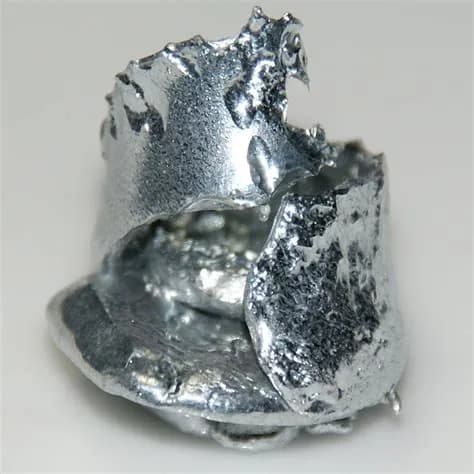
A sonar21.com analysis, built on digging that credits Kevin Wamsley of the Inside China Business podcast, argues that America's dependence on Chinese-controlled gallium is now visible in the cockpit of its newest fighter and in the direction of the next generation of wireless technology. The US Geological Survey's own figures are cited as the baseline: the United States has no primary domestic gallium production and its net import reliance sits at 100 percent, while China controls the overwhelming majority of global output, commonly cited at 94 to 98 percent of raw production. Gallium is a byproduct of bauxite and zinc processing, industries China dominates, so building a rival supply chain means building those base industries first, a decade-plus undertaking rather than a policy announcement. In December 2024 Beijing banned exports of gallium, germanium and antimony to the United States and explicitly barred sales to US military end-users, retaliation for American semiconductor export controls; the Pentagon had no gallium in its National Defense Stockpile to fall back on. In November 2025, as part of a broader Trump-Xi trade truce, China suspended only the civilian portion of that ban until late November 2026 and moved it to a licensing regime; the prohibition on sales to military end-users stayed in force. The most visible symptom: F-35s built from Lot 17 onward have been delivered with counterweights, plain ballast, in the nose cone where the radar should sit, a fact the article says is confirmed by photographic evidence and industry reporting after the Department of War initially denied it, with reporting putting the number of affected jets in the hundreds. The immediate cause is the delayed development and certification of the AN/APG-85, the gallium-nitride (GaN) radar meant to replace the older AN/APG-81; GaN delivers more power and better thermal efficiency but the APG-85 demands roughly 82 kilowatts, forcing redesigns to the aircraft's forward fuselage, and jets already reworked for the new radar cannot revert to the old one. Gallium scarcity sits underneath that engineering delay: GaN radars consume far more gallium than earlier designs, the Defense Logistics Agency has struggled to source it because Japan and Germany lack the capacity to fill the gap, and prices have risen. China, meanwhile, has reportedly moved its own J-20 fighter to a next-generation radar built on the same GaN technology, narrowing the gap the APG-85 was meant to open. The same gallium-nitride technology underpins the EA-18G Growler's jammers, the F-35's own electronic-warfare suite and large ground-based radar arrays, so the article frames the exposure as systemic rather than confined to one airframe. The piece then extends the argument to 6G. It cites a Nature-published result from a team at Peking University and the City University of Hong Kong, who built what they call the world's first "all-frequency" 6G chip, a device roughly 11 by 1.7 millimeters that integrates the entire wireless spectrum from 0.5 to 115 gigahertz on a single chip, a span that previously needed nine separate radio systems. In testing it exceeded 100 gigabits per second on a single channel, described in independent write-ups as roughly 500 times the real-world speed most people get from 5G today, and it can retune across 6 gigahertz of spectrum in 180 microseconds. Notably, this chip is built from thin-film lithium niobate rather than gallium, but the article's point is that China controls both the raw materials and the trained engineers turning them into deployable systems, and that 6G's real value lies in industrial uses such as robotics, manufacturing and drone networks rather than consumer downloads. Global 6G standards are still being written by bodies including 3GPP, the ITU and the O-RAN Alliance, with first formal specifications targeted around 2029 and commercial networks around 2030, and the article argues whoever fields working systems first shapes those standards. The Trump administration has declared 6G foundational to US national security, foreign policy and economic prosperity and set a policy of American leadership in it. Boston Consulting Group is cited projecting that 5G's roughly $1 trillion in economic output could grow toward $18 trillion by 2035. The article's conclusion: the US cannot reliably fit radar into hundred-million-dollar aircraft today in part because it stopped producing a metal forty years ago, and on the current trajectory the same dependency could extend to the phones, drones, robots and standards of the 2030s.
Key facts
- The US has no domestic gallium production and 100 percent import reliance, while China controls a commonly cited 94 to 98 percent of global raw output.
- F-35s from Lot 17 onward have shipped with nose-cone counterweights instead of radar, with reporting putting the affected count in the hundreds, because the gallium-nitride AN/APG-85 radar (which needs roughly 82 kilowatts) is delayed and gallium itself is scarce.
- Beijing banned gallium exports to US military end-users in December 2024; a November 2025 Trump-Xi trade truce suspended only the civilian portion of the ban until late November 2026, leaving the military export ban in place.
- A Nature-published 6G chip from Peking University and City University of Hong Kong researchers covers 0.5 to 115 gigahertz on one 11 by 1.7 millimeter chip, exceeded 100 gigabits per second in testing (roughly 500 times real-world 5G speeds), and is built from lithium niobate rather than gallium.
- Boston Consulting Group projects 5G's roughly $1 trillion economic output could grow toward $18 trillion by 2035, with global 6G standards (first specs targeted around 2029) still up for grabs.
Why it matters
The article ties two problems to the same root cause. In the near term, gallium scarcity is a direct factor in why hundreds of F-35s, the US military's flagship stealth fighter, have shipped without functioning radar. In the longer term, the same Chinese dominance over gallium and over the trained engineers who turn raw materials into deployable hardware is framed as shaping who leads 6G, the next generation of wireless standards, whose value the piece argues lies mainly in industrial applications like robotics and manufacturing rather than consumer bandwidth.
Who it affects
US defense contractors and the Pentagon, whose F-35 and electronic-warfare programs (including the EA-18G Growler's jammers and ground-based radar arrays) depend on gallium-nitride components sourced through a chain that runs through Chinese-controlled supply. US policymakers weighing how to rebuild a domestic gallium industry that has not existed for forty years. And, on the 6G side, US industry and standards bodies (3GPP, the ITU, the O-RAN Alliance) racing China's Peking University and City University of Hong Kong researchers, whose chip design has already been published in Nature.
How to use it
The article gives two concrete dates worth tracking: the civilian gallium export licensing regime China introduced runs only until late November 2026, and 6G's first formal specifications are targeted around 2029 with commercial networks around 2030, meaning the standards fight is still open. Readers assessing exposure to this dependency should note the distinction the piece draws: the civilian gallium supply reopened under a revocable license, while the ban on sales to military end-users never lifted.
How solid is it
The core US-China trade figures come from the US Geological Survey, a primary source, and the 6G chip claim is grounded in a peer-reviewed Nature publication, both solid. The F-35 counterweight story is described as confirmed by photographic evidence and industry reporting after an initial denial from the Department of War, which strengthens it, though the exact number of affected jets is only given as "in the hundreds." Several figures are explicitly hedged in the source itself, including the 94 to 98 percent China production share ("commonly cited"), the claim about China's J-20 radar ("reportedly"), and the 500-times 5G speed comparison, which the piece attributes to independent write-ups rather than the original researchers. The Boston Consulting Group's $18 trillion 2035 projection is a forecast, not a measured outcome.
Risks and caveats
The piece does not name the individual author of the sonar21.com post, nor any individual scientist on the 6G research team beyond their institutions. It gives no specific figure for how much gallium prices have risen, no detail on the ground-based radar arrays it says were destroyed in Persian Gulf fighting, no exact F-35 count beyond "hundreds," and no timeline for when the APG-85 radar delay might be resolved. The article is an opinion-inflected analysis built on a secondary source (a podcast) rather than original reporting, and it deliberately links a near-term military supply problem to a longer-run technology-standards argument; readers should weigh the well-sourced factual claims separately from the piece's broader strategic framing.
“The chokehold didn't release; it was repositioned.”
— sonar21.com analysis