F1 drivers slam power unit software bug that delayed Bahrain GP start
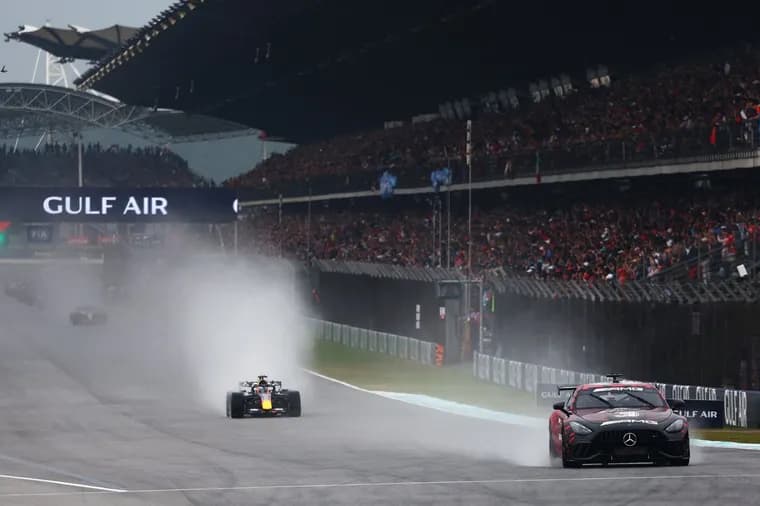
The start of the Bahrain GP, run at a wet Sepang circuit in Malaysia, was aborted after a large number of cars suffered crippling power unit software problems. It was the first wet weather race contested by the 2026 generation of cars. According to Motorsport.com, a bug that appears when drivers go at very low speeds, triggered by the power unit controller's wet weather mode, left drivers stuck in idle mode at various points of the two planned formation laps.
With several cars stuck in that idle loop, the FIA had to code and deliver a software patch quickly, and all 11 teams installed it during the red flag stoppage. The patch lifted the usual wet weather power reduction in the affected zones. The race started after a 50-minute delay, which the article calls a major blemish for F1 ahead of an otherwise entertaining, mixed-weather race. Drivers already had misgivings about the battery-dominated racing and heavy electronics of the 2026 formula, and the incident did little to win them over.
Lando Norris, one of the few Mercedes-powered drivers to suffer the glitch, called it "horrible" and said it proves F1 should not have "any of that stuff, the electronic side". The article presents this as further proof, in his view, that F1 should move away from hybrids. Piastri said he had never seen an F1 race delayed by a bug, called it "a new one", and said he got stuck for about a second. He joked that when the turbo fails you might as well push the car. He added that it would be unfair to point the finger before there is an explanation.
Cadillac's Sergio Perez, who drove one of several affected Ferrari-powered cars, was harsher. He said it felt like being in a rental kart that had run out of time: you put your foot down and nothing came. He said the sport will learn from it, but that what happened was "totally unacceptable for the sport". Haas driver Oliver Bearman said it was scary to have his throttle pedal cut off by something beyond his control, and that he did not know the FIA could control the throttle pedal. In his words, the engine was just idling and it looked like everybody had stopped working.
Aston Martin's Fernando Alonso said there is now "too much technology" in the series and felt that the spectators do not really appreciate it either. Race winner Max Verstappen of Red Bull Racing, whose slow getaway helped trigger the bug, likened the formation lap chaos to the Lego go-kart race in Silverstone. He said the engines are so complicated and so much software is implemented that this is the problem. He triggered it first, looked in his mirror and wondered whether the others were waiting for him. After a lap he still saw eight other cars crawling.
Key facts
- A software bug at very low speeds, triggered by the power unit controller's wet weather mode, left cars stuck in idle mode during the two planned formation laps at a wet Sepang.
- The FIA coded and delivered a patch that all 11 teams installed during the red flag; it lifted the usual wet weather power reduction in the affected zones.
- The race started after a 50-minute delay; it was the first wet weather race for the 2026 generation of cars.
- Norris, Perez, Bearman, Alonso and Verstappen all criticised the electronics; Perez called the episode "totally unacceptable for the sport".
- Piastri said it would be unfair to point the finger before there is an explanation.
Why it matters
Race starts rarely fail because of code. Piastri said he had never seen an F1 race delayed by a bug, and the cause here was a software mode meant to cut power in the wet. The incident came in the first wet race for the 2026 cars, and it fed an existing complaint among drivers about the battery-dominated formula and the electronics in charge of it.
Who it affects
All 11 teams had to install the FIA patch, and the cars named as hit include Mercedes-powered (Norris) and Ferrari-powered (Perez) ones. Drivers were the most exposed: Bearman described a dead throttle pedal, and Perez said he was pressing the pedal and nothing came. Spectators and the series itself are also in the frame, since Alonso doubted fans appreciate the technology and Verstappen said this is not what you want for the sport.
How to use it
There is nothing to install or adopt here. The useful takeaway for engineers is the failure pattern the article describes: a protective mode, here the wet weather power reduction, interacted badly with very low speeds and left cars in idle mode. The fix was a patch that lifted that reduction in the affected zones.
How solid is it
This is a news report from Motorsport.com built largely on driver comments after the race, and the technical cause comes from the article's own account. No official FIA statement or root-cause report is quoted. Piastri himself says it is unfair to point the finger before there is an explanation.
Risks and caveats
Driver quotes are opinions and personal accounts, such as Piastri's "about a second" and Verstappen's count of eight crawling cars. Norris's call to move away from hybrids is the article's paraphrase of his view. Some remarks, like Piastri's push-the-car line, were made mockingly. The source does not say whether the patch was tested before installation, and no penalties or formal FIA consequences are mentioned.
“But what happened today is totally unacceptable for the sport.”
— Sergio Perez, Cadillac driver