Fincher's Netflix film Cliff Booth faces unconfirmed AI suspicions
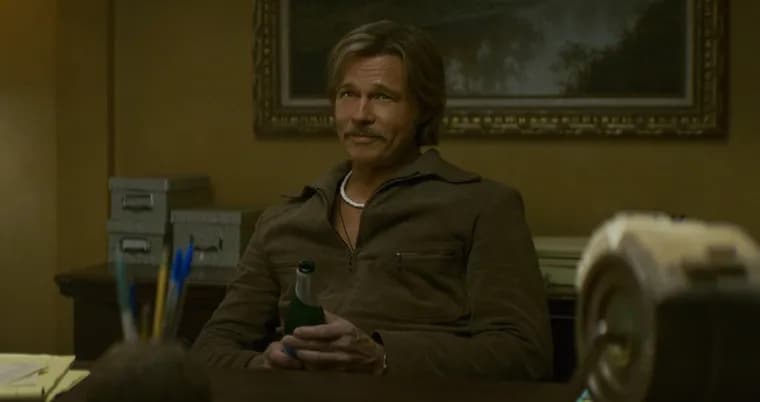
Early screenings of David Fincher's The Further Mis-Adventures of Cliff Booth, the Once Upon a Time in Hollywood sequel starring Brad Pitt, have set off a row over whether generative AI was used to make it. People have claimed the film is chock-full of uncanny, inconsistent visuals that feel more like slop than the polished work you would expect from the director of Fight Club and The Social Network.
The reaction followed critics' screenings held last week, ahead of the film's premiere on November 25. One of the loudest voices was YouTuber and director Patrick Tomasso, who wrote on X that he left his screening "completely gutted" and that the film had "some of the most blatant and egregious AI use" he has ever seen from a major studio. He also insisted that AI-generated footage can be seen in the trailers posted online, and said he was confident the film is full of "slop as you know and loathe it. The shit you can pump out of Higgsfield." Others echoed him, writing that "the amount of AI in the CLIFF BOOTH movie is astounding to an absurd degree" and vowing to "never watch another Fincher, Pitt or Tarintino [sic] movie again."
Not everyone agreed. Some critics enjoyed the film and suggested that the bad AI people thought they were seeing might simply have been bad CGI. Netflix has neither confirmed nor denied whether AI was used in any capacity to make the film. Its heavy involvement in the production and its recent investments in generative AI left many suspicious.
Fincher's own words added fuel. In a recent Los Angeles Times interview, asked about AI, he said: "I'm not a Luddite, so I don't fear the unknown." He reasoned that the anti-AI crowd is asking artists to stop iterating on their creative process: "Is everyone satisfied that we have figured this art form out enough that what we really need to do is go back to celluloid? How long have people painted? 40,000 years? We're talking about a thing that's a hundred years old and everyone's going, 'Stop. Pencils down. No more iterating. It's not necessary to have at your fingertips the ability to change the color of that person's eyes.' Well, it exists. Should we not use it?' The Verge says the spiel made it sound like he might be jumping on the AI bandwagon.
The film is set about a decade after Once Upon a Time in Hollywood and picks up in 1977. Booth (Pitt) has left stunt work behind to become a fixer who quietly deals with scandalous problems for Hollywood elites, while still working side gigs as a projectionist and bartender. The story centres on his budding romance with critic-turned-talent agent Karen Crosby (Elizabeth Debicki) and his working relationship with Charlie Peters (Scott Caan), a TV actor who needs Booth's services to keep his wife (Carla Gugino) from being murdered.
At least one trailer has baffling shots of what looks like people sitting backward in a horse-drawn carriage, which make it seem there might be generative AI in the mix. The Verge says it is hard to tell from the trailers whether that is the case, but with many creators trying to pass off AI generations as human-made art, the suspicion is unsurprising.
The other piece of context is InterPositive. Netflix has been incorporating AI into its films and series for some time, and it seemed to double down earlier this year when it acquired Ben Affleck's startup InterPositive for around $600 million. Rather than turning text into visual outputs like many commercial AI tools, InterPositive's models are designed to generate assets based on footage captured during a film's production. According to Netflix, the AI was built to make it easier to tweak details like lighting or remove unwanted background elements, and Netflix stressed that the models are highly customizable and well suited to replicating a human director's signature style. Netflix absorbing InterPositive's development team is part of why speculation about Cliff Booth has been so intense.
The Verge's conclusion is conditional: if the film actually uses AI and the visuals really are as bad as some have said, it would be a major knock against both Netflix and Fincher, a director known for meticulous, even obsessive, attention to detail.
Key facts
- After critics' screenings last week, social media users accused David Fincher's The Further Mis-Adventures of Cliff Booth of using generative AI, pointing to uncanny, inconsistent visuals; the film premieres November 25.
- YouTuber and director Patrick Tomasso called it "some of the most blatant and egregious AI use" he has seen from a major studio and said AI footage is visible in the trailers; some critics countered that it may just be bad CGI.
- Netflix has neither confirmed nor denied any AI use in the film, but it bought Ben Affleck's startup InterPositive earlier this year for around $600 million.
- In a recent Los Angeles Times interview Fincher said "I'm not a Luddite, so I don't fear the unknown" and asked of AI tools, "Should we not use it?"
- The Verge says it is hard to tell from the trailers whether AI was used; one trailer has odd shots of people sitting backward in a horse-drawn carriage.
Why it matters
A prestige director's film, made with heavy Netflix involvement, is now at the centre of a public argument about generative AI in cinema before it has even opened. Netflix bought InterPositive for around $600 million earlier this year, so the question of whether its tools reach a major release is live. The Verge notes that if the film does use AI and the visuals really are as bad as some say, it would be a major knock against both Netflix and Fincher, who is known for meticulous attention to detail.
Who it affects
Fincher, Netflix and the film's cast, including Brad Pitt, Elizabeth Debicki, Scott Caan and Carla Gugino, face the reputational fallout. Viewers and critics are divided: some vowed on social media to skip future Fincher, Pitt or Tarintino [sic] films, while others enjoyed the film. Filmmakers and artists more broadly are affected too, since Fincher framed opposition to AI as asking artists to stop iterating.
How to use it
There is no product to use here. The practical takeaway is to treat the AI claims as unconfirmed suspicion until Netflix or the filmmakers say something. The film premieres November 25, so viewers will be able to judge the visuals for themselves, and the trailers are online. It helps to know what InterPositive is claimed to do: according to Netflix, it generates assets from footage captured during production, to tweak lighting or remove unwanted background elements, rather than turning text prompts into images.
How solid is it
Weak. The accusations come from moviegoers on social media, with Patrick Tomasso the most prominent voice, and rest on how the visuals looked. Netflix has neither confirmed nor denied AI use. No evidence is given that InterPositive's tools were used on Cliff Booth. Tomasso's claim that Higgsfield-type output appears in the film is his own opinion; no tool is established as used. Fincher's quotes were a response about AI in general, not an admission about this film. Some critics suggested the odd visuals could be bad CGI.
Risks and caveats
The Verge itself says it is hard to tell from the trailers whether AI was used, and its closing verdict is conditional on both AI use and poor visuals being real. The carriage shots in one trailer are the only specific example the article names. Fincher's remarks were read by some as a sign he is embracing AI, but they were an answer about AI broadly. Judging the film's quality from critics' screenings and social posts alone is also risky, since critics are split on it.
“Well, it exists. Should we not use it?”
— David Fincher, in a Los Angeles Times interview, on AI tools