Hibernation wipes out half a mouse's synapses, yet memories survive
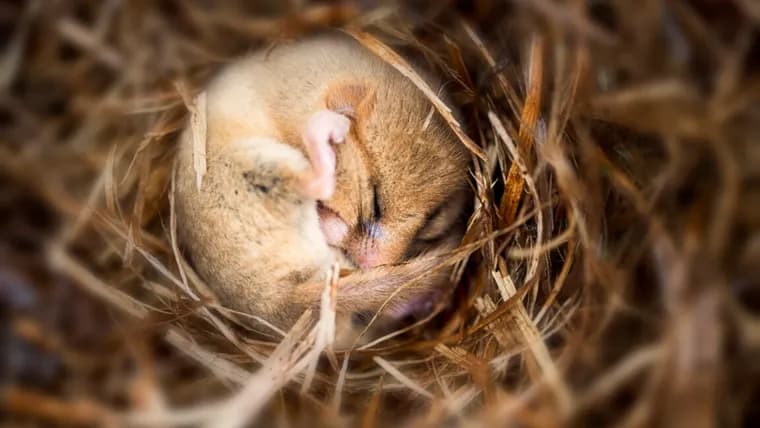
Kazumasa Tanaka, a neuroscientist at the Okinawa Institute of Science and Technology Graduate University in Japan, led a team that used an extreme case to probe a long-standing puzzle in neuroscience: how a memory that lasts for years can be stored in synaptic connections that are known to change substantially every few days. "If you compare the arrangement of these connections on day one with the same on day four or five, it's very, very different," Tanaka says. To push that instability to its limit, the team induced a hibernation-like state in mice and reported in a recent study in Science that the procedure basically erased the state of more than half of the animals' synapses. The mice nonetheless appeared to have kept their memories.
The state the team used, called QIH (Q-neuron-induced hypothermia and hypometabolism), is triggered by activating a population of Q neurons in the hypothalamus. The technique to do this artificially was developed in June 2020 by a team led by Takeshi Sakurai, a neuroscientist at the University of Tsukuba and a collaborator on Tanaka's study. The underlying neural circuit that triggers hibernation is conserved across mammals and is present even in species that never hibernate in the wild, mice included.
"With our protocol, we can bring mice's body temperature down to somewhere around 20 degrees Celsius, and their heart rate and breathing rate decrease significantly as well," Tanaka explains. Whether QIH counts as genuine hibernation depends on the reference animal used for comparison. Bears reduce their metabolic demand during hibernation but keep their body temperature roughly constant, around 36 to 37 degrees Celsius. Some hibernating squirrel species go far further, letting body temperature drop close to freezing. "Artificial hibernation sits somewhere in the middle of that spectrum," Tanaka says.
Key facts
- Kazumasa Tanaka's team at the Okinawa Institute of Science and Technology Graduate University reported in Science that mice retained their memories after an induced hibernation-like state erased more than half of their synapses.
- The state, called QIH (Q-neuron-induced hypothermia and hypometabolism), is triggered by activating Q neurons in the hypothalamus.
- The technique for artificially triggering QIH was developed in June 2020 by Takeshi Sakurai's team at the University of Tsukuba, a collaborator on Tanaka's study.
- Under the QIH protocol, mice's body temperature drops to about 20 degrees Celsius, with heart rate and breathing slowing significantly, according to Tanaka.
- The hibernation-triggering neural circuit is conserved across mammals and present even in mice, which never hibernate in the wild; for comparison, hibernating bears stay near 36 to 37 degrees Celsius while some squirrels drop close to freezing.
Why it matters
The leading idea for how memories are stored is that learning strengthens and physically enlarges the connections, or synapses, between the neurons involved. But those connections are known to be highly plastic, changing noticeably from one day to the next, which raises a hard question: how can a memory last for years if the physical structure that supposedly holds it keeps shifting? Tanaka's team used an extreme test case, wiping out more than half of a mouse's synapses through induced hibernation, to see whether memory could survive that scale of disruption. The mice appeared to keep their memories anyway, a result that complicates the simple version of the theory that synapse strength alone is the memory.
Who it affects
The finding speaks directly to neuroscientists studying how and where memories are physically stored, including the teams at the Okinawa Institute of Science and Technology Graduate University and the University of Tsukuba involved in this work. It also bears on researchers working on hibernation and torpor biology, since the QIH technique used here builds on the 2020 discovery of how to artificially trigger the hibernation circuit in a species, the mouse, that does not hibernate naturally.
How to use it
There is no product or consumer application here. The practical takeaway for other researchers is the QIH technique itself: activating Q neurons in the hypothalamus lets a lab induce a hibernation-like drop in body temperature and metabolism, to roughly 20 degrees Celsius, in an animal that would not otherwise hibernate, and then study what happens to its brain and behavior during and after that state.
How solid is it
The result comes from a peer-reviewed study in Science, and it builds on a specific, previously published technique, the 2020 method for artificially activating the hibernation circuit, rather than a one-off procedure. The account here is based on the article's framing of the study and does not include the exact percentage of synapse loss beyond "more than half," the number of mice tested, or a description of the specific memory tests used to conclude the mice "kept their memories," so those details are not covered.
Risks and caveats
The claim that mice "kept their memories" is being taken on the article's word here; without the underlying behavioral tests or sample size, the strength of that conclusion can't be independently assessed from this account. The study does not, in the material available, offer a mechanism for how memory could survive losing more than half of a mouse's synapses, which remains an open question. The work is also confined to mice under an artificially induced state, not natural hibernation, so any extension to naturally hibernating animals or to humans is not something the source supports.
“If you compare the arrangement of these connections on day one with the same on day four or five, it's very, very different.”
— Kazumasa Tanaka, neuroscientist at the Okinawa Institute of Science and Technology Graduate University