Iran-linked cyberattack shut down a UK power plant
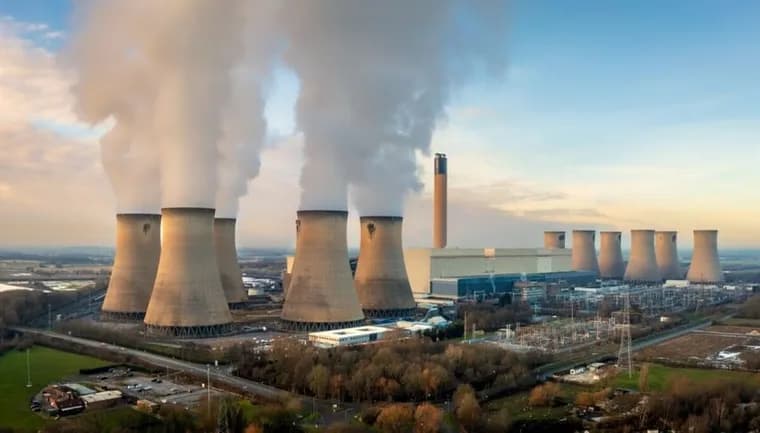
A suspected Iran-linked cyberattack knocked out a small-scale UK power plant, a British government spokesperson confirmed to The Register on Monday, August 24, 2026. The spokesperson said the incident affected a "small-scale energy generator" and that there was no risk to the wider energy system at any point, describing the UK's energy system as "highly resilient" and saying the government works "closely with the energy sector to protect infrastructure." UK Energy Minister Michael Shanks said his department briefed energy company CEOs after the incident and "shared further advice with companies on the steps they should take to stay secure." Officials did not disclose which power station was hit, and the UK government has not formally attributed the attack to Iran or to any other government or hacking group.
The Telegraph, which first reported the story, said the attack shut the plant down for four days and called it the first disruptive Iranian cyberattack of its kind in the UK. That duration and characterization come from The Telegraph's reporting rather than from the statement the government gave directly to The Register, and no technical detail on how the plant was compromised has been made public.
The UK incident happened around the same time as a separate wave of intrusions into American water utilities. In late July, suspected Iranian cyber operatives disrupted more than 30 water facilities in Minnesota; similar intrusions were later reported in at least 11 other US states, putting the total at 12 states. Neither state nor federal US officials have attributed those breaches to Iran, but private-sector threat analysts told The Register that Iran is "almost certainly" responsible, framing the activity as a direct response to the ongoing Middle East conflict. The reporting does not describe the UK and US incidents as a single coordinated campaign, only as roughly concurrent.
Those earlier US water-utility intrusions do not appear to have involved AI assistance and mostly relied on internet-connected programmable logic controllers (PLCs). The week before this report, however, the FBI and four other federal agencies warned that attackers are now using AI-generated exploitation scripts to break into internet-exposed Siemens S7 Series PLCs at water, manufacturing, energy and other critical facilities, calling the danger an active threat rather than a theoretical one. Cynthia Kaiser, senior vice president at the Halcyon Ransomware Research Center and a former FBI cyber analyst, told The Register the activity "appears to be a continuation of the same suite of activity we suspect is affiliated with Iran targeting PLCs," adding that these operational technology systems "underpin essential health, safety, and critical infrastructure across society." The article ties the AI-generated exploit warning specifically to the earlier US water-utility attacks; it does not confirm that the same method was used against the UK power plant.
Key facts
- A suspected Iran-linked cyberattack shut down a small-scale UK power plant; a British government spokesperson confirmed the incident on Monday, August 24, 2026, and said there was no risk to the wider energy system.
- The Telegraph, which first reported the story, said the plant was down for four days and called it the first disruptive Iranian cyberattack of its kind in the UK; the UK government has not formally attributed the attack to Iran.
- In late July, suspected Iranian operatives disrupted more than 30 water facilities in Minnesota, with similar intrusions later reported in at least 11 other US states, for a total of 12 states affected.
- Neither US state nor federal officials have attributed the water-utility hacks to Iran, but private-sector threat analysts told The Register that Iran is almost certainly responsible, calling it a response to the ongoing Middle East conflict.
- The FBI and four other federal agencies warned that attackers are now using AI-generated exploitation scripts to break into internet-exposed Siemens S7 Series PLCs across water, manufacturing, energy and other critical facilities, calling the threat active rather than theoretical.
Why it matters
The Telegraph frames the incident as the first disruptive Iranian cyberattack of its kind against UK infrastructure, a milestone even though the plant itself was small and the wider grid was never at risk. It also lands in the same window as a broader wave of suspected Iran-linked intrusions into US water utilities and a fresh federal warning that attackers are turning to AI-generated exploit scripts against industrial control systems. Read together, the reporting points to state-linked actors probing Western critical infrastructure more actively, with AI tools potentially lowering the bar for attacking the programmable logic controllers that run physical plant.
Who it affects
Directly, an unnamed small-scale UK power generator and its operator, plus the energy company CEOs the UK government briefed after the incident. In the US, water utility operators across at least 12 states, starting with more than 30 facilities in Minnesota. More broadly, any operator running internet-exposed Siemens S7 Series programmable logic controllers in water, manufacturing, energy or other critical facilities, since that is the equipment named in the joint federal warning.
How to use it
There is no product to adopt here, but there is guidance to act on. After the UK incident, the government briefed energy sector CEOs and shared advice on the steps to stay secure, though the specifics were not made public. Separately, the FBI and four other US federal agencies issued a joint warning urging operators of internet-exposed Siemens S7 Series PLCs to treat AI-generated exploitation attempts as an active threat rather than a theoretical one. Organizations running that hardware, particularly in water, manufacturing and energy, are the direct audience for that advisory.
How solid is it
The UK side rests on an on-the-record confirmation from a British government spokesperson and public statements from Energy Minister Michael Shanks, though the spokesperson was not named. The four-day outage figure and the characterization of the attack as the first disruptive incident of its kind come from The Telegraph's reporting, not from the statement the government gave directly to The Register. On the US side, the Iran attribution is explicitly not made by any state or federal official; it comes from unnamed private-sector threat analysts cited by The Register. The PLC-targeting warning itself is a joint statement from five federal agencies including the FBI, a comparatively firm source. Kaiser, a former FBI cyber analyst, brings a practitioner's perspective to the Iran-affiliated assessment, though that too falls short of an official attribution.
Risks and caveats
Iran-linked in the headline reflects suspicion, not a formal attribution: neither the UK government nor US state or federal officials have pinned either set of hacks on Iran. The UK side withheld the name of the power station, the compromise method, and any casualty or financial-loss figures. The AI-generated exploit-script warning is tied to the earlier, separate US water-utility attacks; the article does not establish that the same method hit the UK plant. And the two incidents are described only as happening around the time of each other, not as parts of one confirmed campaign.
“At no point was there a risk to the wider energy system”
— British government spokesperson, on the UK power plant incident