Jensen Huang's exit from Nvidia leaves AI startup funding gap, VCs say
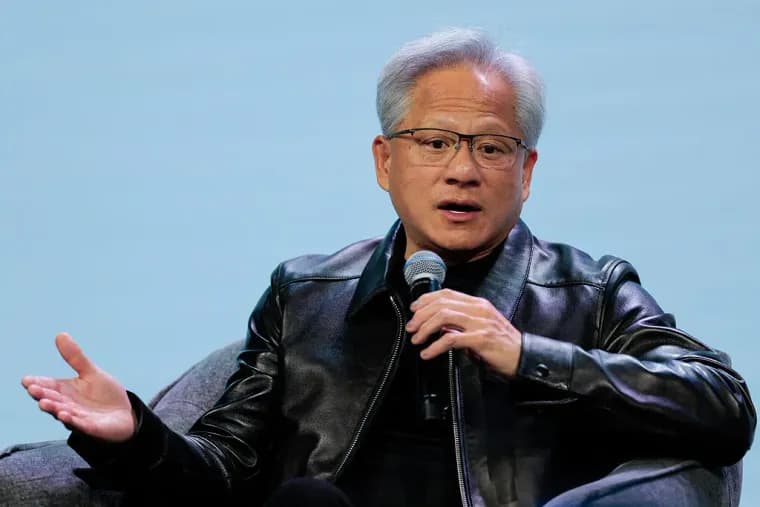
Jensen Huang, who co-founded Nvidia and led it for 33 years, has officially stepped down as CEO, TechCrunch reports. One neocloud founder told the outlet, on first hearing the news: "It's like a bomb went off." The article is about what his departure means for the startups that Nvidia has been funding.
The scale of that funding is the starting point. Over the last several years Nvidia has poured tens of billions of dollars into startups annually, and according to PitchBook it took part in 105 funding rounds this year alone, often as the largest investor. Investors told TechCrunch that Huang's absence leaves the startup ecosystem without one of its biggest champions and with far less capital for now. They say that could have a massive impact on dealmaking, valuations, funding and even competition. Maria Davidson, founder of Relational Capital, said: "If that direction changes, it'll be a big blow to so many young companies." Shamillah Bankiya of Dawn Capital put it more bluntly: "Nvidia is carrying almost every AI-native startup from application to neocloud."
Personal involvement mattered. According to Umesh Padval, managing partner at Seligman Ventures, most of the significant decisions to invest in startups came from Huang himself. Padval has known Huang since serving on the board of Mellanox Technologies, the networking chipmaker Nvidia acquired for approximately $7 billion in 2020. There is hope that Huang's eventual successor will resume the dealmaking spree, but investors are not hopeful that will happen in the short term.
Nvidia's interim CEO, Colette Kress, is expected to make some changes, especially to investments in the AI startups at the center of the billion-dollar data center build-out. Huang's heavy dealmaking there had been a source of concern for Wall Street. One investor said of Kress: "She's much more conservative. I don't think she's going to commit the same amount of money to keep the early-stage ecosystem going."
Nvidia's biggest bets were on neoclouds, inference providers and open weight models, which are expensive for smaller companies to build. Zain Javaid, co-founder of the hardware company Ghost, said Huang's initiatives are a big reason an ecosystem emerged despite that. The examples TechCrunch lists: Nvidia backed CoreWeave while it was still private; it joined two of Crusoe's rounds, including the $1.4 billion Series E; it bought Hugging Face this year for $13 billion (expected to close in 2027); and it holds stakes in Mistral AI, Lambda and Black Forest Labs. Nvidia was often the largest investor in these deals. Last year it wrote an $800 million check into a $2 billion Series B for Reflection AI, before the open source startup began to earn meaningful revenue, according to the Wall Street Journal.
The effect reaches beyond the US. Bankiya said Huang believed in open source and Europe, and that an end to that support outside America, including in Europe, would be "a massive funding and honestly ecosystem gap that no one can fill."
TechCrunch also notes the other side. Nvidia was so dominant that at times it felt like a monopoly: by backing so many companies with generous checks, it effectively locked them into its chips, which reinforced its market position. If it grows more conservative, that could leave more room for rivals and smaller competitors. The article adds that Google announced two new chips this week amid the Nvidia fallout.
Some investors hope large cloud companies and other chipmakers will fill part of the void. Dharmesh Thakker, a general partner at Battery Ventures, expects Big Tech rivals to compete for Nvidia's investment crown, depending on who brings the best combination of product, ecosystem and community to rival CUDA, Nvidia's software platform for running AI models on its GPUs, plus the financial power to bankroll the ecosystem. He doubts, though, that Google, Amazon, Microsoft or AMD will pour hundreds of millions into pre-revenue infrastructure startups the way Nvidia did. They may back mature startups to drive adoption of their chips and clouds.
One VC described how it worked under Huang: infrastructure companies that needed $100 million to $500 million in GPUs would often raise half of that from Nvidia at valuations of $1 billion or more, just to get started. Nvidia's participation gave other investors comfort to back them at those valuations. Now Nvidia is expected to be more selective with new companies and to write smaller checks into its existing portfolio, contributing to a drop in valuations. Padval said: "When Nvidia was on the cap table, everyone felt safe." Without that backing, investors say traditional VCs are likely to think twice before writing checks and may even pause certain dealmaking.
Still, few believe the slowdown in Nvidia's investing will by itself halt the broader AI boom. Amulya Vishwanath, a former employee of Huang who now runs her own VC fund, agreed he is a massive loss for Nvidia but said "founders and leaders must be held accountable" and that the ecosystem is bigger than one person: "That talent will, and must, continue to thrive."
Key facts
- Jensen Huang, who co-founded Nvidia and led it for 33 years, has officially stepped down as CEO; Colette Kress is interim CEO.
- Nvidia invests tens of billions a year in startups and joined 105 funding rounds this year, per PitchBook, often as the largest investor.
- Investors expect Nvidia to be more selective with new deals and write smaller checks into existing holdings, which could pull valuations down.
- Some investors hope big clouds and other chipmakers will fill the gap, but Battery Ventures' Dharmesh Thakker doubts they will fund pre-revenue infrastructure startups at Nvidia's scale.
- Few believe Nvidia's slowdown will by itself halt the wider AI boom, and less Nvidia money could leave more room for rivals.
Why it matters
Nvidia is not only the dominant chip supplier but also one of the biggest backers of the startups that buy its chips. Per TechCrunch, it took part in 105 rounds this year and often led them, and its presence let other investors back neoclouds and inference companies at valuations of $1 billion or more. If the person who made most of the big investment calls is gone and the company turns more conservative, the effect lands on dealmaking, valuations and competition across that part of the AI market. TechCrunch also notes that the same generous checks locked startups into Nvidia's chips, so less of them could open room for rivals.
Who it affects
Mainly neoclouds, inference providers, open weight model builders and other AI-native startups that relied on Nvidia as an anchor investor, including its existing portfolio: CoreWeave, Crusoe, Mistral AI, Lambda, Black Forest Labs and Reflection AI. Traditional VCs are affected too, since they leaned on Nvidia's participation for comfort. Investors also point to startups outside the US, especially in Europe, where Bankiya says Huang's support for open source mattered. Competing chipmakers and cloud companies may gain room to step in.
How to use it
For founders, the practical reading from the investors quoted is to expect a more selective Nvidia, smaller follow-on checks and more cautious traditional VCs, and to watch whether Google, Amazon, Microsoft or AMD back startups to drive adoption of their own chips and clouds. Thakker says that backing is more likely for mature startups than for pre-revenue infrastructure ones. For investors, the article suggests watching which rival builds a product, ecosystem and community that can compete with CUDA and has the money to bankroll it.
How solid is it
This is a single TechCrunch piece built on interviews with investors and founders, and it mixes reported facts with expectations. The figures are attributed: 105 rounds comes from PitchBook, the $800 million Reflection AI check from the Wall Street Journal. The "tens of billions" a year is not tied to a specific figure or source. The view that Kress is more conservative comes from one unnamed investor, not from an Nvidia announcement. Nvidia itself is not quoted and gives no statement on changes to its investment strategy. The neocloud founder, the investor and the VC quoted on deal sizes are not named. The article gives no figure for how much Nvidia's startup investing is expected to fall.
Risks and caveats
Much of the story is forecast. Investors say Nvidia is expected to be more selective and that VCs may pause some deals, but no timescale is given for the funding gap or for Kress's interim tenure, and no successor is named. The article does not say why Huang resigned or what made him embattled. TechCrunch itself notes that few believe the slowdown will halt the AI boom, that Nvidia's dominance at times felt like a monopoly, and that some investors hope other cloud and chip companies fill the gap. Vishwanath's point that the ecosystem is bigger than one person is a counterweight to the more alarmed voices.
“When Nvidia was on the cap table, everyone felt safe”
— Umesh Padval, managing partner at Seligman Ventures, to TechCrunch