Jensen Huang says AI needs fossil fuels before it can fix climate
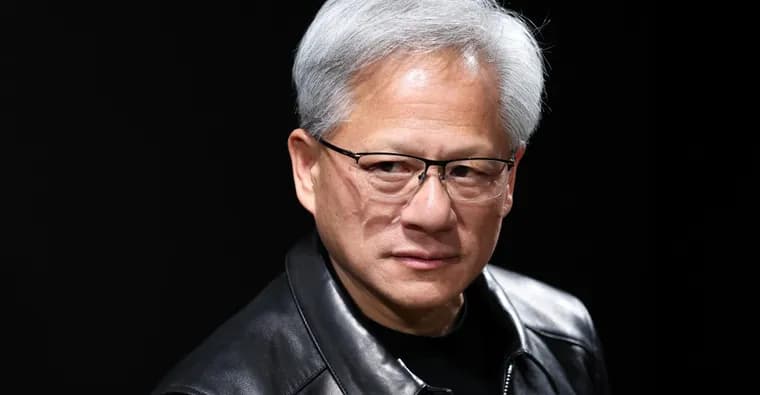
Nvidia CEO Jensen Huang told podcast host Ezra Klein that AI's rollout will require burning fossil fuels for now, framing the tradeoff like surgery: 'in order to save you, they've got to hurt you first... They've got to inflict an enormous amount of pain and suffering on you so that they can save you. And so I think AI's kind of like that.' He said 'over the next several years we have to unfortunately use fossil fuels, because we just don't have enough sustainable energy to make a difference,' promising a later transition to sustainable power. Huang also said the US 'got ourselves really gummed up in climate change and sustainable energy' and, as a result, 'didn't plan enough energy production,' and he called AI 'the best opportunity we have' to eventually 'turn a corner on climate change.' On community pushback against new data centers, Huang said, 'If they don't want data centers to be built in their town or whatever it is, then so be it. But if you're going to build in their town, be sure to go there and let them know what's coming.'
A Verge opinion piece responds critically to these remarks. The author notes Huang's net worth of about $192.6 billion and his $7.5 million home on Maui, bought in 2004, which survived the 2023 wildfires that devastated the island; an Nvidia spokesperson said the Huangs 'have owned the same home in Maui for many years' and 'donated significantly to local relief efforts.' Maui County Councilmember Keani Rawlins-Fernandez is quoted saying billionaires buying up land as vacation homes is 'painful for our community' and underscores the gap between Indigenous residents who want to care for the land and those who treat Hawaii as a vacation spot.
The piece lays out the stakes of delaying the Paris agreement's goals, adopted in 2015, of cutting emissions in half by 2030 and reaching net zero around 2050: Earth is expected to lose 99 percent of its coral reefs, 770 million people (one in 10 worldwide) already face 'acute risk' from sea level rise, and peak daily wildfire growth rates in the western US have more than doubled since 2001. It also cites a UC Riverside, Caltech and Rochester Institute of Technology study projecting that air pollution linked to AI could cause up to 1,300 premature deaths and more than $20 billion in public health costs by 2028. The author argues renewables were already the fastest-growing source of new electricity generation before the generative AI boom and are generally cheaper to build than new gas or coal plants, but that President Donald Trump is incentivizing gas and coal development to power data centers. Marc Boom of the Environmental Protection Network is quoted saying 'a more polluting AI buildout is not inevitable. It depends on the choices government makes now.' The author's conclusion is that a more polluting AI buildout reflects industry leaders' priorities, not inevitability.
Key facts
- Jensen Huang told Ezra Klein that AI must run on fossil fuels for the next several years before a transition to sustainable energy, comparing the pain to surgery.
- The Verge opinion piece contrasts Huang's roughly $192.6 billion net worth and his Maui home, bought for $7.5 million in 2004, with the costs climate change imposes on others.
- Cited climate stakes include 99 percent of coral reefs expected lost, 770 million people at acute risk from sea level rise, and wildfire growth rates that have more than doubled in the western US since 2001.
- A UC Riverside, Caltech and Rochester Institute of Technology study projects AI-linked air pollution could cause up to 1,300 premature deaths and over $20 billion in public health costs by 2028.
- Huang said pushback from towns against data centers is acceptable, but developers should inform residents about what is coming before building.
Why it matters
As Nvidia's CEO, Huang's framing of AI's energy demands, using fossil fuels now for a promised climate payoff later, carries weight because his chips underpin much of the industry's data center buildout. The remarks fit a broader pattern the author identifies among tech leaders and President Trump: presenting AI's near-term environmental damage as an acceptable, even necessary, cost of future benefits.
Who it affects
Communities near new data centers and fossil fuel plants built to power them, residents of places like Maui dealing with billionaire land purchases and wildfire risk, and the public exposed to AI-linked air pollution that the cited study ties to premature deaths and health costs through 2028.
How to use it
There is no product or offer here; this is commentary on the AI industry's energy tradeoffs and a critical response to Huang's public remarks, useful for readers tracking the debate over AI's climate impact and how tech leaders and the Trump administration are framing it.
How solid is it
The piece draws on Huang's own words from a named interview, The Ezra Klein Show, plus quotes from a Maui county councilmember, an Environmental Protection Network director, and an Nvidia spokesperson, alongside a named academic study and Paris agreement figures. It is explicitly an opinion piece critical of Huang rather than neutral reporting.
Risks and caveats
This is argumentative commentary, not a straight news report: the author frames Huang's position with pointed comparisons, including to the Marvel villain Thanos, and characterizes some of his claims, such as crediting AI for renewable energy purchases, as unfair. The cited 1,300 deaths and $20 billion figure is a projection to 2028, not an observed outcome.
“It's kind of like, in order to save you, they've got to hurt you first, that's the nature of surgery. They've got to cut you open to save you. They've got to inflict an enormous amount of pain and suffering on you so that they can save you. And so I think AI's kind of like that.”
— Jensen Huang, Nvidia CEO, on The Ezra Klein Show