Memory makers' long-term deals could end the RAM and SSD price cycle
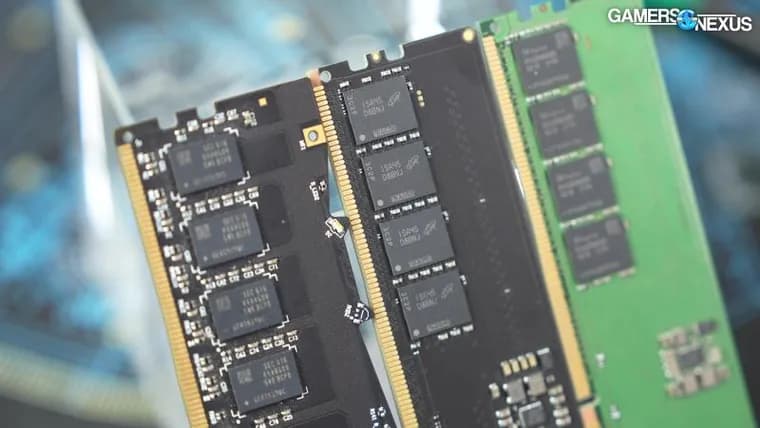
An opinion and analysis article, adapted from a video first published on September 21, 2026, argues that DRAM and NAND flash manufacturers have found a way to suppress the boom-and-bust pricing that memory has followed for decades. The method, according to the authors, is committing to larger and longer long-term agreements (LTAs) with fewer customers. They describe the shift this way: over the past year, all major manufacturers began forming 3-5 year LTAs and allocating 50 to 70% of their output to only their largest 5 to 16 customers. Such clients are often unnamed; the authors say they almost certainly include NVIDIA, which is their inference, not a stated fact. The authors say the most concerning part is that suppliers appear to be trying to bust the pricing cycle, which would remove the future low point for prices, especially for consumers.
The piece opens with price data. Since last September, average prices have risen 137% for 2 TB NVMe SSDs, 183% for 2 TB SATA SSDs, 363% for 32GB DDR5 kits and 294% for 32GB DDR4 kits. DDR5-6000 64GB kits went from $240 to $1,300-$1,400 on average, about 483%. The authors bought 128 GB of DDR5-6400 GSkill ECC Registered memory in 2024 for $1,060; they say it is no longer available, and a third-party seller lists a similar NEMIX 128GB kit at $6,800. A 512GB configuration that used to cost $4,200 is quoted at $23,811. A 4 TB Samsung 990 Pro they bought for $390 in 2024 now costs $1,100, a 254% increase.
The authors say the diversion of memory to data centers is lifting prices across consumer electronics. Apple raised prices on the MacBook Neo, MacBook Air, MacBook Pro, Mac Studio, iPad lines, HomePod lines, Apple TV Box and Vision Pro. On its final earnings call as CEO, the executive the article names as Tim Apple called it 'a 100-year flood on the memory pricing with exponential increases in memory prices.' Xbox announced that from August 1, 2026 console prices rise by US$100 for 512 GB models and US$150 for 1 TB models, the 2 TB model is being sunset, and console storage and memory prices have risen more than 2.5x with another doubling expected by fall 2027. Amazon raised prices on the Echo Dot, Echo Show 11, Kindle, Kindle Paperwhite, Fire TV Stick HD, Fire TV Stick 4K Max, eero 7 and eero Pro 7. Nintendo raised the Switch 2 MSRP, and Sony has raised PS5 prices twice within the last year. A TechInsights CSO, quoted via the New York Times, warned that iPhone prices are going up and that M.R.I. machines may cost more or may not get made. Meanwhile China's YMTC has reached the global top 3 NAND makers by shipments, ahead of Kioxia, Micron and SanDisk, and CXMT holds 10% of DRAM revenue, up 6 percentage points year on year per Counterpoint Research. The article says both face challenges from the US government over entry.
On the manufacturers' own words: Micron says its 16 LTAs cover 20% of its DRAM and a third of its NAND supply, and expects about half or more of company revenue to come under such agreements when completed (its quote says 'SCAs'). SanDisk, whose Datacenter and Edge revenue rose 1,298% and 392% year on year while its consumer segment fell 5%, says it is allocating 50% of bit output in 2027 and 67% in 2028 to LTAs. Samsung has finalized agreements with the top five global data center customers, is in final talks with five more, and plans to allocate approximately 60% to 70% of total capacity to long-term contracts while keeping some capacity for customers without multi-year deals. Western Digital's CEO said it had one LTA running to calendar 2029 and is in discussions for 2029, 2030 and 2031. Chosun Daily is quoted saying LTAs turn a 3-5 year boom-bust cycle into an order-based model with pre-secured demand. JP Morgan is quoted saying LTAs may help keep costs manageable for hyperscalers but sharply reduce fabricators' flexibility to serve consumer memory demand. The Korea Herald says the shift could soften the boom-and-bust cycle, and an unnamed analyst it cites says LTAs are unlikely to eliminate the cycle but could reduce earnings volatility; how well they work depends on how the contracts hold up in the next downturn.
The article then turns to cloud providers. TrendForce anticipates capital spending by the world's nine major cloud service providers rising from $922 billion in 2026 to $1.383 trillion in 2027, and estimates DRAM and NAND combined at 47% of that spending in 2026 and 68% in 2027. From those figures the authors calculate roughly $433 billion in 2026 and $940 billion in 2027 on DRAM and NAND alone. They argue that hyperscalers buying up supply pushes prices high enough that smaller businesses cannot afford on-site server upgrades and rent cloud infrastructure instead. Amazon's CEO, on the 1Q '26 earnings report, called the change in memory price and supply 'a further impetus' pushing on-premises companies to the cloud, and said enterprise conversations 'accelerate rapidly' because Amazon has more supply than others. Recent filings show Google Cloud revenue up 82% year on year, Microsoft's Azure and other cloud services up 43%, and AWS sales up 36.7%, which Amazon calls its fastest growth in 18 quarters.
The last section, on end applications, is cut off in the text available. TrendForce projects server applications' share of NAND bit demand rising from 44.2% in 2026 to 51.1% in 2027, with PC, mobile, console and other applications each moderately decreasing. For DRAM, it expects the bit demand share from graphic and server applications to rise by 1.7 and 1.5 percentage points, taking share from PC, mobile and consumer uses. The authors note that DRAM is affected by graphics demand as well as server demand as manufacturers prioritize HBM.
Key facts
- Since last September, average prices are up 137% for 2 TB NVMe SSDs, 183% for 2 TB SATA SSDs, 363% for 32GB DDR5 kits and 294% for 32GB DDR4 kits; DDR5-6000 64GB kits went from $240 to $1,300-$1,400.
- The authors say major DRAM and NAND makers now sign 3-5 year LTAs and allocate 50 to 70% of output to their largest 5 to 16 customers, which they argue could end the cyclical low in pricing.
- Micron says 16 LTAs cover 20% of its DRAM and a third of its NAND; Samsung plans about 60% to 70% of capacity for long-term contracts; SanDisk allocates 50% of bit output in 2027 and 67% in 2028.
- TrendForce forecasts capex of the nine biggest cloud providers rising from $922 billion in 2026 to $1.383 trillion in 2027, with DRAM and NAND at 47% and then 68% of it.
- An unnamed analyst cited by The Korea Herald says LTAs are unlikely to eliminate the memory cycle, only reduce earnings volatility; the outcome depends on the next downturn.
Why it matters
Memory pricing has long swung between shortage and glut, and buyers have counted on the glut to bring prices back down. The authors argue that long-term agreements with a few huge customers could remove that low point, leaving consumer RAM, SSD and device prices high for years. The article also shows how far AI-era demand has spread: it is cited behind price rises at Apple, Xbox, Amazon, Nintendo and Sony, and behind a push of smaller companies from their own servers into rented cloud capacity.
Who it affects
PC builders and enthusiasts face the steepest listed increases in RAM and SSDs. Buyers of consoles, phones, tablets and other consumer electronics see it in device prices. Small businesses that would otherwise upgrade their own servers are described as being pushed toward cloud rental. Hyperscalers and the few largest LTA customers get supply priority, and memory makers get more predictable demand. The article's TechInsights quote extends the concern to other hardware such as M.R.I. machines.
How to use it
This is market analysis, not a product. The practical takeaways are the price benchmarks (for example the 2024 versus current prices for 128GB and 512GB memory and a 4 TB Samsung 990 Pro), the article's view that people needing a high-end machine might find it cheaper to rent a system or use cloud computing, and the supplier statements on LTA coverage that can be tracked in later earnings reports. The article gives no buying schedule or forecast for when prices might fall.
How solid is it
It is an opinion and analysis piece, adapted from a video, and the authors' conclusions (such as LTAs fundamentally altering the memory market) are their own understanding. The supplier figures and quotes come from cited earnings reports and calls, and the capex forecasts from TrendForce. The $433 billion and $940 billion figures are the authors' own derivation from TrendForce percentages. The sample of product listings behind the average price rises is not shown in the text, so the method is not visible. The text available is cut off partway through the end-application section, and a line introducing IDC data is followed by nothing.
Risks and caveats
The claim that suppliers want to kill the pricing cycle is the authors' reading; the manufacturers' quotes talk about visibility and stability, and the unnamed analyst says LTAs are unlikely to eliminate the cycle. The authors say AI shortages could, not will, keep prices inflated for years. That NVIDIA is an LTA client is their inference. SanDisk's 67% allocation for 2028 and its quoted 50% LTA volume coverage for calendar 2028 with key customers are not reconciled in the article, and Micron's quote says 'SCAs' where the article says LTAs. The article's own Highlights say Amazon stated more users than ever will consider its cloud, but the Amazon quote itself says only that memory changes are a further impetus toward the cloud.
“While LTAs may help keep costs manageable for hyperscalers, they dramatically decrease the flexibility of memory fabricators to address demand for memory chips in consumer goods.”
— JP Morgan, as quoted in the article