Meta reconsiders its 2030 net-zero goal as AI data center emissions climb
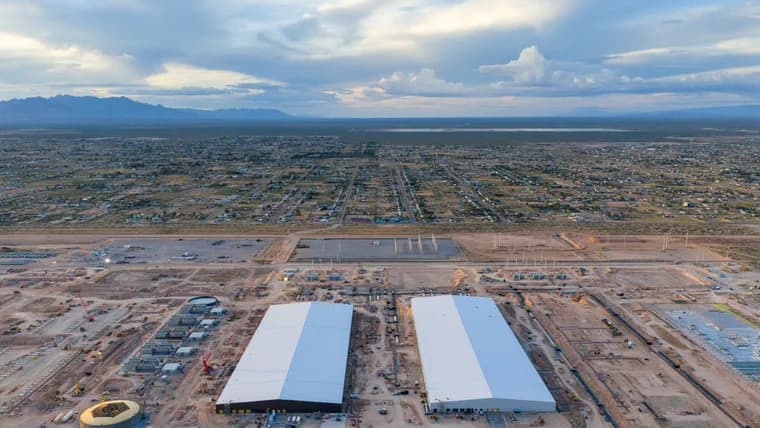
Meta's executives are rethinking the company's original goal of reaching net-zero emissions by 2030. The admission sits in Meta's 2026 sustainability report, dated November 19, 2026, and comes as the company reports a record percentage increase in greenhouse gas emissions, one that Ars Technica says exceeds any other Big Tech competitor building new AI data centers.
The report's introduction is written by Rachel Peterson, vice president of data centers at Meta, and Blair Swedeen, global head of net zero and sustainability at Meta. They write that "our long-term ambitions haven’t changed, but our operating environment has," and they blame the change on AI: "demand for AI infrastructure has grown faster than almost anyone projected." They then say Meta is re-evaluating its timelines, sequencing and interim milestones, including the 2030 timeframe for its net-zero goal and its near-term intensity targets, so that its approach reflects current operating realities while keeping progress transparent year over year.
The numbers are large. The report describes Meta's total emissions as rising from 15.6 million metric tonnes of carbon dioxide equivalent in 2024 to more than 21.7 million metric tonnes in 2025. Ars Technica notes that this would make Meta's annual carbon footprint roughly comparable to the total emissions of the state of Idaho, and larger than those of states such as Hawaii, Maine, South Dakota and New Hampshire. Meta attributed much of the increase to "capital goods," such as data center servers.
According to Ars Technica, Meta's statement is a significant public acknowledgment, because Amazon, Google and Microsoft have all stuck by their original sustainability goals so far. All of those companies have nonetheless acknowledged the difficulty of balancing those goals against the breakneck buildout of hyperscale data centers. Despite investing in more renewable energy projects, Meta and its rivals are still often pushing ahead with AI data centers that rely on burning natural gas for electricity.
Key facts
- Meta's 2026 sustainability report (dated November 19, 2026) says the company is re-evaluating the 2030 timeframe for its net-zero goal and its near-term intensity targets.
- Total emissions went from 15.6 million metric tonnes CO2e in 2024 to more than 21.7 million metric tonnes in 2025.
- Meta's report blames AI: demand for AI infrastructure "has grown faster than almost anyone projected." Much of the rise is attributed to capital goods such as data center servers.
- Ars Technica says Amazon, Google and Microsoft have so far stuck by their original sustainability goals, and that Meta's percentage increase exceeds any other Big Tech competitor's.
- Ars Technica compares the 2025 total to the annual emissions of Idaho.
Why it matters
Meta is the first of the large AI infrastructure builders named in the article to publicly question its net-zero timeline. Ars Technica calls this a significant acknowledgment, since Amazon, Google and Microsoft have all stuck by their original goals so far. The report ties the problem directly to AI: demand for AI infrastructure grew faster than almost anyone projected. The scale is notable too. Emissions rose from 15.6 million to more than 21.7 million metric tonnes CO2e in a single year, a gap of more than 6 million tonnes.
Who it affects
Meta's sustainability and data center teams, whose targets are now under review. Meta's hyperscale rivals Amazon, Google and Microsoft, which face the same tension between sustainability goals and data center buildout. Anyone who tracks corporate climate commitments, including investors and observers who rely on Meta's reported targets. Communities and grids near AI data centers that run on natural gas are affected too, since the article says Meta and its rivals still often build such facilities.
How to use it
This is a reporting story, not a product or tool. A practical reading: when you compare Big Tech climate pledges, check the interim milestones and the intensity targets as well as the headline net-zero year, because Meta is re-evaluating exactly those. The 2024 and 2025 totals (15.6 and more than 21.7 million tonnes CO2e) give a baseline to measure future Meta reports against.
How solid is it
The core facts come from Meta's own sustainability report, with direct quotes from two named Meta executives, so the re-evaluation and the emissions totals are first-party statements as relayed by Ars Technica. The Idaho comparison and the claims about a record percentage increase and about Amazon, Google and Microsoft are Ars Technica's own statements. No new target date for net zero is given. The source says only that the 2030 timeframe, timelines, sequencing, interim milestones and near-term intensity targets are being re-evaluated.
Risks and caveats
This is a re-evaluation, not an announced abandonment of the goal, and the source does not say the 2030 goal has been dropped. The source states no percentage figure for the increase, only the two absolute totals, and the 2025 figure is given as "more than" 21.7 million tonnes. It does not say which emissions scopes the totals cover, how much comes from natural gas or any specific data center, or what emissions Amazon, Google and Microsoft report. No timescale or decision date for the re-evaluation is given. The visible article text ends mid-story, so other findings in the report are not covered here.
“our long-term ambitions haven’t changed, but our operating environment has”
— Rachel Peterson and Blair Swedeen, introduction to Meta's 2026 sustainability report