Microsoft books $10 billion in quarterly revenue from OpenAI
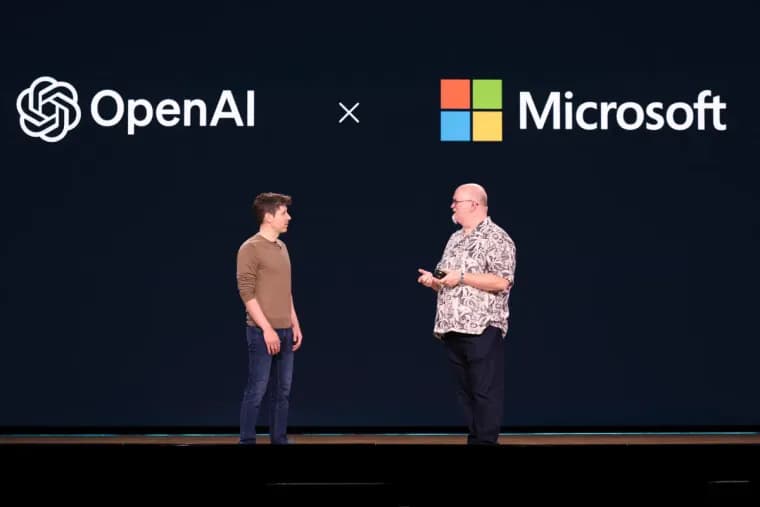
Microsoft said in a regulatory filing on Wednesday that it generated $10 billion in revenue from commercial arrangements with OpenAI, including revenue-sharing payments, in the quarter ended September 30. That is nearly 11% of Microsoft's total quarterly revenue of $92.3 billion. TechCrunch, which reported the filing, says it shows the enormous financial ties that remain between the two companies even as they increasingly compete for the same customers. Because Microsoft's financial year begins in July, the quarter is the first of its fiscal 2027.
For the full 2026 fiscal year, revenue from OpenAI hit $24.1 billion. At the latest quarterly pace, Microsoft would take in $40 billion a year from OpenAI-related arrangements; that is an extrapolation, not a reported figure or a forecast.
Microsoft also reported $7.2 billion in outstanding receivables from OpenAI at the end of September, up from $6 billion at the end of June. That money is what OpenAI owes for previous transactions, not additional revenue.
It is not clear how much of the $10 billion came from revenue-sharing payments and how much from Azure cloud computing services. TechCrunch has reached out to Microsoft for more information. For scale, TechCrunch reported in November 2025, citing leaked documents, that Microsoft had received $865.8 million in net revenue-sharing payments from OpenAI in the first nine months of that year.
OpenAI reportedly shares 20% of its revenue with Microsoft under a previous deal in which Microsoft invested more than $13 billion in the startup. Neither company has publicly confirmed that percentage. Under an April 2026 agreement, OpenAI must keep sharing revenue with Microsoft through 2030, subject to a cap, while it is allowed to work with competing cloud providers. The source does not state the size of the cap.
The once-exclusive partnership began loosening in October 2025, when Microsoft relinquished its hold on OpenAI so the startup could partner with other cloud providers. In exchange, OpenAI committed to buying an additional $250 billion in Azure services under an October 2025 agreement.
Microsoft's ownership stake in OpenAI has also slipped slightly, from about 25% in June to 24% in September. That continues a gradual decline from roughly 27% after the October 2025 recapitalization. Microsoft did not specify what caused the dilution.
Key facts
- Microsoft generated $10 billion from commercial arrangements with OpenAI, including revenue sharing, in the quarter ended September 30, nearly 11% of its $92.3 billion quarterly revenue.
- Revenue from OpenAI for the full 2026 fiscal year was $24.1 billion; the latest quarter's pace would imply $40 billion a year (an extrapolation).
- Receivables from OpenAI rose to $7.2 billion at the end of September from $6 billion at the end of June; these are amounts owed for past transactions, not extra revenue.
- The split between revenue-sharing payments and Azure services is not clear, and OpenAI's reported 20% revenue share has not been confirmed by either company.
- Microsoft's stake in OpenAI fell from about 25% in June to 24% in September, down from roughly 27% after the October 2025 recapitalization.
Why it matters
The filing puts a hard number on how much of Microsoft's business still rests on OpenAI: $10 billion in one quarter, nearly 11% of the company's $92.3 billion total. That comes even though the two firms increasingly compete for the same customers and the once-exclusive partnership has been loosening since October 2025, when OpenAI gained freedom to use other cloud providers and committed to an additional $250 billion in Azure services.
Who it affects
Microsoft and OpenAI are the direct parties: Microsoft depends on OpenAI for a large slice of revenue, and OpenAI owes Microsoft a revenue share through 2030, subject to a cap, under the April 2026 agreement. Anyone tracking Microsoft's results, its Azure business or OpenAI's finances and ownership has a new data point.
How to use it
Read the $10 billion as a combined figure for commercial arrangements, including revenue-sharing payments and, per the article, possibly Azure services. Do not treat the $40 billion annual figure as guidance; it is a simple extrapolation of one quarter. Compare against the $24.1 billion for fiscal 2026 to see the pace, and keep receivables ($7.2 billion) separate from revenue.
How solid is it
The core figures come from Microsoft's own regulatory filing, as reported by TechCrunch. The article is clear about what is not known: how the $10 billion divides between revenue sharing and Azure, the size of the revenue-share cap, and why Microsoft's stake was diluted. The 20% revenue-share rate is reported, not confirmed by either company. No Microsoft or OpenAI spokesperson is quoted.
Risks and caveats
The $40 billion annual figure is hypothetical and assumes the latest quarter repeats. The receivables are not revenue. Without the revenue-sharing versus Azure breakdown, the figure cannot be read as pure revenue share. The slide in Microsoft's ownership stake, from about 25% to 24%, has no explanation from Microsoft.