Microsoft's Satya Nadella says much critical infrastructure is unpatchable
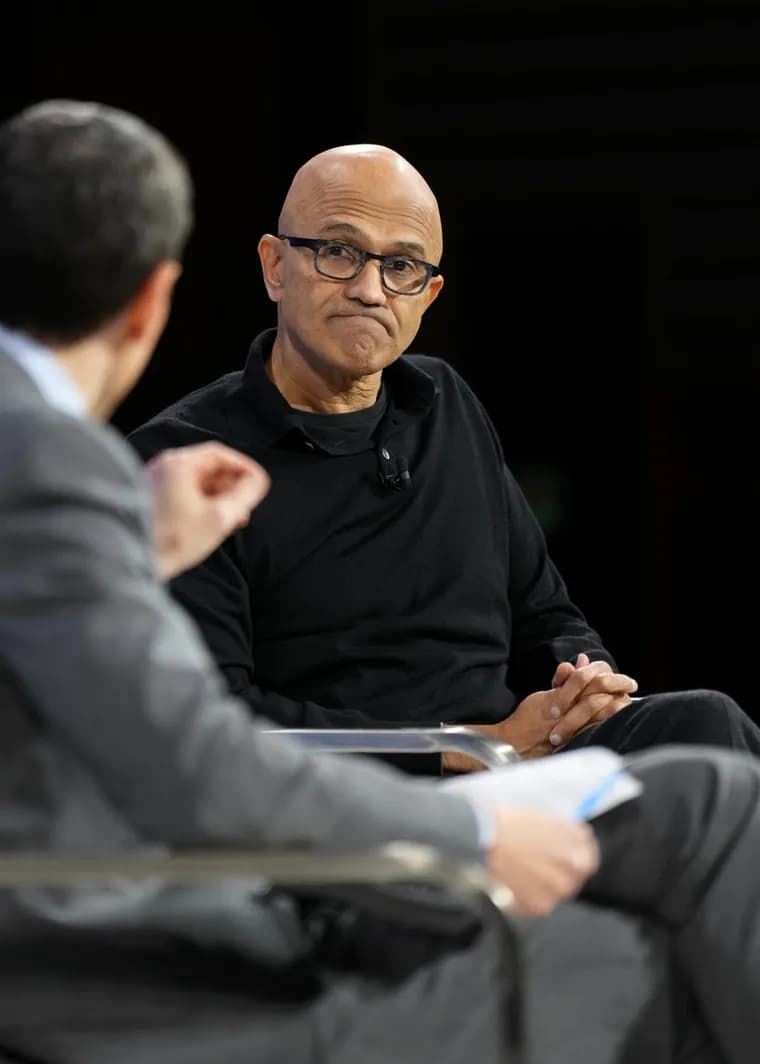
Speaking at The New York Times' DealBook Summit on Wednesday, Microsoft CEO Satya Nadella said that a lot of America's software systems, including those that run everyday hardware and transportation systems, carry vulnerabilities that cannot be fixed. In the age of AI-aided cyberattacks, TechCrunch writes, those flaws are just waiting to be exploited.
"Remember, there is a lot of stuff in our critical infrastructure that’s unpatchable," Nadella said. He pointed to "all the firmware and the chillers" (TechCrunch glosses a chiller as a cooling device often used in data centers) "and the HVAC systems everywhere else," and added that all of it is on the internet. Later he said somebody had told him about transportation systems and "the amount of stuff that's discoverable but with unpatchable firmware." His conclusion: "we'll have to really modernize for sure," and then assess what the threat vector looks like and how well organisations can detect and defend in real time. TechCrunch's gloss on this is that the "smartification" of the economy, in which many formerly "dumb" devices were connected to the internet, is now causing tremendous headaches.
The conversation took place against a wave of recent large-scale outages. One involved Microsoft Outlook; others involved the NSA, the FFA (as TechCrunch spells it) and Apple. Concerns have swirled that the outages were caused by cyberattacks, although officials have denied that. Still, TechCrunch says, the reality of AI-aided attacks is pushing companies to look for new ways to discover and remediate vulnerabilities.
Nadella touched briefly on the Outlook problem. He said the global inconvenience was the result of a "latent bug" that led to a "perfect storm." "We put out an incident response, and we're going to obviously take all of the learnings, both upstream architectural, as well as operational, and fix that," he added.
His broader point was about speed. The process of patching vulnerabilities has escalated to match the speed of potential exploitation, he said, but this has caused more problems. "We now have a very powerful tool that finds vulnerabilities," he said, yet companies used to have more time to test patches, understand a situation and deploy them. At the same time, AI has made sophisticated cyberattacks much easier to carry out. In his words: "The patch [now] needs to go instantly from being available to being patched in production, because it's being exploited in the wild, right? So that's going to create instability."
Key facts
- Nadella said much of America's critical infrastructure is unpatchable, naming firmware, chillers and HVAC systems, and that these systems are on the internet.
- He argued that AI-speed exploitation means a patch must go instantly from available to deployed in production, which he said will create instability.
- He attributed the recent global Outlook outage to a "latent bug" that led to a "perfect storm," and said Microsoft put out an incident response.
- The talk came amid a wave of large-scale outages that also involved the NSA, the FFA (as spelled in the source) and Apple; officials have denied they were cyberattacks.
- No Microsoft product or plan for the unpatchable systems was announced; Nadella only said 'we'll have to really modernize'.
Why it matters
The head of one of the world's largest software vendors is saying, in public, that part of the infrastructure people depend on cannot be repaired in place, and that attackers using AI make that gap more dangerous. He also described a second problem: because tools now find vulnerabilities so quickly and exploitation follows fast, defenders lose the time they once had to test a patch before rolling it out. His own forecast is instability, because patches will reach production before anyone has fully tested them.
Who it affects
Anyone who runs or relies on internet-connected firmware, cooling and HVAC equipment, or transportation systems, which Nadella named as examples. It also reaches companies that apply patches, since the window for testing them is shrinking, and users of services like Outlook, whose recent outage he addressed.
How to use it
There is nothing to install or buy here. No Microsoft product or plan for fixing unpatchable infrastructure was announced. The practical content is the direction Nadella set: modernise the old systems, assess what the threat vector looks like, and build the ability to both detect and defend in real time.
How solid is it
This is an executive's on-stage remarks, reported by TechCrunch, with direct quotes. Nadella gives no numbers, such as how many devices are unpatchable or how long the outages lasted. His explanation of the Outlook outage is limited to a 'latent bug' and a 'perfect storm,' and the source does not say what Microsoft's incident response contained. Some of the framing, such as the 'smartification' of the economy, is TechCrunch's own gloss rather than Nadella's.
Risks and caveats
The link between recent outages and cyberattacks is unproven in the source: concerns have swirled, but officials have denied that the outages were attacks. The source does not say which officials, or what exactly the NSA, FFA (as spelled in the source) and Apple outages were. Nadella's claim that faster patching will cause instability is his prediction, not a measured result.
“Remember, there is a lot of stuff in our critical infrastructure that’s unpatchable.”
— Satya Nadella, Microsoft CEO, at The New York Times' DealBook Summit