Midterm backlash over AI data centers could bring new US limits
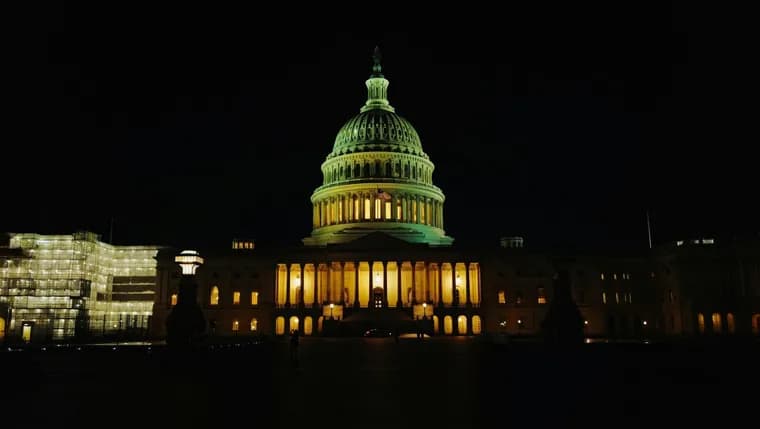
The November 3 midterm results gave Democrats full control of Congress, with Republicans still in the White House. TechCrunch reports that Tuesday's results suggest anger over data centers, the large facilities that house the computers powering AI, is becoming a political force. With Democrats in charge of Congress, that could lead to new limits on where data centers can be built and how much say local communities have.
An NBC exit poll showed how concerned voters are. More than half of respondents believe AI will do more harm than good, almost 80% are against data centers being built in their neighborhoods, and almost 60% said data centers were a crucial or major factor in their vote. Nadine Smith, president and CEO of the racial justice organization Color of Change, called the election a referendum on 'who this economy is built for'. She answered the common argument that data centers are essential for national security and the rivalry with China: 'National security matters. And so do the families in South Memphis breathing exhaust from the gas turbines powering an AI supercomputer.' The article says she was referring to xAI's data center in Memphis, Tennessee, which uses gas turbines for power.
Voters in several states pushed back even as pro-AI super PACs spent millions trying to sway them. The backlash was especially felt in Ohio, where OpenAI has eyed a $500 billion data center backed by more than $100 billion in financing from Nvidia. The Ohio county where Meta had planned a 700,000-square-foot facility just passed a ban on data centers, and local communities across the state overwhelmingly voted against data center buildout measures. Analysts at Morgan Stanley predict that Democratic governor-elect Amy Acton will also pose a major risk to Ohio's data center buildout. Candidates in Texas, Maine, Michigan, Nevada, Georgia and South Carolina all won seats after taking a stance against the rapid buildout. Anshi Bhatt, a tech and policy researcher, said 'It is clear that money does not buy outcomes', adding that in modern politics, creating a 'local villain' is one way to build campaign momentum.
Likely next steps, according to the article, include more construction moratoriums or requiring data centers to pay for their own power grid upgrades instead of passing those costs to nearby communities. Goldman Sachs predicts construction delays in states like Georgia and Texas because of Democratic gains. In Washington, Democratic control could improve the odds for bills like the one Sen. Bernie Sanders and Rep. Alexandria Ocasio-Cortez introduced earlier this year, though any such bill would face a possible veto. It proposes a nationwide moratorium on new data centers until Congress adds new guardrails and ensures the buildout does not raise electricity costs, harm the environment, or proceed without community approval. Another measure, the GRID Savings Act proposed by New Mexico Sen. Martin Heinrich, would prevent grid infrastructure costs from being passed on to communities during large AI data center buildouts.
Environment is a major concern, especially around xAI's Memphis site and the data centers throughout Virginia, where gas turbines are used for power. Maia Woluchem, program director at Data & Society, a nonprofit research group, believes changes to energy regulations, land rights and other environmental policies could affect the buildout, especially as congressional Democrats look further into the Trump administration's rollback of certain energy protections, as the New York Times reported they might. She added that, regardless of federal action, she could imagine additional movement at the state and local level. Her example was Texas governor-elect Gina Hinojosa, who supports a statewide moratorium on data centers. Both Hinojosa and Gov. Greg Abbott called for some limits, but Hinojosa centered much of her campaign on opposing data centers, a notable choice in Texas, whose electrical grid has proved vulnerable over the past decade.
The article says the hard part is still to come. Smith expects a fight, or even more executive orders, to bypass what Congress is now likely to block. 'Even among Democrats, a blanket freeze is contested,' she said, pointing to some Democrats' worry that a moratorium could slow AI progress and hurt national security. She also expects AI lobbyists to start calling lawmakers.
The author argues the backlash runs deeper than the buildings. One private equity executive told the author that people do not necessarily hate data centers but rather AI, and that data centers have become a stand-in for fears and anxieties about the technology. Woluchem said the results point to a real frustration with tech power at minimum, and that it is a bipartisan issue. The author reports hearing over the past month that people worry about environmental effects and about having no say in whether data centers are built. Amazon built a data center in Gilroy, California, without many residents knowing, by satisfying a 45-year-old zoning law. Vague or outdated zoning laws, along with requirements that local officials sign nondisclosure agreements barring them from discussing projects, have fueled outrage. Data centers have also received billions in tax breaks, and the jobs and community programs tech companies have touted were not enough for many people. Many also fear the buildout will mainly enrich a few wealthy people while their communities suffer and living costs rise.
Key facts
- An NBC exit poll found almost 80% of respondents against data centers in their neighborhoods, more than half expecting AI to do more harm than good, and almost 60% calling data centers a crucial or major factor in their vote.
- In Ohio, the county where Meta had planned a 700,000-square-foot facility passed a data center ban; Morgan Stanley analysts see governor-elect Amy Acton as a major risk to the state's buildout.
- Candidates in Texas, Maine, Michigan, Nevada, Georgia and South Carolina won seats after opposing the rapid data center buildout; Goldman Sachs predicts construction delays in Georgia and Texas.
- Democratic control of Congress could improve the odds of the Sanders and Ocasio-Cortez bill for a nationwide moratorium on new data centers, but any such bill faces a possible veto.
- Likely next steps are more local moratoriums or rules making data centers pay for their own grid upgrades, as in the proposed GRID Savings Act from Sen. Martin Heinrich.
Why it matters
Data centers are the physical base of the AI boom, and TechCrunch reports that opposition to them now shows up at the ballot box. The exit poll figures and the wins by anti-buildout candidates in six states suggest the issue has moved from local zoning disputes into statewide and national politics. With Democrats controlling Congress, the article says this could lead to new limits on where data centers are built and how much say communities have.
Who it affects
AI companies and developers with large projects, including OpenAI, Meta, Amazon and xAI, which the article names in connection with specific sites. Local residents and officials are also affected: the article says people want a say in what is built in their communities and worry about utility bills, the environment and secrecy around projects. States named as exposed include Ohio, Texas and Georgia.
How to use it
The article gives a short list of things to watch. At federal level, the Sanders and Ocasio-Cortez moratorium bill and Sen. Heinrich's GRID Savings Act, which would stop grid infrastructure costs being passed to communities. At state and local level, further moratoriums, such as the statewide one Texas governor-elect Gina Hinojosa supports, and rules making data centers pay for their own grid upgrades. Anyone planning or tracking a buildout can also read the zoning and NDA complaints as the points where public anger has formed.
How solid is it
The core facts are election results and an NBC exit poll, though the article gives only rounded shares ('more than half', 'almost 80%', 'almost 60%'). The forward-looking parts are predictions or expectations: Morgan Stanley on Acton, Goldman Sachs on delays in Georgia and Texas, Nadine Smith on a fight and more executive orders. The article says the results 'suggest' a political force and that limits 'could' follow. The private equity executive's view that data centers stand in for fears about AI is relayed by the author without a name.
Risks and caveats
The article says any federal moratorium bill would face a possible veto, and that even among Democrats a blanket freeze is contested because of worries it could slow AI progress and hurt national security. Smith expects AI lobbyists to start calling lawmakers. The OpenAI Ohio project is described only as something the company 'has eyed'. Pro-AI super PACs spent millions this cycle, though Anshi Bhatt reads the results as showing money does not buy outcomes. Maia Woluchem calls the frustration with tech power a bipartisan issue, so the backlash may not follow party lines neatly.
“Families should never be subsidizing the richest corporations in history through their utility bills.”
— Nadine Smith, president and CEO of Color of Change