MIT Technology Review essay: people hate AI yet keep using it
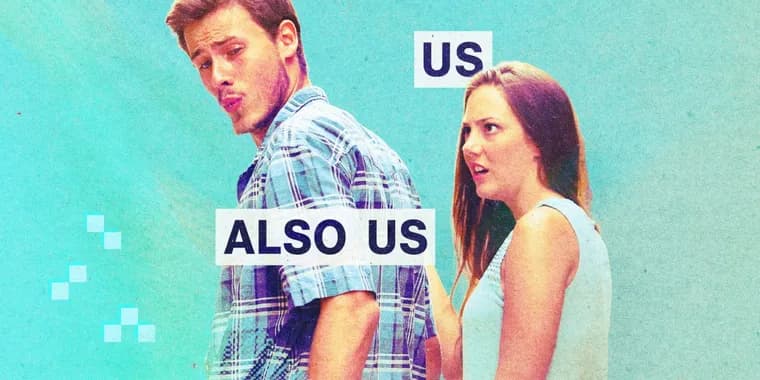
An opinion essay in MIT Technology Review (the author is not named in the text) starts from an exchange over the summer. The CEO of Springboards, a startup building an LLM designed to produce a wider variety of responses than its mainstream rivals, told the author: "We often say that we’re a self-loathing AI company. We don’t know if we really like what we’re doing." The author joked that this made them a self-loathing AI journalist, and explains that they love the job but not what the technology has become: warped by hype, steered by zealots, inescapable. The piece calls this love/hate attitude the vibe around the world right now.
The negative side of the picture rests on several surveys. According to the Pew Research Center, more US adults think AI will have a negative impact on them personally and on society than expect a positive one, and the pessimism is strongest among the young. A Stanford University report finds that more than half of people worldwide say AI products and services make them nervous. In a Gallup poll in May, 71% of US adults said they would oppose construction of a new AI data center in their area, against 53% who would oppose a new nuclear power plant. In an NBC poll in March, AI was less popular than ICE.
Usage, meanwhile, keeps climbing. ChatGPT hit a billion monthly users in May, according to the market analysis firm Sensor Tower, and Google DeepMind's Gemini logged 950 million users in July. Per Pew, half of US adults now say they use a chatbot, more than twice the number who said so in 2023, and one in four say they do so every day. More than a third of adults across all 38 OECD countries (a group of the world's wealthiest democracies) report having used generative AI tools in the last three months.
The author asks how both can be true. One possibility is two distinct groups, haters and users, but the author doubts it: the numbers don't add up unless the Venn diagram is on its way to being a circle. Another is that more use breeds more negative opinion. There is at least a correlation: the Global North, where adoption is highest, skews pessimistic, while the Global South, with lower adoption, is more optimistic.
The author's own explanation is that when people say they hate AI, they do not dislike the technology but the relentless drive of the companies behind it to push it on people in as many ways as possible, while telling them to brace for the biggest social and economic upheaval in generations.
The essay compares this with social media over the last 20 years, when billions flocked to Facebook and Twitter despite a growing techlash, and likewise with Google search. With social media there was little anyone could do, because quitting meant losing your content and connections. With AI, the author argues, people still have a chance to sway the outcome. There is more political appetite for regulation: all 50 US states have passed or proposed laws governing AI development and deployment, a patchwork of more than 2,100 bills, a tenfold increase in three years. And with top-class open-source alternatives to Google, OpenAI and Anthropic already on the market, there is, for now at least, the potential for more consumer choice and market pressure.
The author does not want to be naive, since trillion-dollar companies are hard to move, but says what comes next is not as inevitable as those companies imply. Asked why his firm builds a new model if he doesn't really like AI, the Springboards CEO said there was no walking back from LLMs, but you could still make them do something different. The essay ends with a hope for clarity about what AI can and cannot do and a technology that is not sold as if it is about to take over the world.
Key facts
- Pew finds more US adults expect AI to hurt them personally and society than to help, with pessimism strongest among the young; Stanford reports more than half of people worldwide are nervous about AI products.
- In a May Gallup poll, 71% of US adults would oppose a new AI data center in their area, versus 53% for a new nuclear power plant.
- Use is still rising: ChatGPT reached a billion monthly users in May (Sensor Tower), Gemini logged 950 million in July, and half of US adults say they use a chatbot (Pew).
- The author's view, offered as opinion: people dislike the companies' relentless push of AI, not the technology itself.
- The author sees room for leverage this time: more than 2,100 state AI bills across all 50 US states, plus open-source alternatives.
Why it matters
The essay names a tension that the survey numbers make hard to ignore: AI is unpopular and heavily used at the same time. Its argument is that the dislike is aimed at how AI is being sold and pushed, not at what it can do. If that reading is right, public sentiment tells you little about whether adoption will slow, and more about how people feel toward the firms involved. The author also compares it with social media, where users stayed despite a techlash, but argues AI differs because there is still a chance to influence it.
Who it affects
Mainly the AI companies, which are told in effect that their marketing and constant push are what sours people. It also touches regulators and lawmakers, since the author points to more than 2,100 AI bills across all 50 US states, and ordinary users, who are both the survey respondents and the growing user base. Young people are singled out as the most pessimistic group in the Pew data. Residents near proposed data centers appear through the Gallup figure of 71% opposition.
How to use it
This is an essay, not a product or tool, so there is nothing to install or try. As a reading aid, it gives a set of survey figures (Pew, Stanford, Gallup, NBC, Sensor Tower, OECD-wide usage) and one explanation for the paradox. The levers the author names for people who want some sway are regulation and consumer choice, including the open-source alternatives to Google, OpenAI and Anthropic that are on the market now.
How solid is it
The survey figures are attributed to named sources: Pew, Stanford, Gallup, NBC, Sensor Tower and OECD-wide usage data. The text gives months for the Gallup, NBC and Sensor Tower numbers but not the year. Pew's negative-versus-positive percentages are not given, only that negative outnumbers positive, and the Stanford share is given only as more than half. The central explanation, that people resent the companies' push rather than the technology, is the author's own opinion and not a survey finding. The Global North and South pattern is described as a correlation only. The Springboards CEO is not named.
Risks and caveats
The essay is opinion and should be read as such. The author doubts that haters and users are separate groups but offers no data on overlap beyond the arithmetic argument. No evidence is presented that heavier use causes more negative opinion. The hope for more consumer choice via open-source models is qualified in the piece itself by the phrase for now, at least, and the author concedes that trillion-dollar companies are hard to move. The piece also does not say how the Springboards model works beyond its aim of producing a wider variety of responses.
“We often say that we’re a self-loathing AI company. We don’t know if we really like what we’re doing.”
— CEO of Springboards (unnamed in the source), quoted in MIT Technology Review