Montana finalizes right-to-try rules for unapproved drugs
Montana's Department of Health and Human Services finalized, last weekend, a set of rules for clinics operating under the state's right-to-try law. The state has allowed terminally ill patients to seek unapproved drugs since 2015; a 2023 law technically extended that option to patients who are not terminally ill, as long as the drug has completed at least a phase I clinical trial, and a second law spelled out how clinics could sell and administer such treatments. Until last weekend those newer provisions had no operating rules. A newly formed Experimental Treatment Review Board (ETRB) will now review applications for access to experimental, unproven, and unapproved drugs, and is set to review its first two in the coming weeks.
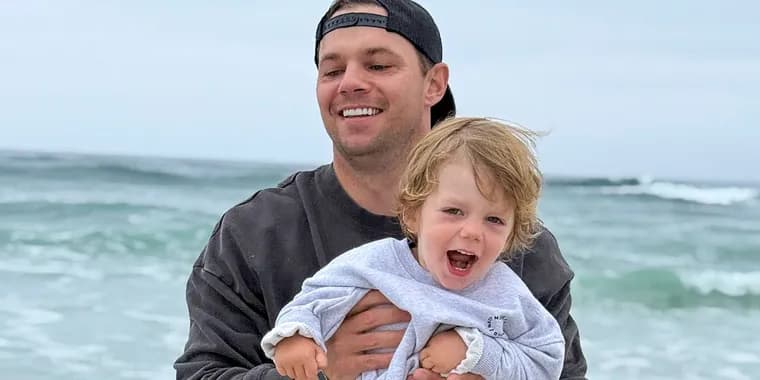
The law's most concrete test case is Kris DeVault's son Brody, now three, who was diagnosed at around two and a half with creatine transporter deficiency (CTD), a rare condition in which the brain and muscles cannot get the energy they need from creatine. Brody struggles to speak, has trouble telling his parents when he is hurt or hungry, and has visible muscle weakness. DeVault has learned of a French biotech company, Ceres Brain Therapeutics, developing a nasal-spray drug meant to deliver creatine to the brain directly. According to CEO Thomas Joudinaud, the drug has shown promising results in mice and has completed a phase I trial testing various doses for safety in 48 healthy adult volunteers; that trial has not yet been published, and the drug has never been tested in children or in anyone with CTD.
Joudinaud is planning a phase II trial of the drug in people with CTD and with amyotrophic lateral sclerosis, but it will run in France, and DeVault does not expect Brody to be included. The FDA's expanded-access scheme is also closed to Brody, Joudinaud says, because the drug is not registered with the FDA and is currently manufactured in a way that does not meet FDA rules. Even a successful phase II trial and eventual approval would likely keep the drug off the US market for years, which DeVault fears will be too late for his son's developmental window.
Ceres could apply to Montana's ETRB to sell the drug through a clinic in the state. Joudinaud calls the state's framework "very interesting and very pragmatic" and "suitable for our drug," but says he is reluctant to apply for now, worried about complicating the drug's path to eventual FDA approval. DeVault has been asking FDA staff for a written assurance that companies using Montana's program will not be penalized later; he says he has made no progress. He is now also looking at Próspera, a private city and special economic zone in Roatan, Honduras, where a clinic sells unproven stem-cell and gene therapies, though scientists have cautioned against such offshore options.
Aaron Kesselheim, a professor of medicine at Harvard Medical School with expertise in health policy and drug regulation, told the reporter that phase I trials prove neither a drug's safety nor its efficacy, and that patients deserve rigorous assessment of what they are paying for. DeVault rejects the argument that the decision should not be his to make, comparing it to other legal risks adults are free to take on.
Key facts
- Montana's health department finalized clinic rules last weekend, completing the framework begun by a 2015 right-to-try law for terminally ill patients and a 2023 law that extended eligibility to non-terminal patients whose drug had passed a phase I trial.
- A newly formed Experimental Treatment Review Board (ETRB) is reviewing its first two applications in the coming weeks.
- Kris DeVault's son Brody, three, has creatine transporter deficiency; DeVault is trying to access a nasal-spray drug from French biotech Ceres Brain Therapeutics that has completed a phase I trial in 48 healthy adults but was never tested in children or in anyone with CTD.
- Ceres CEO Thomas Joudinaud calls Montana's setup "very interesting and very pragmatic" but is reluctant to apply, worried about jeopardizing the drug's eventual FDA approval.
- Harvard Medical School's Aaron Kesselheim warns that phase I trials prove neither safety nor efficacy, while DeVault is also weighing a clinic in Próspera, Honduras, that sells unproven stem-cell and gene therapies.
Why it matters
Montana's finalized rules turn a years-old law into an operating channel: for the first time, clinics have a defined process to sell experimental, unapproved drugs to patients who are not terminally ill, provided the drug has cleared a phase I safety trial. That closes the gap between the 2015 right-to-try law, which covered only the terminally ill, and the 2023 expansion, which had no operating rules until the health department finalized them last weekend. It sets a working model other states could follow for early, unapproved access to experimental treatment outside clinical trials and outside FDA oversight.
Who it affects
Patients with rare or otherwise untreatable conditions whose drug has passed only a phase I trial, like three-year-old Brody DeVault, who has creatine transporter deficiency, a rare disorder that starves the brain and muscles of energy. It also affects small biotech companies such as Ceres Brain Therapeutics, the French company developing a nasal-spray drug for Brody's condition, which must weigh access under Montana's program against the risk of jeopardizing future FDA approval. The ETRB itself, newly formed, is about to review its first two applications.
How to use it
A patient's drug must have completed at least a phase I clinical trial to qualify; Ceres's drug has, having been tested for safety across various doses in 48 healthy adult volunteers, though not yet in children or in anyone with CTD. A patient applies to Montana's ETRB, and if approved, a licensed clinic in the state can sell and administer the treatment. Ceres has not applied: CEO Thomas Joudinaud calls the framework "very interesting and very pragmatic" and "suitable for our drug" but is holding off, and DeVault has separately been asking FDA staff for written assurance that companies using Montana's program will not be penalized later, without success so far.
How solid is it
The legal machinery is real and now operational: the ETRB is reviewing its first two applications in the coming weeks. But the underlying science on Brody's case is thin. Ceres's completed phase I trial has not been published, tested only safety and dosing in healthy adults, and the drug has never been given to a child or to anyone with the disease it is meant to treat. Joudinaud says results in mice are promising, far short of clinical evidence in humans, and Ceres cannot use the FDA's own expanded-access pathway because the drug is not FDA-registered and its current manufacturing does not meet FDA rules.
Risks and caveats
Scientists, bioethicists, and health law experts, including Harvard Medical School's Aaron Kesselheim, caution that phase I trials establish neither safety nor efficacy, leaving patients to spend money on treatments whose benefit is unproven. Montana's process also does not resolve the underlying regulatory tension: a company that uses it could complicate its own path to eventual FDA approval, which is why Ceres is hesitating. With no clear US route resolved, DeVault is also considering treatment at a private clinic in Próspera, Honduras, an option scientists have separately warned against for offering unproven stem-cell and gene therapies.
“I look at this, and I'm like, that is my one shot for Brody”
— Kris DeVault, father of Brody