NASA details revised Artemis lander plans for Starship and Blue Moon
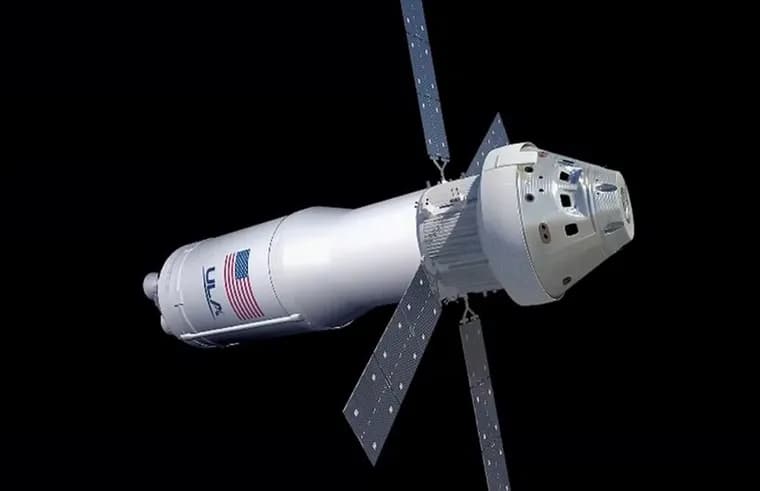
During a lengthy news conference on a Friday, NASA gave a detailed overview of how it plans to return astronauts to the lunar surface as soon as 2028 under the Artemis Program. Ars Technica notes that much of the information had been reported before, by Ars and others, but this was the first time NASA laid the plans out in detail and acknowledged some substantial changes to the architecture.
The most notable change concerns SpaceX's Starship. The revised plan calls for the Orion spacecraft to dock with the Starship lunar lander in high-Earth orbit before the pair transit to the Moon. For Blue Origin, the mission architecture includes four launches of the New Glenn rocket but no spacecraft-to-spacecraft refuelings. The Blue Origin plan also allows for the possibility, not a certainty, of its Blue Moon lander rendezvousing with Orion in low-Lunar orbit.
NASA officials said they still expect to launch Artemis III by "summer" 2027. That mission is a demonstration involving docking with both Blue Moon and Starship near Earth. They are also still tracking toward a 2028 launch of Artemis IV, which would involve an actual landing on the lunar surface.
NASA Administrator Jared Isaacman said: "This is an achievable path we are on right now. We have the mandate, we have the resources, and the support from our stakeholders to be able to execute, and that’s what we intend to do."
The article's author calls it commendable that Isaacman and his leadership took a hard look at every element of the Artemis Program and sought changes that help the lunar lander companies execute and accelerate their plans. Then comes the author's own question: can they hold to those dates?
The article then turns to the SpaceX plan and the background to the change. The biggest ask SpaceX engineers had in meetings with NASA in early 2026 was to remove the requirement to dock with Orion in a near-rectilinear halo orbit around the Moon, which required more energy and had other difficulties. When NASA canceled the Lunar Gateway earlier this year, it solved this problem for SpaceX.
Key facts
- NASA says it plans to return astronauts to the lunar surface as soon as 2028 under Artemis, and acknowledged substantial architecture changes at a lengthy news conference.
- In the revised SpaceX plan, Orion docks with the Starship lunar lander in high-Earth orbit before transiting to the Moon.
- Blue Origin's architecture uses four New Glenn launches and no spacecraft-to-spacecraft refuelings, and allows for Blue Moon possibly meeting Orion in low-Lunar orbit.
- Artemis III, a docking demonstration with both Blue Moon and Starship near Earth, is still expected by "summer" 2027; Artemis IV, the actual landing, is tracked for 2028.
- SpaceX's biggest ask in early 2026 was to drop the near-rectilinear halo orbit docking requirement, and NASA's cancellation of the Lunar Gateway solved that problem.
Why it matters
This is the first time NASA has set out the lunar lander architecture in detail and openly acknowledged substantial changes. Moving the Orion docking with Starship to high-Earth orbit removes the need to dock in a near-rectilinear halo orbit around the Moon, which SpaceX engineers had asked to drop because it required more energy and brought other difficulties. The Blue Origin plan avoids spacecraft-to-spacecraft refuelings altogether.
Who it affects
The plan shapes the work of NASA, SpaceX (Starship as lunar lander) and Blue Origin (New Glenn rocket and Blue Moon lander), and the Orion spacecraft that carries the crew. It also sets the expectations for Artemis III and Artemis IV, the missions that lead to a landing.
How to use it
There is nothing to adopt here; this is a schedule and architecture update. The things to watch are the stated milestones: Artemis III, a docking demonstration near Earth, by "summer" 2027, and Artemis IV, the landing, tracked for a 2028 launch.
How solid is it
The facts come from an Ars Technica report on NASA's own news conference, with statements attributed to NASA officials and to Administrator Jared Isaacman. Ars notes that much of the underlying information had been reported earlier. The dates are targets: "as soon as 2028", "summer" 2027 and "tracking toward" 2028. The primary source is unavailable beyond the report itself, and this retelling covers the article's opening and the start of its SpaceX section.
Risks and caveats
The article's author questions whether NASA and the lander companies can hold to those dates; that is the author's view, not Isaacman's. The Blue Moon rendezvous with Orion in low-Lunar orbit is described only as a possibility. No cost or budget figures are given. The text does not say when exactly in 2028 a landing would occur.
“This is an achievable path we are on right now. We have the mandate, we have the resources, and the support from our stakeholders to be able to execute, and that’s what we intend to do.”
— Jared Isaacman, NASA Administrator