Nvidia's Jensen Huang admits affair with suspected Chinese spy, experts warn of AI fallout
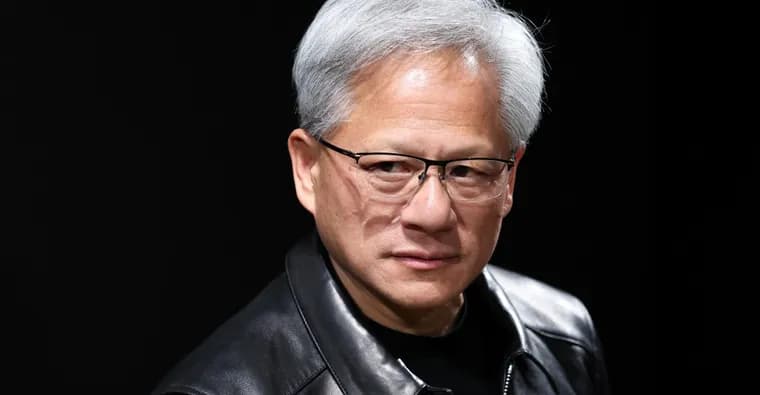
The Verge reports that Nvidia CEO Jensen Huang has admitted to an affair with a woman suspected of being a Chinese spy. The outlet says, with the word "reportedly", that her spying was known to US intelligence and even President Donald Trump at the time. Experts told The Verge the episode threatens to disrupt the US AI industry, could jeopardize national security, and could undermine America's fragile technological lead over China in AI.
The piece sets out why Nvidia is a target. It calls the company the undisputed leader in advanced computer chips, one of the AI industry's scarcest resources, and a gatekeeper to a key bottleneck in global AI development. US companies including Meta, Anthropic and OpenAI are racing to build chips of their own, partly to reduce their dependence on Nvidia, while spending billions on compute. For China the bottleneck is tighter. The US has restricted sales of the most advanced AI chips to the country; China, thought to trail the US by a matter of months, has made domestic alternatives a strategic priority but still lags Nvidia at the bleeding edge, and a thriving black market for restricted Nvidia chips has emerged.
Experts say China could use access to Nvidia either to speed up its own AI development or to impede US development. Emily Kilcrease, a senior fellow and director of the energy, economics, and security program at the Center for a New American Security (CNAS), says getting more Nvidia chips is Beijing's most obvious win. China has other advantages, including abundant energy and a solid ecosystem of open weight models, but without the latest Nvidia chips it "cannot close the gap with US frontier capabilities". "With those chips, the US lead could vanish in a matter of weeks or months."
The article is careful about what is not known. It is unclear how successful the alleged spying operation has been. There is no public evidence that Huang himself helped direct restricted chips toward China or that sensitive information about them came from him. But companies linked to the alleged spy, Alice Huang (no relation to Jensen), have reportedly enabled at least $7 billion of Nvidia chip sales to China. Kyle Chan, a Brookings fellow, says one concern for US industry could be that companies with alleged ties to China had priority access to Nvidia's latest GPUs, which in a time of chip scarcity would make it much harder for American firms to get them.
Huang is also a prominent critic of US chip sales restrictions, and Nvidia spends heavily on lobbying in Washington. Last year he secured White House approval to start exporting Nvidia's H200 AI GPUs to "approved customers" in China and other countries. He also has the ear of Trump and other world leaders.
Sunny Cheung, a fellow for China studies at the Jamestown Foundation, argues that hardware is not the only prize. He says too many people focus on whether trade secrets were stolen, a "very narrow way" of looking at espionage, and adds: "I would hope Jensen Huang isn't foolish enough to hand over the blueprints for Nvidia's next-generation chips to a suspected Chinese intelligence operative." Huang's ties to tech executives, senior policymakers and Trump give him an unusually intimate view of how powerful Americans think and plan. Beijing could use information on infrastructure expansion plans, compute requirements or industry trends to shape its own investments and industrial strategy, Cheung says. Insight into White House thinking on export controls, or Silicon Valley executives' private views on China and Taiwan, could also be valuable.
The other side is disruption at Nvidia. The Verge says the company is closely tied to its CEO: Huang cofounded it more than three decades ago and has served since as president, chief executive and board member, and despite a relatively small stake, "in many ways Nvidia is Jensen Huang". Nvidia shares have slumped since news of the affair broke. Cheung says: "When so much of America's AI infrastructure depends on one company, any significant security or governance problem at Nvidia can create uncertainty across the industry." Kilcrease warns the scandal could "destabilize" the company and that the various investigations already underway "will consume an immense amount of bandwidth within the company". If that slows decisions, product rollouts or the allocation of scarce chips, customers such as OpenAI and Anthropic "could have a real issue accessing the vast amounts of compute they need", and switching hardware "takes time". Nvidia is almost certain to face further disruption, though the effect on the wider industry may be hard to measure.
The piece ends on a possible backfire for China. With everything now public, Kilcrease says, "The odds of AI chip control legislation being passed in Congress just went through the roof." A correction dated Tuesday November 10th fixed a sentence that wrongly named Anthropic, rather than Nvidia, as the leader in advanced computer chips.
Key facts
- The Verge reports Jensen Huang admitted an affair with a woman suspected of being a Chinese spy, reportedly while US intelligence and President Trump knew of her spying.
- Companies linked to the alleged spy, Alice Huang (no relation to Jensen), have reportedly enabled at least $7 billion of Nvidia chip sales to China.
- There is no public evidence that Huang himself directed restricted chips to China or that sensitive information about them came from him.
- Nvidia shares have slumped since the news broke; experts warn that investigations could distract the company and delay compute for AI labs.
- Emily Kilcrease of CNAS says the odds of AI chip control legislation passing in Congress "just went through the roof".
Why it matters
Nvidia is described as the gatekeeper of the chips that are a key bottleneck in AI, and China, thought to trail the US by a matter of months, is short of them under US export restrictions. Experts quoted by The Verge say that if China got more of the latest chips, the US lead could shrink fast. They also say the scandal itself can unsettle a company that depends heavily on its CEO, and with it much of America's AI infrastructure.
Who it affects
Nvidia and its leadership first, with its shares reported to have slumped. AI labs and hyperscalers such as OpenAI and Anthropic could face trouble getting compute if Nvidia's operations are disrupted, according to Kilcrease. American companies in general could lose out if firms with alleged China ties had priority access to the latest GPUs, Chan says. US policymakers are also affected, since Kilcrease expects the episode to raise the odds of AI chip control legislation in Congress.
How to use it
The article offers no instructions, but it does point to things to watch: how the investigations already underway develop, whether Nvidia's product rollouts and chip allocation slow, and whether Congress moves on AI chip controls. Treat the expert scenarios as warnings about what could happen, not as events that have happened.
How solid is it
The core claim is The Verge's reporting, and it hedges key points: the spy's activity being known to US intelligence and Trump is stated as "reportedly", and the $7 billion figure is described as reported, with no source named for it. No Nvidia, White House or Huang response or statement is quoted. The expert comments come from named people at CNAS, Brookings and the Jamestown Foundation, but they are assessments of risk, not findings. The text also carries an editor's correction dated Tuesday November 10th, which fixed a sentence that named Anthropic instead of Nvidia as the chip leader.
Risks and caveats
There is no public evidence that Huang directed restricted chips to China or that sensitive information about them came from him, and it is not clear how successful the alleged spying has been. Cheung's point is that the risk may lie less in stolen trade secrets than in what Beijing could learn about US infrastructure plans, compute needs and export control thinking. The nature and scope of the investigations are not specified. The Verge says the effect on the wider industry may be difficult to measure, and the article names no timescale for any disruption to Nvidia.
“With those chips, the US lead could vanish in a matter of weeks or months.”
— Emily Kilcrease, senior fellow at the Center for a New American Security (CNAS), to The Verge