OpenAI says it is improving ChatGPT for low-resource programming languages
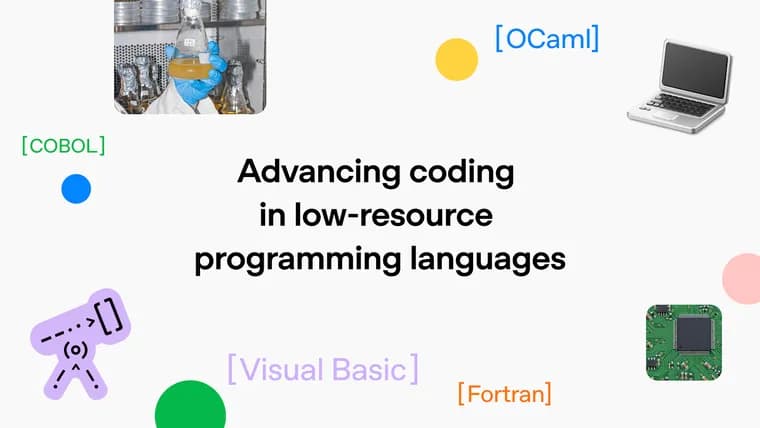
OpenAI has published a post describing work to improve ChatGPT across low-resource programming languages, meaning languages that get less attention than the mainstream ones.
The description of the post names the accompanying material: new evaluations for software engineering, for SQLite, and for COBOL migration. That is three evaluation areas, and COBOL and SQLite are the two specific technologies the description mentions by name.
The description is a single sentence that invites readers to learn how OpenAI is doing this. It gives no scores, percentages or benchmark results, and it names no models or versions. It does not describe the method, training approach or data behind the improvements.
Key facts
- OpenAI says it is improving ChatGPT across low-resource programming languages.
- The post comes with new evaluations for software engineering, SQLite, and COBOL migration.
- No benchmark results, scores or percentages are given in the available description.
- No model names or versions are given.
Why it matters
Coding help in ChatGPT is usually judged on mainstream languages. OpenAI is now stating that less common languages are a focus, and it is pairing that claim with evaluations, including one on COBOL migration. Migration work is a distinct task from writing new code, and naming it signals what kind of coding OpenAI wants to measure.
Who it affects
The evaluations point to developers working with SQLite and teams dealing with COBOL migration, along with anyone doing software engineering tasks in languages outside the mainstream. The description does not say which other languages count as low-resource.
How to use it
The description does not explain how to access or apply the improvements. Developers interested in these languages should read OpenAI's post itself for details. Nothing about pricing or availability is stated here.
How solid is it
This is a first-party claim from OpenAI, and the available text is only a one-sentence description of the post. It carries no numbers, so the size of any improvement cannot be judged from it. The source does not say whether the evaluations are released publicly.
Risks and caveats
Without results, the claim of improvement is unverified here. The wording is that OpenAI is improving ChatGPT, not that a specific level of performance has been reached. Evaluations that OpenAI builds and reports itself should be read with that in mind until the details and scores can be checked.