Personal software gets cheap enough to build in a weekend
In 2020 Robin Sloan wrote about BoopSnoop, a messaging app he built for his family that only four people ever downloaded, and called it a success anyway: software, he argued, can be a home-cooked meal rather than a product chasing scale. Building it took him a week, half of that lost to code-signing problems, and he wished for 'some kind of modern, flexible HyperCard for iOS' that would make it faster. Six years later the essay resurfaced on X, where a user named Thariq wrote that personal software 'was a bit early in 2020 but in 2026, it really can be as personal as a home cooked meal.' Lee Robinson made the same point after building a baby tracker with his wife that skipped user profiles, badges and subscription tiers entirely.
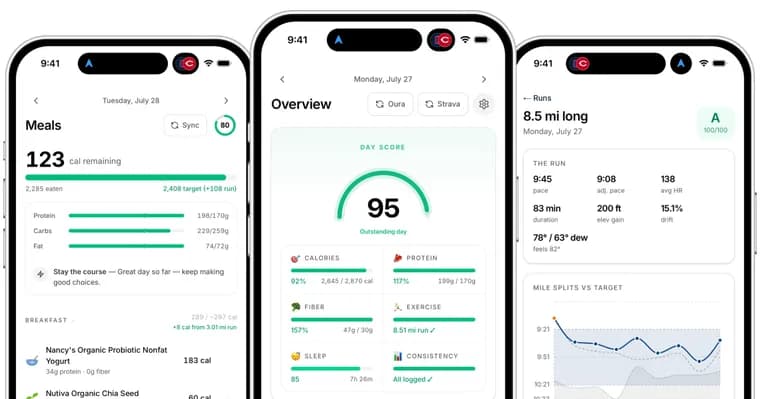
The essay's author, HN user awaxman11 (Alex Waxman), tested the claim by spending the past six months building software for his own household: a sleep app running his family's sleep consultant's plan, a fitness app that sizes his morning smoothie to that day's run, a marathon training plan built from his own race history rather than a generic age-based formula, a chord-voicing quiz he calls 'Duolingo for jazz,' and a medical-records tool that flags gaps before a specialist visit. The sleep app took a week of evenings to turn a consultant's PDF full of conditional logic into a shared schedule that he, his wife and their nanny now use, and that re-plans itself when a nap runs short. The fitness app took a weekend; it pulls his weekly run schedule from the marathon app and adjusts daily calorie, carb and protein targets, including instructions for an eight-ingredient smoothie he weighs out each morning. The marathon app derives heart-rate zones from his actual race results instead of an age formula. The jazz quiz took a single evening.
His stack is Next.js on Vercel, Tailwind and shadcn/ui, Better Auth, Postgres on Neon with Drizzle ORM, Resend for email, GitHub Actions for jobs, and Claude Code plus the Vercel AI SDK for the AI layer, with Warp as his terminal and Umami for analytics; he notes that non-technical alternatives like Claude Artifacts, Replit and Lovable can get similar results without a terminal. Running it all costs about $160 a month: $100 for Claude Code Max, $10 in Anthropic API usage, $20 for Vercel and $30 for Neon. He says that is more than subscribing to equivalent commercial apps would cost, but the bulk of it is a Claude subscription he would keep regardless, and part of the Neon and API spend comes from two larger side projects, nycjazz.guide and Claude Code Daily, not the household apps. Before he upgraded from Claude Pro to Max, his total was under $100 a month, and he estimates someone running one or two personal apps could get by on a $20-a-month agentic coding subscription plus $5 to $10 in model API usage.
His takeaways: build cost has collapsed to the point where imagination, not engineering time, is the limiting factor, and maintenance is easier than expected, since most bug fixes now amount to sharing a screenshot with Claude. He expects the pattern of pulling data from several sources and having an LLM turn it into recommendations, which is how his fitness app combines nutrition, sleep, weight and training data, to spread into professional software too. He is untroubled by an app's software being short-lived: the family retired the sleep app after about four months once their son started sleeping through the night. He argues AI floods large markets with derivative apps while also making it worth building for audiences too small to be a business, citing nycjazz.guide and claudecodedaily.com alongside his household tools, and says good APIs matter more than ever since he switched from Cronometer to FatSecret purely because FatSecret's API was better. He also admits the process is addictive, comparing agentic coding to a slot machine that keeps him up late building instead of sleeping.
He closes by acknowledging his approach still requires comfort with a terminal, a database and a deployment pipeline, but doubts that will last, pointing to Sam Altman's account of planning a nine-friend trip, building a coordination site and drafting an invite email from a single one-paragraph message to ChatGPT on his phone. If that is where the tools are headed, he expects the technical barrier to keep falling and truly personalized software to become the baseline consumer expectation, calling it the stranger, plain-English version of the flexible HyperCard Sloan once wished for.
Key facts
- The author built five personal apps in six months, including a sleep app, a fitness app and a marathon planner, using Claude Code, Next.js, Vercel and Postgres on Neon.
- The fitness app took a weekend to build and sizes an eight-ingredient smoothie to that morning's run distance and intensity, pulling data from Strava, Oura, Withings and FatSecret.
- Running the whole personal-software stack costs about $160 a month: $100 for Claude Code Max, $10 in Anthropic API usage, $20 for Vercel and $30 for Neon.
- The family retired the sleep app after about four months once their son started sleeping through the night, treating the short lifespan as a feature rather than wasted work.
- Robin Sloan's 2020 essay about BoopSnoop, downloaded by four people, is the essay's starting point; the author frames current AI tools as the 'flexible HyperCard' Sloan once wished for.
Why it matters
The piece argues that AI coding assistants have crossed a cost threshold: software that once needed a professional team or months of a hobbyist's spare time, such as a family sleep-tracking app, now takes a week of evenings. That shift turns 'software as a home-cooked meal,' an idea Robin Sloan floated in 2020 as aspirational, into something the author treats as routine.
Who it affects
It speaks most directly to people already comfortable coding with AI assistants who want to build narrow tools for a household, a hobby or a tiny audience, such as the author's sleep and fitness apps or his niche sites nycjazz.guide and Claude Code Daily. The author expects the same aggregate-data-plus-LLM pattern to eventually reach professional software, and separately expects the technical barrier itself to drop for non-developers, citing Sam Altman's one-message trip-planning example.
How to use it
The author's stack, Next.js on Vercel, Tailwind, shadcn/ui, Better Auth, Postgres on Neon with Drizzle, Resend, GitHub Actions, and Claude Code with the Vercel AI SDK, runs about $160 a month, most of it a Claude Code Max subscription he says he would pay for regardless. He estimates someone running one or two smaller personal apps could manage on roughly $20 a month for an agentic coding subscription plus $5 to $10 in API usage, and points to no-terminal alternatives like Claude Artifacts, Replit and Lovable for non-technical builders.
How solid is it
This is a first-person account from one HN user (site ajwaxman.com) rather than a study, so the specific costs, build times and outcomes describe his own projects and are not benchmarked against anyone else's experience. He does supply concrete numbers throughout, monthly cost broken down by vendor, build time per app, months of use before retirement, which makes the account more checkable than a general trend piece.
Risks and caveats
The author flags his own approach as still too technical for most people, requiring comfort with a terminal, a database and a deployment pipeline. He also describes the process as addictive, comparing agentic coding to a slot machine that has cost him sleep, and the $160-a-month figure includes costs from two larger side projects rather than the household apps alone, so it is not a clean per-app price.
“There will be no sudden redesign, no flood of ads, no pivot to chase a userbase inscrutable to us.”
— Robin Sloan