Rep. Torres proposes Power to Players Act: buying a game means owning it
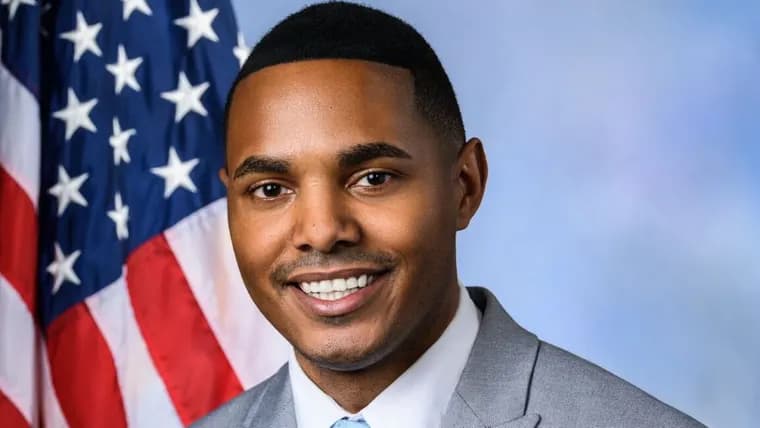
Rep. Ritchie Torres (D-NY) has proposed a bill called the Power to Players Act. It aims to set rules so that, in the bill's words as quoted by Ars Technica, "buying a video game would give the consumer ownership of the game rather than a license to play it." That includes assurances that players can keep accessing their games for years after release. The bill directs the FTC to take action to prevent outcomes like the one it uses as its example.
That example is NBA 2K25. The game launched on September 6, 2025, but is scheduled to become unplayable on December 31 because of server shutdowns. The announcement names it as the kind of problem the bill is meant to solve.
Torres published a statement on the bill: "When you pay for a game, you should own it. Consumers must have the right to own, the right to play, and the right to transfer the games they buy. A game that can be taken away the moment a company pulls the plug is not a purchase. It is a rental disguised as a sale." He added that families in the Bronx and across the country save up to buy these games and deserve better than a license that can vanish at any time. In the statement the act "ensures consumers own what they buy and can keep playing long after a company moves on."
Torres also told Kotaku: "I think there should be a simple rule: if you pay for it, you own it." He called the status quo the bill proposes a "restoration to the historical norm," referring to how most games were experienced by players in the '90s.
Ars Technica places the bill inside a wider fight over game ownership and preservation. Some consumers have been protesting Sony's announcement that it plans to discontinue releases of PlayStation games on physical media. In its most recent financial earnings report, Sony said digital downloads account for 82 percent of full-game unit sales across PlayStation 4 and PlayStation 5 for the covered fiscal year. Ars Technica reads that as suggesting that less than 20 percent of games are still bought in physical form. The counter-argument is that offering discs is not only about the habits of a minority of players: players hope physical copies would help preserve games over the long term, since games are sometimes delisted from digital marketplaces and then become inaccessible.
Key facts
- Rep. Ritchie Torres (D-NY) proposed the Power to Players Act, which aims to make buying a video game confer ownership rather than a license to play it.
- The bill directs the FTC to take action to prevent outcomes like NBA 2K25, which launched on September 6, 2025 and is scheduled to become unplayable on December 31 due to server shutdowns.
- Torres says consumers must have the right to own, the right to play, and the right to transfer the games they buy, and calls a revocable license "a rental disguised as a sale."
- The bill lands amid protests over Sony's plan to stop releasing PlayStation games on physical media; Sony reports digital downloads are 82 percent of full-game unit sales on PS4 and PS5 for the covered fiscal year.
Why it matters
The bill takes a live dispute, whether a digital game purchase is a sale or a revocable license, and puts it in front of Congress and the FTC. NBA 2K25 is the concrete case: a game bought after its September 2025 launch is due to stop working on December 31 when servers shut down. Torres frames the fix as a return to the historical norm, referencing how most games were experienced by players back in the '90s. Ars Technica notes that game ownership and preservation is already a hot-button issue.
Who it affects
Game buyers are the main group: Torres's statement stresses families who save up to buy games. Owners of PlayStation consoles are in the frame too, because digital downloads make up 82 percent of full-game unit sales on PS4 and PS5 and Sony plans to discontinue physical releases. Companies that sell games under licenses and shut down servers would be the ones the FTC is directed to act against, though the source does not say what action the bill would require.
How to use it
There is nothing for a reader to use yet: this is a proposed bill, not a product or a rule in force. For players, the practical point is that the license-versus-ownership question is now an active policy proposal. The source offers no steps for consumers and no detail on how to follow the bill.
How solid is it
The description of the bill rests on the announcement and Torres's published statement, as relayed by Ars Technica, plus his comments to Kotaku. The source gives no bill number, no co-sponsors, and no committee or vote status. It does not say what specific FTC action or penalties the bill would require, and it gives no date for the bill's introduction or announcement. The year of the December 31 NBA 2K25 shutdown is not stated. The bill's name appears as "Power to Players Act" in the article text and "Power To The Players Act" in Torres's statement.
Risks and caveats
The source does not say whether the bill covers existing games or only future purchases, nor how it would treat online-only titles whose servers must be paid for. The "less than 20 percent" physical share is Ars Technica's own inference from Sony's 82 percent digital figure, not a number Sony reported. The preservation case for physical discs is described as a hope players hold, not an established outcome.
“A game that can be taken away the moment a company pulls the plug is not a purchase. It is a rental disguised as a sale.”
— Rep. Ritchie Torres (D-NY), published statement on the bill