Second German court holds Google liable for its AI search answers
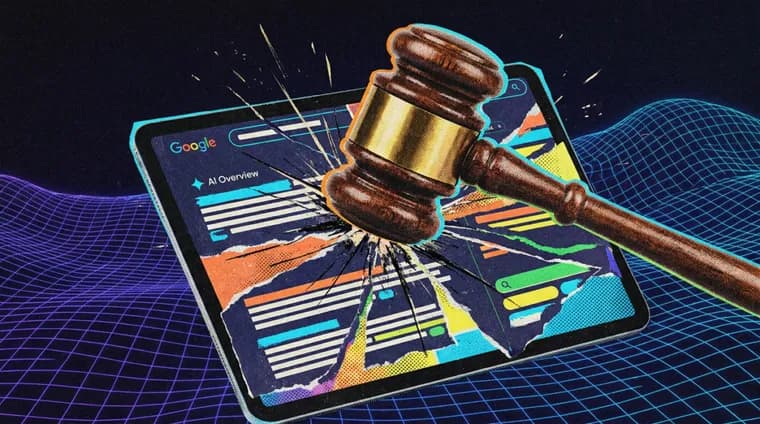
In a decision dated September 24, 2026, the Aachen Regional Court issued a preliminary injunction barring Google from spreading certain false statements about a physician through its "AI Mode" search feature. The court explicitly relied on the reasoning of a Munich Regional Court I ruling from late May, which held that Google is directly liable for the content of its AI-generated search summaries. Google can challenge the Aachen injunction; the decision is not final yet.
The Munich case came first. Google's AI had falsely linked two Munich-based publishers to fraud schemes. The judges classified AI Overviews not as mere search results but as Google's own statements, so Google has to answer for them rather than hide behind the role of a neutral middleman passing along third-party information. According to The Decoder, Google publicly announced an appeal but never carried it through to a decision. The case ended in a settlement, which means no higher court has weighed in on the Munich reasoning. Why the settlement was reached and whether money changed hands is unknown, and neither Google nor the affected publisher would comment.
The Aachen case involves a physician who worked as chief physician and professor of neuroradiology from 2010 until late June 2026. On August 28, a colleague alerted him that Google's AI was explaining his departure by citing an alleged sexual assault against his secretary. When users ran further searches with terms such as "suspension," "termination" and "court proceedings," AI Mode returned detailed, multi-paragraph fabrications, including an invented legal aftermath. None of it concerned the doctor. The AI had taken events involving a different former university professor and attributed them to him, which the court could confirm from its own records because the criminal case was brought against someone else.
The doctor described the mix-up in detail in late August and asked Google by email to remove the content. In mid-September the company said it would take no action. A formal legal demand sent the same day also went nowhere: Google confirmed receiving it, but according to the court the false AI-generated texts were still live. The court then banned further spread of the three disputed text variants. Because the false claims could seriously damage the doctor's professional reputation, it acted on an emergency basis without hearing Google first. If Google violates the order, it faces fines of up to 250,000 euros per violation.
The Decoder calls the closeness to the Munich reasoning the most significant part of the decision, and reads it as a sign that a consistent legal view is forming across German courts. The Aachen court wrote: "The respondent provides AI-generated search and is therefore also responsible for the answers generated in this context." It also cited the Munich ruling directly, noting that Google's AI produces "independent, new, and substantive statements based on an evaluation and combination of content from various third-party websites." Google could check such statements, the court said, for example by comparing AI output against the source websites it used. The judges added that had Google confronted its own AI with the doctor's objections, the system would have caught the errors itself.
The Decoder's own analysis goes further. If German courts keep classifying Google as a publisher of false statements and Google keeps avoiding precedent through what are likely financial settlements, the outlet argues, that creates a perverse incentive: law firms and affected parties could probe AI search with targeted queries until the model produces false, potentially defamatory statements, then seek an injunction and negotiate a settlement. It also suggests Google's motive for settling may go beyond individual false claims. If a top court ruled that AI answers count as original content, the publishers whose texts feed those answers could assert their own claims. That was not part of the Munich case, but The Decoder calls it a logical next step. In the most extreme scenario it describes, Google would have to compensate the creators behind its sources for every AI-generated answer.
Key facts
- In a decision dated September 24, 2026, the Aachen Regional Court issued a preliminary injunction barring Google from spreading false statements about an Aachen doctor through AI Mode; Google can challenge it and the decision is not final.
- The court relied on the late-May Munich Regional Court I ruling and treated AI-generated texts as Google's own statements, not mere links to third-party sites, making Google directly liable.
- The AI had attributed an alleged sexual assault and legal proceedings to the doctor, but the events involved a different former university professor; the court confirmed this from its own records.
- Breaching the order carries fines of up to 250,000 euros per violation; the court banned three disputed text variants and acted without hearing Google first.
- Google's announced appeal in the Munich case ended in a settlement, so no higher court has ruled on the reasoning; the terms and the reason are unknown.
Why it matters
Two regional courts have now reached the same view: what Google's AI generates in search is Google's own statement, not a pointer to someone else's content. The Munich ruling came from a widely watched case, and Aachen applied its reasoning explicitly. The Decoder reads this as a consistent legal view forming across German courts. If it holds up, the outlet says, it could call into question the business model of AI search in Germany and shape the debate in other countries too.
Who it affects
Google first: it operates AI Overviews and AI Mode and, on this reasoning, answers directly for what they say. The Aachen doctor and the two Munich-based publishers were the people directly harmed by false output. The Decoder also points to publishers whose texts feed AI answers, who might eventually assert their own claims if a top court ruled that AI answers count as original content. That point was not part of the Munich case.
How to use it
This is a court development, not a product, so there is nothing to switch on. The Aachen sequence shows how the case ran: the doctor documented the mix-up and asked Google by email to remove the content, a formal legal demand followed, and only after Google refused and the texts stayed live did the court issue an emergency injunction. The court said Google could check AI output against the source websites it used. The Decoder's analysis is that affected parties and specialised law firms could use this route against false AI-generated statements.
How solid is it
The Aachen order is a preliminary injunction issued without hearing Google, and it is not final. Google can challenge it. The Munich reasoning has not been tested by a higher court, because the appeal Google announced ended in a settlement, according to The Decoder, which learned this itself. The reasons for the settlement and whether money changed hands are unknown, and neither Google nor the affected publisher would comment. The Decoder says the Munich court also declined to weigh in on the broader significance of its ruling beyond that case. No Google statement on the Aachen decision is given.
Risks and caveats
The legal view could change if a court of higher rank rules differently, and binding precedent only emerges if one side pushes a case to the end. The Decoder warns of a perverse incentive: if Google keeps settling, targeted probing of AI search to provoke false statements and then negotiating could become a lucrative business, and the outlet says these systems are easy to manipulate. The more far-reaching scenarios, such as claims by source publishers or compensation for every AI-generated answer, are the author's speculation and depend on a top court ruling that AI answers are original content.
“The respondent provides AI-generated search and is therefore also responsible for the answers generated in this context.”
— Aachen Regional Court