Sila signs Panasonic Energy anode deal it says could top $1B
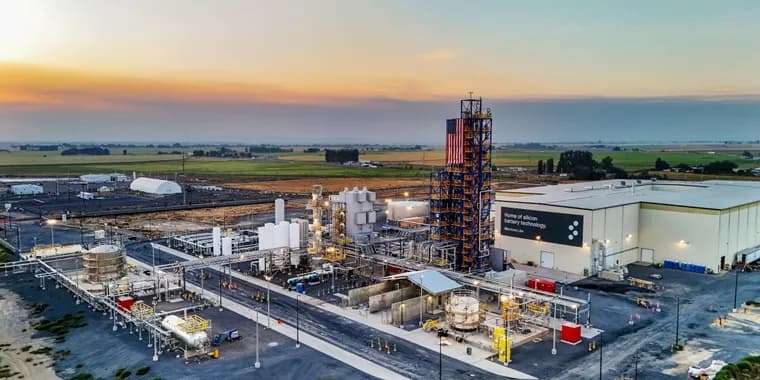
Sila, a US company that makes silicon-based anodes for lithium-ion batteries, has signed an agreement with Panasonic Energy, a global battery manufacturer, to supply silicon-carbon anode material. Sila says the deal could be worth more than $1 billion over time. MIT Technology Review's weekly climate newsletter, The Spark, uses the deal both as good news for next-generation US batteries and as an example of how the politics of batteries have shifted.
Sila was founded in 2011. Its pitch is energy density: according to the company, its anode weighs a fifth as much as the graphite used in anodes today and cuts the volume in half. That lets a battery pack more energy into the same weight and volume, which could mean longer range for EVs, and the material can also deliver more power and recharge faster than conventional chemistry. The author's colleague James Temple covered Sila in 2021, when its battery first appeared in Whoop fitness wearables.
The company has grown since. In 2022 it announced a factory in Moses Lake, Washington, and received $100 million from the US Department of Energy, part of a multibillion-dollar round of grants under the Biden administration to support the US battery supply chain. The factory opened in September 2025 and is already operating. According to cofounder and CEO Gene Berdichevsky, the Panasonic deal will help Sila scale to at least 10 times more production than current levels. He says Panasonic has committed to buying tens of thousands of tons of material, but Sila is not sharing specific numbers on the total commitment or the price Panasonic is paying. The article calls this Sila's first mass-market deal.
The article stresses the context. The US next-generation battery market has largely been on the ropes in recent years: two billion-dollar battery companies, 24M and ESS Tech, have declared bankruptcy and shut down in the last year. Against that, the Sila deal is described as a bright spot.
The author's larger point is political. Batteries used to be firmly seen as a climate technology, but many companies have moved away from clean-energy messaging and toward geopolitics. China dominates batteries and the anode market in particular, controlling over 90% of graphite production today. The US has long tried to reduce reliance on Chinese batteries and materials, and the Trump administration has stepped that up. Earlier this year the US Defense Department committed a $1.4 billion loan to Sila, aimed at helping the US face a "significant technology sovereignty challenge," as a press release put it. The article describes that loan as a major part of the financial backing for the factory's production.
Sila's announcement of the Panasonic deal mentions EVs but not climate, emissions or the energy transition. It is about American industrialization, with a note that a North American battery supply chain can also help power the AI market. Asked whether the company still treats decarbonization as a priority, Berdichevsky said the politics have shifted around the company much more than its motivations have, and that energy efficiency is what motivates engineers and technologists there.
Key facts
- Sila will supply silicon-carbon anode material to Panasonic Energy; Sila says the deal could be worth more than $1 billion over time. The price and total commitment are not disclosed.
- Berdichevsky says the deal will help Sila reach at least 10 times its current production, and that Panasonic has committed to buying tens of thousands of tons of material.
- A $1.4 billion US Defense Department loan, committed earlier this year, is a major part of the financial backing for the Moses Lake, Washington factory, which opened in September 2025.
- China controls over 90% of graphite production today; Sila says its anode weighs a fifth as much as graphite and cuts volume in half.
- Sila's announcement mentions EVs and American industrialization but not climate, emissions or the energy transition.
Why it matters
The article frames the deal as rare good news after a rough stretch for US next-generation batteries. Two billion-dollar companies, 24M and ESS Tech, went bankrupt and shut down in the last year, and this is Sila's first mass-market deal. It also marks a change in how the sector talks about itself: with China controlling over 90% of graphite production and a $1.4 billion Defense Department loan behind Sila's factory, the pitch is technology sovereignty and American industrialization rather than decarbonization.
Who it affects
Battery makers that buy anode material, starting with Panasonic Energy, and US battery materials startups that rely on public financing. EV makers and wearable makers are the downstream users the article names for denser batteries. The article also notes that a North American battery supply chain can help power the AI market.
How to use it
This is a business-to-business supply agreement, so there is nothing for an individual buyer to adopt. For readers tracking the sector, the useful signals are the scale (tens of thousands of tons committed, at least 10 times current production) and the framing in Sila's announcement. Price, total commitment and the signing date are not given in the source.
How solid is it
The $1 billion figure is Sila's own estimate of what the deal could be worth over time, not a stated contract price. The tonnage and the 10x scale-up come from CEO Gene Berdichevsky. The weight and volume advantages over graphite are the company's claims. The Moses Lake factory opening, the $100 million Department of Energy funding in 2022 and the $1.4 billion Defense Department loan are stated as facts by the author. The piece is a newsletter with the author's interpretation of the political shift.
Risks and caveats
Several things are open. Sila is not disclosing the total commitment or the price Panasonic pays, and no timescale is given for the 10x scale-up. The energy density benefits are company figures. A major part of the factory's financial backing is a government loan, and the article ties the sector's fortunes to shifting politics. The article does not say why 24M and ESS Tech failed.
“I think the politics of it has shifted around us much more than our motivations have shifted”
— Gene Berdichevsky, cofounder and CEO of Sila