Simon Willison has Claude Opus 5.5 build Quick Study, a photo painter
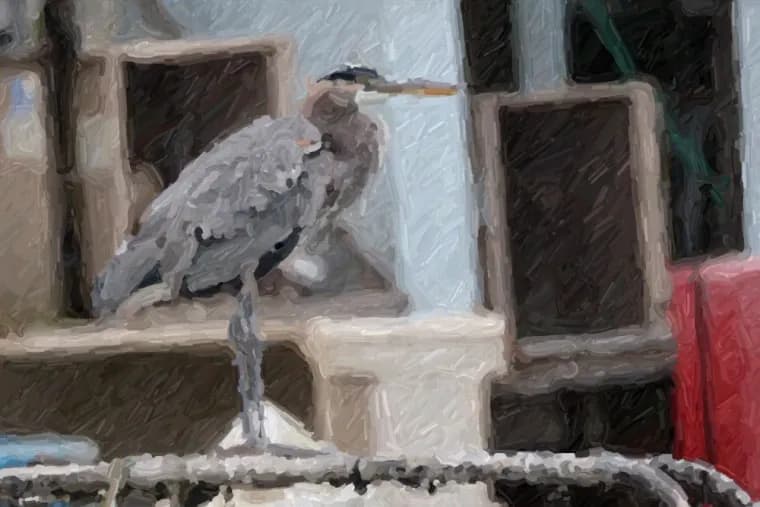
On 23 October 2026, Simon Willison posted a short note on simonwillison.net about a small experiment with Claude Opus 5.5 High. He gave the model a one-line prompt: "Build an artifact where you open a photo and it rapidly (in a few seconds) paints a version of that photo using a canvas element and simulated paintbrush." The result is called Quick Study.
The post describes the finished artifact in a single sentence: Quick Study uses Sobel edge detection, with no external libraries beyond Google Fonts. So the painting runs on the browser's canvas element, with edge detection guiding a simulated brush, and the only outside dependency is a font source.
The note points back to an earlier experiment of the same kind, in which the author got Claude Fable to simulate a watercolor illustration with P5.js. The "few seconds" figure is a requirement written into the prompt, not a measured result. The post text carries no reactions, benchmarks or comparison between the two experiments.
The page also lists recent posts from the same blog: Battle Drones, a vibe coded RTS with audio-based multiplayer (20 October 2026); Hello Python 3.15, goodbye 3.10, and now I can use 3.11 (12 October 2026); A new feature for my blog, built using my voice (9 October 2026); and Claude Haiku 5.5 (7 October 2026).
Key facts
- Simon Willison prompted Claude Opus 5.5 High to build an artifact that opens a photo and paints a version of it on a canvas element with a simulated paintbrush.
- The prompt asked for the painting to happen rapidly, "in a few seconds"; that is a requested target, not a measured result.
- The resulting artifact, Quick Study, uses Sobel edge detection and has no external libraries beyond Google Fonts.
- The post links the work to an earlier experiment in which Claude Fable simulated a watercolor illustration with P5.js.
- The post is dated 23 October 2026.
Why it matters
This is a small, concrete data point on what a single prompt to Claude Opus 5.5 High can produce: a self-contained browser artifact with image processing and a brush simulation, built on plain canvas and Sobel edge detection rather than a graphics library. It also continues a thread in the author's blog, where an earlier experiment had Claude Fable simulate a watercolor illustration with P5.js. It is a hobbyist demo, not a product launch.
Who it affects
Mainly developers and tinkerers who use Claude to generate small interactive web artifacts, and readers who follow Simon Willison's experiments with coding models. It has no stated bearing on businesses or on any wider market.
How to use it
The source text carries no link, demo, screenshot or code for Quick Study. What it does give is the prompt, which can be reused as a starting point with a model of your choice: ask for an artifact that opens a photo and, within a few seconds, paints a version of it using a canvas element and a simulated paintbrush. The post says the result used Sobel edge detection and nothing external except Google Fonts.
How solid is it
It is a first-person note from the author's own blog, and the prompt is quoted in full. The claim about Sobel edge detection and the lack of external libraries is the author's own statement. The post does not say whether the artifact actually paints within a few seconds; that is only the requirement in the prompt. It also does not say how many attempts were needed or whether the output was edited by hand.
Risks and caveats
Nothing in the source lets a reader check the result directly, since no demo, screenshot or code appears in the text. The post does not describe how the painting algorithm works beyond Sobel edge detection and the canvas and brush simulation, and it does not explain what "High" means in "Claude Opus 5.5 High". No benchmarks or comparison with the earlier Claude Fable watercolor experiment are given.
“Build an artifact where you open a photo and it rapidly (in a few seconds) paints a version of that photo using a canvas element and simulated paintbrush”
— Prompt to Claude Opus 5.5 High, as posted on simonwillison.net