Simon Willison tests Gemini 4 Neon, backs code over image models for design
In a 28 November 2026 post on simonwillison.net, Simon Willison argues that images defined in code by text-output LLMs are more useful for much of the author's work than images from dedicated image models. The starting observation is that frontier LLMs released in the second half of 2026 tend to be much better at visual reasoning and creative “design” than their predecessors. Ask one for a 2D image or a 3D model and you are very likely to get something useful, sometimes something aesthetically impressive. Above all, you or the model can keep editing the code.
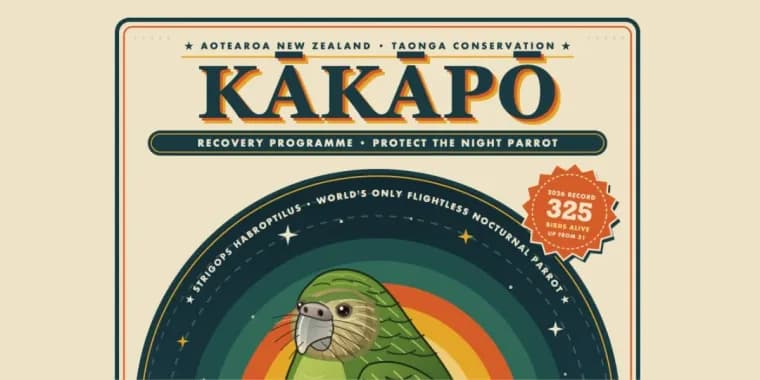
The test case was a poster made with Gemini 4 Neon, which Willison says is getting some buzz for its 2D design skills, in AI Studio. The opening prompt read: “Create an SVG poster promoting the Kakapo recovery project, research details first, make the poster look really cool and give it a 1970s graphic design”. It took some iteration, partly because AI Studio does not render SVGs, so models there cannot spot visual mistakes without help. Follow-up prompts asked for a more realistic kakapo, especially the face, using image search for references, then pointed out text that did not fit its pill shape and flagged further problems.
Willison calls the end result pretty solid. AI Studio ran Google searches to find the numbers on the poster, and Willison checked them and reports that all are correct. The poster also included red rimu tree fruit on the branch, a detail the author liked because the fruit is essential for the breeding season. The key point, in this account, is editability: the SVG text can be changed directly, or the file opened and edited visually in Inkscape, Adobe Illustrator or Boxy SVG.
The approach goes beyond SVG. A model connected to a coding agent environment can execute code to produce image files, HTML and CSS, Canvas elements, Blender scripts, WebGPU shaders, PDF and anything else representable as a file on disk or a script's output. Willison names this as one reason vibe game development has exploded recently: Claude Opus 5.5, GPT-6 Astra and Gemini 4 Neon can create good-enough game assets, such as 3D models, textures and sprites, entirely by writing code.
By comparison, most AI image tools output bitmaps directly. Stable Diffusion, DALL-E and Midjourney were early leaders, and the past 15 months or so brought LLM-driven variants such as Google's Nano Banana and OpenAI's ChatGPT Images, which can edit existing images while preserving details across multiple turns. Willison says they still produce glitches visible on zooming in, lack the guaranteed consistency of font-based typography, and are inherently flat, with no direct manipulation of an element or layer. An update to the post notes innovation the author had not known about: Ideogram 4.0, for example, claims “bounding-box layout control” through structured JSON prompting. Willison says code-generated images solve all those problems, while dedicated image models still have their place for photorealism.
The author also revisits an earlier view that Anthropic had a serious product gap without an image generation model, since OpenAI and Google offered excellent ones and enterprise customers still run on PowerPoint. Now, Willison writes, Claude readily produces compelling presentations and website designs, and Claude Design offers a full design system platform, all built around code-driven images.
Key facts
- Willison argues that frontier LLMs released in the second half of 2026 tend to be much better at visual reasoning and design than their predecessors.
- A 1970s-style SVG poster for the Kakapo recovery project, made with Gemini 4 Neon in AI Studio, needed several rounds of fixes; Willison checked its researched numbers and reports they are all correct.
- Code-defined images stay editable: the SVG can be changed as text or visually in Inkscape, Adobe Illustrator or Boxy SVG.
- Willison's complaints about bitmap image models are zoom-level glitches, less consistent text and no direct control of elements or layers, though an update notes Ideogram 4.0 claims bounding-box layout control.
- Dedicated image models keep their place for photorealism; for diagrams, posters, UI components, visualizations and game assets, the author prefers code.
Why it matters
The argument is that general text-output models are taking on visual work that seemed to need a specialist image model. Willison calls it another variant of the bitter lesson: the text-output LLMs kept improving until they could handle visual design by writing code. It also changed the author's view of Anthropic, which had looked at a disadvantage after Nano Banana and ChatGPT Images arrived. Claude now turns out presentations and website designs that Willison finds visually compelling.
Who it affects
The uses Willison cares about are explanatory diagrams, editable poster designs, UI components, visualizations and game assets, so people doing that kind of work are the natural audience. Game makers get a specific mention: the author links part of the recent explosion in vibe game development to models that write good-enough 3D models, textures and sprites as code. Those who need photorealistic images are the stated exception.
How to use it
The poster began with one prompt in AI Studio asking Gemini 4 Neon for an SVG, with research first and a 1970s graphic design. Since AI Studio does not render SVGs, expect to point out visual mistakes yourself, as Willison did with the kakapo's face and with text that overflowed a pill shape. Finished files can be edited by hand or in Inkscape, Adobe Illustrator or Boxy SVG. With a coding agent, the same idea extends to HTML and CSS, Canvas, Blender scripts, WebGPU shaders and PDF.
How solid is it
This is a personal blog post offering one author's assessment, built around a described hands-on experiment: the Gemini 4 Neon poster. Willison published the full transcript, exported from AI Studio as Markdown, and says the poster's numbers were checked and are correct. The verdict that code-driven images are a better bet is framed as how it feels to the author for the author's own priorities.
Risks and caveats
The poster was not a one-shot result and needed corrective prompts. The author's claim that generated code solves the listed problems of image models comes with an update acknowledging innovation unknown at the time of writing, with Ideogram 4.0's claimed bounding-box layout control through structured JSON prompting as an example. And the preference does not cover photorealistic images, where Willison says dedicated image models still have their place.
“This feels like another variant of the bitter lesson: I was convinced a specialist image model was necessary to serve customers with design problems. It turns out the text-output LLMs just kept getting more capable until they could handle visual design by writing code.”
— Simon Willison, simonwillison.net