Splice CEO Kakul Srivastava warns AI-written documents make conversations worse
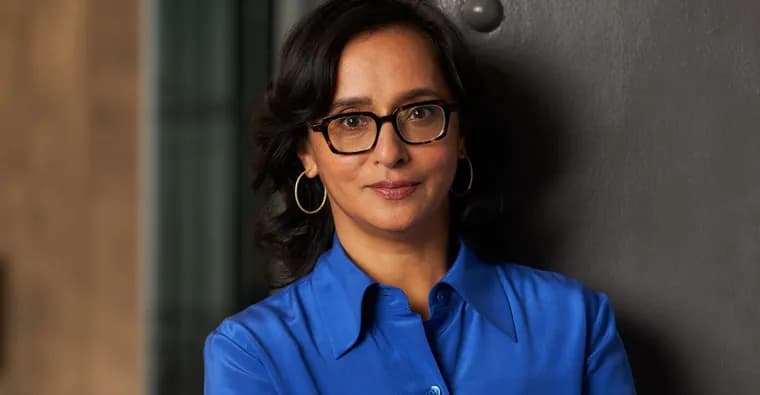
The Verge ran a questionnaire-style interview with Kakul Srivastava, CEO of Splice, the sample platform that countless producers rely on for one-shots and melodic loops. The article says samples from the service have ended up in hits such as Lisa's 'Money' and Sabrina Carpenter's 'Espresso'. Before Splice, Srivastava held executive roles at Flickr, Yahoo, GitHub and Adobe. At Splice she has expanded the platform's footprint by acquiring Spitfire Audio and has overseen its moves into generative AI. The article says she was very outspoken on an episode of Decoder last year about avoiding the sort of 'push-button, get-song' AI that has made companies like Suno controversial, and that the company has made a point of offering AI products that keep the human at the center of the creative process.
The AI-related answer comes when she is asked for her most indispensable tool. Her reply: a well-written document and a real conversation about it. Splice is remote-first, so it has no hallway; instead, someone sits down and thinks something through, and a bunch of people argue with it. She says almost everything good that has happened at the company started that way. That is why she is careful about AI-written documents. In her words, once you can't tell whether there is a person behind the words, the conversation about it becomes a different conversation, and a worse one, and you can't really go back from that. She adds that she thinks the same thing is true of music. Note that she speaks of AI-written documents; the 'AI emails' framing is the publication's headline, not her wording.
The rest of the piece is personal. Her happy place online is Instagram, where her feed is almost entirely people making music in unexpected ways: gothic western, a woman in Russia who organizes street dancing, a man playing modern hits on a hammered dulcimer, an Indian chai-wala rapping. Her fondest game memory is Antakshari, an Indian game in which you sing a bit of a song and the next person must start with the letter the line ended on; she loves that the game is made of music while none of the players are musicians. Her most disappointing gadget is a cup warmer: it warms the cup but not the coffee, and she stresses it works exactly as designed. She is most proud of her kids.
The thing she is least proud of is Glitch, a massively multiplayer open-world game made at Tiny Speck, the company that later became Slack, where she was on the early team. She calls it one of the most beautiful things she has worked on, but says it failed for reasons in plain sight: it was built on Flash, and Adobe had already stopped investing in Flash, and it was a PC experience just as the world moved to playing games on phones. The best advice she has received is 'Say the thing, then explain it', because people listen for whether you sound like you believe it before they care about the proof.
Her current obsession is cooking her late mother's food. She died before Srivastava learned most of it, so she has been reconstructing the recipes from YouTube videos by strangers. She got one right last year, and the taste took her back to being eight years old with her mother. She says this is what she thinks about when asked what technology is for: a stranger uploaded a video of his family's recipe and gave her mother's cooking back. Her splurge is live jazz, her biopic tagline is 'A heist movie where nothing gets stolen and everybody gets paid', and the final question, about her last GIF or meme, appears with no answer in the text.
Key facts
- Splice CEO Kakul Srivastava says she is careful about AI-written documents: once you can't tell whether a person is behind the words, the conversation becomes 'a different conversation, and a worse one', and you can't go back. She thinks the same is true of music.
- Her most indispensable tool is a well-written document and a real conversation about it; Splice is remote-first, so it has no hallway.
- The Verge says she was outspoken on Decoder last year about avoiding 'push-button, get-song' AI of the kind that made Suno controversial, and that Splice offers AI products that keep the human at the center.
- She names Glitch, the game made at Tiny Speck before it became Slack, as what she is least proud of: it was built on Flash, which Adobe had stopped investing in, and was a PC game as the world moved to phones.
- The Verge's headline says 'AI emails', but her answer concerns AI-written documents.
Why it matters
Splice sits close to the centre of how music gets made: the article says samples from the service appear in hits like Lisa's 'Money' and Sabrina Carpenter's 'Espresso'. Its CEO is a prominent voice on where generative AI should and should not go. The Verge notes she has tried to thread the line on AI music tools, avoiding 'push-button, get-song' AI while offering products that keep the human at the centre. Here she carries the same logic from music into everyday work writing: the worry is not output quality but losing the ability to tell whether a person is behind the words.
Who it affects
Most directly, people who write and read internal documents at work, since her remark is about how colleagues communicate. It is framed around Splice's remote-first culture, where a written document replaces the hallway conversation. It also touches the producers and musicians who use Splice, because she says she believes the same dynamic holds for music.
How to use it
There is nothing to install or buy; this is an interview, not a product launch. The practical takeaways are her own habits: write the document, then have a real conversation about it, and follow her best advice received, 'Say the thing, then explain it', rather than laying out all the proof first.
How solid is it
This is a first-person questionnaire, so the views are her opinions, not findings or company policy. The Verge's headline says 'AI emails are killing conversations', but those words do not appear in her answers; she speaks of AI-written documents and says the conversation becomes 'a different conversation, and a worse one'. The source never says Splice bans or restricts AI-written emails. The publication date of the interview and of the Decoder episode are not given.
Risks and caveats
Do not read the headline as a company rule or a measured claim about email. Her comment is a personal judgement with no data behind it. The source gives no details of Splice's AI products, policies or the Spitfire Audio acquisition, so it cannot tell you how her stance shapes what Splice actually ships. Most of the interview is lighter personal material, such as the cup warmer, Antakshari and her mother's recipes.
“Once you can’t tell whether there’s a person behind the words, the conversation you have about it becomes a different conversation, and a worse one.”
— Kakul Srivastava, CEO of Splice, in The Verge's questionnaire