Study: US hyperscale data centers used 1.5 to 2.2% of electricity
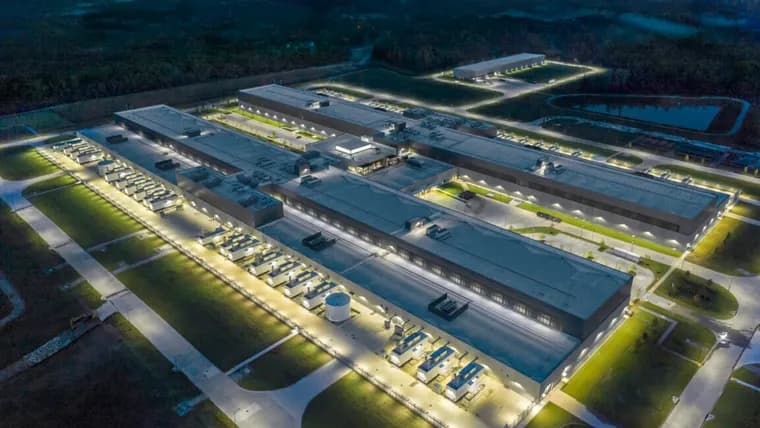
A new study has tallied energy use and estimated emissions for hyperscale data centers operating in the United States between May 2024 and April 2025. Ars Technica frames it against the tech industry's rush to turn investment money into hyperscale data centers for large language models. That rush, the article says, has left no one able to plan how to supply the electricity cleanly or with minimal impact on ratepayers, and it has been hard even to collect information on what is being built.
The team started with a list of 675 facilities from a commercial database that draws on news reports, company statements and satellite imagery. They dropped any facility with no reported electrical capacity, and any they could not verify as a suitably large building with the expected cooling and electrical connection equipment. That left 403 data centers with an average electrical capacity of about 40 megawatts.
The filtering cuts both ways. In one sense the estimate is very conservative, because 272 facilities believed to be large data centers were left out. But for anyone interested in AI data centers specifically, some of the facilities that were included may not fall in that category.
That also adds uncertainty to how much power the sites actually drew. Relying on other research, the team used a range of utilisation figures: some conventional data centers run at an average of about 48 percent of capacity, while AI training loads have been running higher, at around 70 percent.
Putting it together, the total power use for the year by the 403 data centers was estimated at 68 to 99 terawatt-hours. That is 1.5 to 2.2 percent of total US electricity use, on par with the total used by Wisconsin or Indiana. The study could not separate AI compute from more traditional data services, but Ars Technica says it gives a clear point of reference to track going forward.
Key facts
- The study estimates that 403 US hyperscale data centers used 68 to 99 terawatt-hours between May 2024 and April 2025, or 1.5 to 2.2 percent of total US electricity use.
- That is on par with the total used by Wisconsin or Indiana.
- The sample was cut from 675 facilities on a commercial-database list to 403 with an average electrical capacity of about 40 megawatts; 272 facilities believed to be large data centers were left out.
- The result is a range because utilisation was taken from other research: about 48 percent of capacity for some conventional data centers, around 70 percent for AI training loads.
- AI compute could not be separated from traditional data services, so the figure is not an AI-only number.
Why it matters
Information on what hyperscalers are building has been hard to collect, so any grounded tally is useful. This study puts a number on the sector's power draw: 1.5 to 2.2 percent of US electricity, comparable to a state such as Wisconsin or Indiana. Ars Technica presents it as a clear point of reference to track moving forward, against a backdrop of unplanned electricity supply and concern for ratepayers.
Who it affects
The article ties the question to ratepayers and to anyone planning how to supply electricity cleanly for the data center build-out. It also bears on the operators of hyperscale facilities, whose combined demand is now measured against a state-sized share of US consumption.
How to use it
Treat the 68 to 99 terawatt-hours range and the 1.5 to 2.2 percent share as a baseline for the May 2024 to April 2025 period, and compare later estimates against it. Do not read it as an AI-only figure, since the study could not separate AI compute from more traditional data services.
How solid is it
The sample is explicit: 403 of 675 listed facilities passed the team's checks, and the initial list came from a commercial database built on news reports, company statements and satellite imagery. The final range rests on utilisation figures borrowed from other research, so it is an estimate, not a measurement. The article names no authors, institution or journal for the study, so the retelling relies on Ars Technica's account.
Risks and caveats
The estimate pulls in two directions. It is described as very conservative because 272 facilities believed to be large data centers were left out. Yet some of the included facilities may not be AI data centers, which muddies any reading of the number as AI demand. The study also estimated emissions, but no emissions figure appears in the article.
“it provides a clear point of reference to track moving forward”
— Ars Technica, describing the study