Unitree robot dog overheats and collapses on its owner's commute
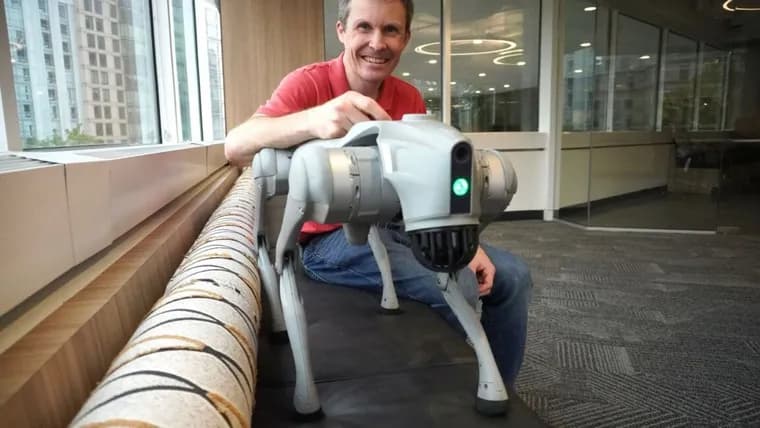
An Ars Technica writer paid $4,000 for a quadruped robot dog made by the Chinese company Unitree and began walking it alongside him on his commute. On a sunny June morning, the two-mile walk to his office near the White House in Washington, DC was mostly downhill, and the robot finished with battery capacity to spare. Strangers stopped to photograph it and ask questions, biological dogs kept their distance and sometimes growled or barked, and children were delighted when the author had it shake hands, do a handstand and leap into the air. The return trip was a different story. The author recharged the robot during the workday, but the walk home was mostly uphill and the temperature had climbed to 87°F (30°C). Its steps grew increasingly labored as the path got steeper. Checking his phone as he neared his own neighborhood, the author saw the robot's battery at 5 percent and its internal temperature at 84°C (183°F). Within sight of his front door, the robot collapsed, rolling onto its back with its legs in the air instead of shutting down gracefully. The author says he is not sure whether it ran out of power or overheated. Asked repeatedly what the robot is actually useful for, he gives an honest answer: not much.
Key facts
- The author paid $4,000 for a quadruped robot dog made by the Chinese company Unitree.
- On a June morning the robot walked the two miles to the author's office near the White House with battery capacity to spare, since the route was mostly downhill.
- On the uphill walk home in 87°F (30°C) heat, the robot's steps grew increasingly labored as its battery drained and it heated up.
- Near the author's front door its battery hit 5 percent and its internal temperature reached 84°C (183°F), and it collapsed onto its back with its legs in the air instead of shutting down gracefully.
- The author says he is not sure whether it ran out of power or overheated, and concludes the robot is not useful for much.
Why it matters
Quadruped robots from Chinese manufacturer Unitree have moved from demo reels and warehouse pilots into the hands of ordinary buyers who can walk one down the street like a pet. This account is a rare firsthand test of what that actually looks like day to day: a machine that draws crowds and performs tricks on a flat, cool morning but runs into hard physical limits, battery drain and heat buildup, on an ordinary uphill walk in the afternoon sun. It is a useful check against marketing footage that never shows the return trip.
Who it affects
Anyone considering buying a consumer quadruped robot as a novelty, companion or attention-getter, and manufacturers like Unitree marketing these machines for everyday use rather than controlled demonstrations. It also touches people who simply encounter the robots in public: the piece describes strangers, children and biological dogs all reacting to it on a city sidewalk.
How to use it
The only commercial detail given is the price: the author paid $4,000 for the robot outright. The source names no subscription, tier or service plan, so there is nothing beyond that purchase price to report. In practice, using it for a commute meant recharging it during the workday and still finding it under-powered for the return leg once the route turned uphill in the heat.
How solid is it
This is a single owner's firsthand account published by an Ars Technica writer, not an independent lab test or a manufacturer benchmark. No model name or technical specifications for the robot are given beyond calling it a quadruped robot or robot dog, and the temperature and battery figures come from readings the author saw on his own phone during the walk, not from disclosed manufacturer instrumentation.
Risks and caveats
Heat and slope cut sharply into the robot's usable range: a battery that had capacity to spare on a downhill morning walk was down to 5 percent, with an internal temperature of 84°C (183°F), by the uphill trip home. When it ran out of margin, it did not power down safely but collapsed onto its back, which raises questions about what happens if that occurs in traffic or near bystanders rather than steps from the owner's front door. The author's own verdict, after living with it, is that it is not useful for much.
“Several people have asked me what my robot is useful for, and the honest answer is not much.”
— the author, in Ars Technica