US-China AI hotline still weeks from done, officials say
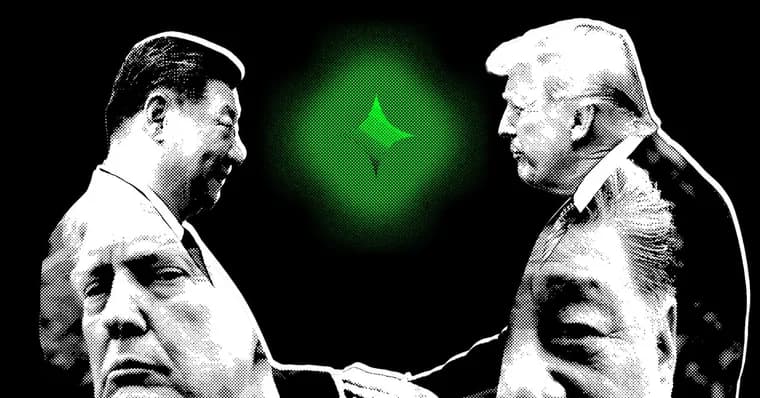
As US president Donald Trump and Chinese president Xi Jinping prepare for a state dinner at the White House on Thursday, with executives from OpenAI and Nvidia among the attendees, a proposed US-China AI notification system is a top agenda item. Treasury secretary Scott Bessent first announced the plan on Sunday together with Chinese vice premier He Lifeng: a Cold War-style hotline that would let each country alert the other to national security issues tied to AI.
Trump administration officials tell Wired's Inner Loop newsletter, written by Hugo Lowell, that despite the high-level announcement, finalizing an actual agreement will still take a number of weeks, though they remain optimistic the hotline could be in place before the end of the year. Officials say they are targeting a working framework, one formally agreed to by Trump, by the time Bessent next meets Lifeng for follow-up talks in Shenzhen, China, in two months.
Several details remain unresolved. It is still unclear what kind of incident would count as a national security issue serious enough to trigger a notification, and China has not yet given explicit sign-on to the mechanism. Officials have discussed a framework that spells out when each side is obligated to alert the other and includes enforcement measures so the arrangement does not become a one-way channel with only the US notifying China. But with the US expected to extend its trade truce with Beijing and Trump reluctant to halt exports of advanced Nvidia chips to China, sources say a framework with real enforcement teeth could take time to clear the White House.
The administration has already granted a limited number of licenses this year letting Nvidia sell its H200 chip to China. Supporters of the sales have argued that withholding the chips only pushes Chinese firms like Huawei to build their own chip technology, though recent reports say Huawei has already reached that milestone with commercially available AI chips of its own.
Some officials say the notification system could also be delayed by a separate decision: who Trump will name as his next "AI czar" to lead a planned "AI Force" overseeing interagency coordination on AI. Bessent is one name floated for the role, alongside Commerce secretary Howard Lutnick and White House AI officials Michael Kratsios and Sean Cairncross, according to two sources; it is not yet clear whether the pick would hold the job alongside their current post or leave it to take the position full time. The previous AI czar, David Sacks, who served as a special government employee, is not considered to be in contention to return.
Part of the push for Bessent stems from a historical parallel: a similar US-China economic dialogue ran between then-Treasury secretary Hank Paulson and then-Chinese vice premier of finance Wang Qishan. Paulson has credited that channel with helping deter China from dumping a large share of US government-sponsored debt issued by Fannie Mae and Freddie Mac during the 2008 financial crisis. Lutnick, meanwhile, remains in contention for the AI czar role in part because he oversees the Center for AI Standards and Innovation, which the newsletter says successfully navigated crises with frontier AI model companies this summer.
Key facts
- Treasury secretary Scott Bessent and Chinese vice premier He Lifeng first announced a proposed US-China AI notification system on Sunday, ahead of Thursday's White House state dinner for Xi Jinping.
- Trump officials say finalizing the agreement will still take a number of weeks, with a working framework targeted by Bessent's next meeting with Lifeng in Shenzhen in two months, though they hope the hotline is in place by year's end.
- Unresolved issues include what counts as a national security incident, China's still-noncommittal sign-on, and enforcement measures, which sources say could take time to clear the White House given US reluctance to halt Nvidia H200 exports to China.
- The plan echoes a 2008-era hotline between then-Treasury secretary Hank Paulson and Chinese vice premier Wang Qishan, which Paulson credited with helping stop China from dumping large amounts of Fannie Mae and Freddie Mac debt.
- The system could be delayed by Trump's pending choice of a new "AI czar"; candidates include Bessent, Commerce secretary Howard Lutnick, and White House officials Michael Kratsios and Sean Cairncross, while former czar David Sacks is not in the running to return.
Why it matters
A direct US-China channel for flagging AI-related national security incidents would be the first formal crisis-communication mechanism built specifically around frontier AI, at a moment officials describe as a race between the two countries for dominance in the technology. Its slow, contested rollout shows how far diplomatic announcements can be from operational agreements.
Who it affects
The two governments and their AI and trade policy teams, including Bessent, Lutnick, Kratsios and Cairncross; Chinese counterparts He Lifeng and the broader Xi administration; and companies caught in the middle, notably Nvidia, whose H200 exports to China are entangled with the same trade talks, and AI labs like OpenAI, whose executives were attending the state dinner where the topic was on the table.
How to use it
There is no product or policy yet to act on. The concrete markers to watch are a possible framework announcement by year's end and, more specifically, Bessent's follow-up meeting with He Lifeng in Shenzhen in about two months, which officials are treating as the deadline for a functional, Trump-approved framework.
How solid is it
The account comes from Wired's Inner Loop newsletter, written by Hugo Lowell, citing multiple unnamed Trump administration officials and sources rather than an official government statement, so the timeline and internal deliberations described are as reported by those sources rather than confirmed publicly.
Risks and caveats
China has not given explicit sign-on to the notification system, and what qualifies as a reportable national security incident is still undefined. Enforcement measures with real teeth may be slow to win White House approval given the administration's reluctance to cut off Nvidia chip exports to China. The whole effort could also stall further while Trump decides on a new AI czar, a decision unrelated to the technical substance of the hotline itself.