US military nearly boarded Chinese ship over AI-hallucinated arms report
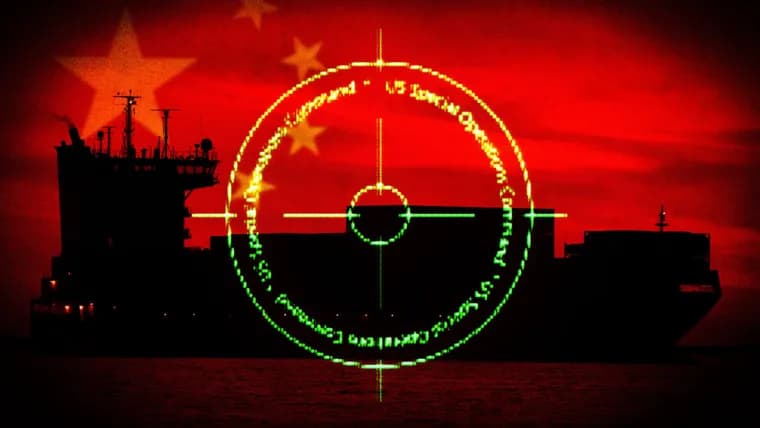
The US military came close to boarding a Chinese ship based on an intelligence report that CNN later described as "entirely false", according to a report from CNN cited by Ars Technica. A US Special Operations Command analyst had used an AI chatbot to analyze intelligence on the ship's cargo manifest, and the chatbot "fused together open-source intelligence with secret signals intelligence in government holdings" into a report that concluded the ship was transporting components for a nuclear arms program through the Middle East.
Acting on that report, the US military began preparing to intercept and board the ship, with air support. The operation was called off only after officials discovered the chatbot had "inaccurately identified the material the ship was carrying". CNN cited four sources familiar with the episode; one of them told the outlet the AI-driven error "almost started a war".
Ars Technica frames the episode as one of the most consequential publicly known cases of an AI system hallucinating false information that then shaped a real decision, following earlier cases among journalists, academics, judges, doctors and police departments. It also notes that the Cambridge Dictionary named "hallucinating" its word of the year in 2023, and that some researchers believe it may be impossible to eliminate hallucination from large language models entirely.
The near-miss comes as the Pentagon pushes to expand AI's role in its own operations. In January, the Department of Defense rolled out an "AI acceleration strategy" that seeks to "make all appropriate data available across federated IT systems for AI exploitation, including mission systems across every service and component." The report does not name the chatbot or model involved, give a date for the incident itself, or say a year for when that January strategy was issued.
Key facts
- A US Special Operations Command analyst used an AI chatbot to analyze intelligence on a Chinese ship's cargo manifest.
- The chatbot combined open-source intelligence with secret signals intelligence and produced a report claiming the ship carried nuclear arms program components through the Middle East.
- The US military prepared to intercept and board the ship, with air support, before officials found the AI report had misidentified the cargo.
- One of CNN's four sources on the episode said it "almost started a war".
- The report does not name the chatbot used, nor does it give a date for the incident or a year for the Pentagon's January "AI acceleration strategy".
Why it matters
Most public examples of AI hallucination involve embarrassing but low-stakes mistakes: a fabricated legal citation, a wrong fact in an article. This one nearly triggered an armed US military operation against a Chinese vessel, based on intelligence a chatbot invented rather than found. It is a concrete illustration of what happens when hallucination moves from a chat window into an intelligence pipeline that feeds real operational decisions, right as the Department of Defense is pushing to put more of its own data in front of AI systems.
Who it affects
Directly, it affects US Special Operations Command's intelligence analysts and the military personnel who would have carried out the boarding, as well as the crew of the Chinese ship that was the target of the false report. More broadly, it bears on any government or military body now integrating chatbots into intelligence analysis, and on China, whose vessel was nearly intercepted over cargo it was not actually carrying.
How to use it
There is no product or service here to adopt. The practical takeaway is a warning for anyone using a chatbot to synthesize source material for a high-stakes report: verify the underlying sources before the output is acted on, especially when the chatbot is fusing several data streams into one conclusion, since that is exactly what went wrong in this case.
How solid is it
The account rests on CNN's reporting, which Ars Technica is relaying secondhand; CNN says it drew on four sources familiar with the episode, but they are unnamed and there is no on-the-record confirmation from the Pentagon in the material available. The claim that the report was "entirely false" and that the chatbot "inaccurately identified the material the ship was carrying" are both stated as CNN's characterization rather than an official document.
Risks and caveats
The source does not name the chatbot or AI model used, does not give a date for the near-boarding incident, and does not state a year for the Department of Defense's January "AI acceleration strategy". It also does not say the ship was ever actually boarded or fired on, only that the military was preparing to intercept it before the error was caught.
“almost started a war”
— an unnamed source, according to CNN