US tightens drone and robot curbs, but China still has the scale
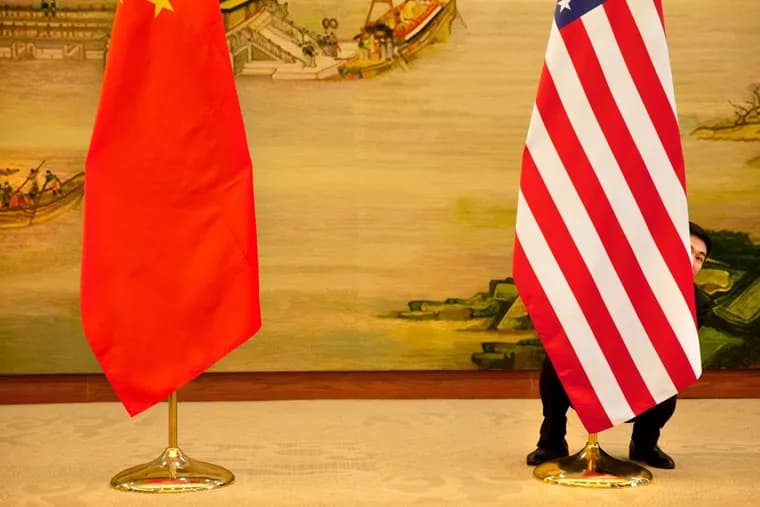
In July and August 2026, the US government tightened restrictions on foreign-made advanced robotic systems and imposed steep tariffs on imported drones and their components, both citing national security. Drone tariffs take effect in September, with additional component tariffs following in 2027. The moves extend the FCC's Covered List, established in 2021 to cover telecom and surveillance gear from companies including Huawei, ZTE and Hikvision, which had already been expanded to foreign-made drones and, most recently, to advanced robotic devices; Agility Robotics welcomed that FCC decision in July.
The restrictions land as Chinese manufacturers dominate both drones and humanoid robots, often underpricing US and European rivals. Global humanoid robot shipments hit 22,000 units in the first half of 2026, according to Counterpoint, and the five largest makers by shipments, AgiBot, Unitree, Galbot, UBTECH and Leju Robotics, all Chinese, together accounted for 86% of that global total. Soumen Mandal, a principal analyst at Counterpoint Research, said US companies are operating at a far smaller scale by comparison.
Ankur Saxena, an investment director at TDK Ventures, said robotics does not hinge on one controllable technology the way semiconductors do: the US leads in frontier AI, software and semiconductor innovation, while China leads in manufacturing scale, supply chain depth and cost. He said lower prices let Chinese makers put more robots into use, generating real-world data that improves the technology, while higher volumes drive costs down further. Mandal added that Chinese humanoid makers are also cutting costs by bringing more of the technology stack in-house and leaning on China's existing manufacturing base, citing Unitree developing more components internally and automaker XPeng drawing on its chip and vehicle experience.
Industry analysts and executives who spoke with TechCrunch said the likely outcome is not a clean US-China split but a more fragmented global market, with Chinese firms expanding elsewhere while US and allied manufacturers compete where security requirements matter most. Even if Chinese robotics firms lose US market access, Saxena said, they still have a large domestic market and room to expand into regions with strong demand for affordable automation. Mandal said Chinese firms are already targeting price-sensitive markets with severe labor shortages across Europe, Southeast Asia, Latin America and the Middle East, and expects humanoid makers to follow the path of Chinese electric-vehicle firms: build scale at home, expand overseas, then localize production.
The drone market offers an early preview of that fragmentation. Bentzion Levinson, founder and CEO of Virginia-based drone maker Heven AeroTech, said the industry is splitting into a US-led ecosystem built around American-made, NDAA-compliant systems and a China-led ecosystem focused on low-cost, high-volume production. He said Western manufacturers are unlikely to beat Chinese firms in the low-end consumer drone market on cost, but expects US and allied companies to compete more in long-range autonomous systems for defense and critical infrastructure, where security carries more weight. Levinson also sees the next competitive front shifting to the energy and payload architecture that powers drones, particularly battery technology, as capability grows and power limits become more central.
Saxena said the real alternative to China is not a purely domestic US supply chain but a diversified allied one, pointing to Japan's experience in industrial robotics and precision manufacturing, South Korea's strength in electronics, batteries and automobiles, and Taiwan's position in semiconductors, though he said none can simply replace China given how deeply embedded Chinese components remain across the industry. Mandal said Asian manufacturers could become a middle ground between cheaper Chinese robots and pricier US ones, citing South Korea's Hyundai, which owns Boston Dynamics, and Japan's Toyota as automakers investing in robotics on the back of their vehicle and automation expertise. Yang Fang of Beagle Technology, a California-based agtech startup that uses AI and robotics software to automate conventional farm equipment, told TechCrunch that robotics is likely to grow more regional, with companies designing machines for the labor needs and customers of their home markets, Chinese firms focusing on China and nearby markets while US firms build more for North American industries.
Key facts
- US tariffs on imported drones and components take effect in September 2026, with further component tariffs in 2027; the FCC's Covered List, running since 2021, has expanded from telecom and surveillance gear to foreign-made drones and now advanced robotics.
- Global humanoid robot shipments reached 22,000 units in the first half of 2026, and five Chinese makers, AgiBot, Unitree, Galbot, UBTECH and Leju Robotics, accounted for 86% of that total, per Counterpoint.
- TDK Ventures' Ankur Saxena says the US leads in frontier AI, software and semiconductors while China leads in manufacturing scale, supply chain depth and cost, and that sanctions cannot substitute for a decade-long US investment in scale.
- Heven AeroTech CEO Bentzion Levinson expects the drone market to split into a US-led, NDAA-compliant ecosystem for security-sensitive uses and a China-led ecosystem built on low-cost, high-volume production, with the next competitive front shifting to battery and payload technology.
- Analysts expect Chinese robotics and drone makers to expand into price-sensitive, labor-short regions such as Europe, Southeast Asia, Latin America and the Middle East, following a path similar to Chinese EV makers, while allied Asian manufacturers in Japan, South Korea and Taiwan try to occupy a middle tier.
Why it matters
The story reframes what US tariffs and FCC restrictions on Chinese drones and robots can and cannot do. They can raise costs and shrink access inside the US market, but they do not touch the underlying reason Chinese manufacturers lead: manufacturing scale and cost structure built over years, which sanctions alone cannot unwind. That reframes the policy question from whether China can be shut out to what kind of fragmented global market forms once it partly is.
Who it affects
Chinese manufacturers such as AgiBot, Unitree, Galbot, UBTECH and Leju Robotics, which together hold the great majority of global humanoid shipments, and US or allied makers like Agility Robotics and Heven AeroTech that stand to gain ground mainly in security-sensitive segments. It also affects buyers: US defense and critical-infrastructure customers who will pay more for compliant systems, and price-sensitive markets in Europe, Southeast Asia, Latin America and the Middle East that Chinese firms are expected to target next. Automakers moving into robotics, including Hyundai-owned Boston Dynamics and Toyota, sit in between.
How to use it
For companies and investors, the practical takeaway is to expect two coexisting markets rather than one winner: a security-driven segment where NDAA compliance and provenance matter more than price, and a cost-driven global segment where Chinese scale keeps setting the floor. Firms selling into regulated or defense-adjacent buyers should plan around compliance costs and slower cost declines; firms selling into price-sensitive regions should expect direct competition from expanding Chinese suppliers. Anyone evaluating supply chains should also watch battery and payload technology, which Levinson flags as the next point of competition once the drones themselves converge.
How solid is it
The piece rests on on-the-record interviews with an investment director at TDK Ventures, a principal analyst at Counterpoint Research, a drone-company CEO and an agtech founder, plus shipment and market-share figures Counterpoint has published. The hard numbers, the 22,000-unit shipment figure and the 86% share held by the top five Chinese makers, come from a named research firm. The broader claims about how the market will fragment are explicitly framed as analyst expectations and forecasts rather than settled fact.
Risks and caveats
The article does not give a specific tariff rate or dollar figure for the new drone and component tariffs, only calling them steep, and it names no price comparison between Chinese and US or European drones and robots. It does not claim the restrictions have already reduced Chinese drone or robot sales in the US, presenting the effects as prospective, and it gives no timeline for when Japan, South Korea or Taiwan might scale up enough to meaningfully compete with China. No shipment or revenue figures are given for US humanoid makers such as Agility Robotics or Boston Dynamics to weigh against China's 22,000-unit, 86%-share position.
“You cannot sanction your way around a cost curve. You can only out-build it, and America has yet to begin making the decade-long investment that will require.”
— Ankur Saxena, investment director at TDK Ventures