US voters side against data centers in 40 of 41 local ballot measures
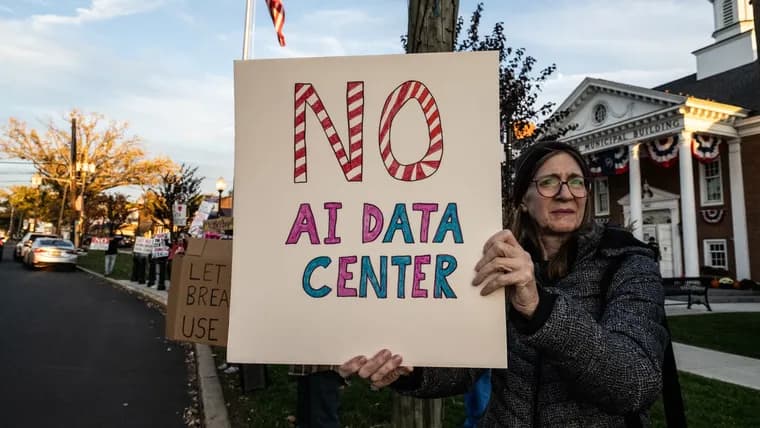
CNBC reports that the AI data center boom hit a political roadblock on election night. Ballotpedia counted 41 local ballot measures in 10 states that would restrict data center construction in different ways. According to an analysis by Ballotpedia and additional results gathered by CNBC on Wednesday, voters sided against data centers in each measure except one. The lone exception was Harwood, North Dakota, where voters rejected an added review of industrial projects, including data centers.
Ohio alone had 21 of the 41 measures, more than half. The issue also reached the top of the ticket there. Democrat Sherrod Brown ousted Republican Sen. Jon Husted after casting the incumbent as "the face of data centers." Democrat Amy Acton, a physician, defeated Republican businessman Vivek Ramaswamy for governor, flipping Ohio's top office. Acton supports a "conditional moratorium" on data centers to ensure they cover 100% of utility costs and "exclusively build with union labor." Communities in California, Florida, Illinois, Kansas, Maine, New Jersey, Nevada and Wisconsin also voted on the issue, per Ballotpedia.
The Ohio stakes are large. OpenAI announced in August that it secured 8 gigawatts of computing capacity at the PORTS-Pike Technology Campus in Ohio, described as the largest planned AI data center campus in the world. Per the project's website, the first phase of construction is slated to begin this year and capacity is expected to come online in phases starting in 2028. SoftBank and SB Energy are developing the campus in partnership with the U.S. Department of Energy. SoftBank is a major investor in OpenAI, and the two companies announced plans to invest $1 billion in SB Energy earlier this year. Nvidia is backstopping the project, which could cost more than $500 billion in total. CNBC writes that those plans could now run into resistance from the governor's mansion.
The vote came as the AI trade was already faltering on Wall Street. Chipmakers, neoclouds and other data center-related companies sold off in October on concerns about rising interest rates and overspending. Alphabet, Amazon, Microsoft and Meta are each spending hundreds of billions of dollars a year on AI infrastructure to meet what they say is insatiable demand, and all of them except Microsoft have turned cash flow negative. CNBC's verdict: getting data center projects off the ground may have just gotten a lot harder.
In a CNBC Voter Poll, 56% of voters said data centers were a crucial or major factor in their decision, with Democrats ranking the issue higher than Republicans. Democrats who campaigned on pausing or regulating new projects won key races in Ohio, Wisconsin, Georgia and Texas, which is on track to become the world's largest data center market by 2030. In one of the night's most significant results, Gina Hinojosa unseated Texas Gov. Greg Abbott after blaming the incumbent for the rapid buildout of data centers across the state and saying he put the tech industry's interests ahead of local communities.
The losses came despite record Silicon Valley spending. By CNBC's analysis of Federal Election Commission records, 14 of the 20 largest donor groups backed Republicans almost exclusively, and crypto, AI and online gambling interests put in more than $377 million. Elon Musk, the cycle's largest individual donor, spent at least $474 million, nearly half of it in Texas, and lost both of the state's marquee races. CNBC calls that a warning sign for tech companies and founders who left California for Texas in search of a friendlier business climate. Musk wrote on X: "Data centers in space looking pretty appealing right now."
Within hours of the polls closing, Democrats were calling for AI executives to testify under oath. Rep. Greg Casar, the Texas Democrat who chairs the Congressional Progressive Caucus, said after Democrats were projected to win the House that the majority "must make it a top priority to protect Americans' jobs, freedom, and lives from AI billionaires" and that "AI company CEOs should be called to testify under oath." He accused Republicans of being "bought and paid for by AI billionaires" and said the data center fight is only the beginning, calling it the "early tremor of a much bigger AI earthquake upending American politics." Rep. Robert Garcia, D-Calif., the presumptive next chair of the House Oversight Committee, summed it up in two words: "Lawyer up."
Key facts
- Of 41 local data center ballot measures in 10 states, voters sided against data centers in all but one, in Harwood, North Dakota, per Ballotpedia and CNBC; Ohio had 21 of them.
- Democrats who campaigned on pausing or regulating projects won key races in Ohio, Wisconsin, Georgia and Texas; Ohio's governor-elect Amy Acton supports a conditional moratorium.
- OpenAI's 8 GW PORTS-Pike campus in Ohio, which could cost more than $500 billion, may face resistance from the governor's office, per CNBC.
- In a CNBC Voter Poll, 56% of voters called data centers a crucial or major factor in their decision.
- Democrats including Rep. Greg Casar called within hours for AI executives to testify under oath.
Why it matters
Data center construction is the physical backbone of the AI build-out, and this is a rare broad test of how voters feel about it. The result was lopsided: 40 of 41 measures went against data centers. The vote also landed while the AI trade was wobbling on Wall Street and most hyperscalers had turned cash flow negative. CNBC's reading is that getting projects off the ground may have just gotten a lot harder. Democrats are already moving from local land-use fights to calls for executive testimony.
Who it affects
Developers and backers of large campuses, most visibly OpenAI, SoftBank, SB Energy and Nvidia on the Ohio PORTS-Pike project. Also Alphabet, Amazon, Microsoft and Meta, which spend hundreds of billions of dollars a year on AI infrastructure. Texas, on track to be the world's largest data center market by 2030, and the tech firms and founders who moved there are named as exposed after Musk lost both of the state's marquee races. Local communities in ten states, including Ohio, are the ones who voted.
How to use it
This is a news report rather than a product, so the use is as a watch list. Items the article puts on the calendar or implies: the first phase of the Ohio campus is slated to begin construction this year, with capacity coming online in phases from 2028. Whether Acton's conditional moratorium (100% of utility costs covered, union labor only) turns into policy is not settled in the article. Watch also for the congressional calls to have AI executives testify under oath, for which no date is given.
How solid is it
The vote counts rest on Ballotpedia's analysis plus additional results gathered by CNBC on Wednesday, and the Ohio project details come from the project's website and OpenAI's August announcement. The article gives no margins for individual measures and does not describe what most of the 41 measures would restrict beyond 'in different ways'. Statements about Ohio resistance and harder projects are CNBC's hedged judgment (could, may), not reported events. The 56% figure is from a CNBC Voter Poll of voters, not a measure of why any race was won.
Risks and caveats
The article does not say the backlash alone decided any race; it reports that candidates campaigned on the issue and voters rated it a factor. Acton only supports a moratorium; none is reported as enacted. The article does not say OpenAI, SoftBank, SB Energy or Nvidia responded or changed plans. Musk's post about data centers in space is a single remark with no detail on what he meant. Casar's calls for testimony and his 'early tremor' forecast are partisan statements, and Garcia's 'Lawyer up' is a two-word comment, not an announced investigation.
“The revolt against data centers was one of the top issues of the 2026 election”
— Rep. Greg Casar, the Texas Democrat who chairs the Congressional Progressive Caucus