Waymo announces Singapore expansion, targets rides by 2028
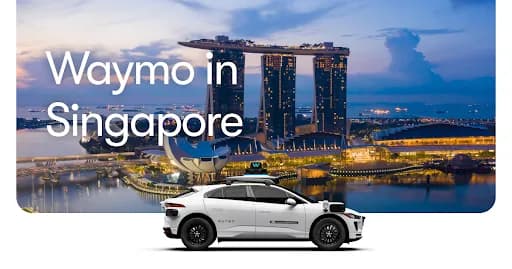
Waymo announced plans to launch its all-electric autonomous ride-hail fleet in Singapore, becoming one of only a few markets outside the United States where the company operates. The rollout follows the phased approach Waymo says it has used in other cities: starting next year, the company will drive manually across all regions of Singapore, day and night, to map streets and collect data. After that manual phase, Waymo will move to autonomous driving with trained local specialists still behind the wheel, before eventually moving to fully autonomous operations without a human safety driver.
Waymo says it intends to seek approval from Singapore's Land Transport Authority for its autonomous driving system in 2027, and to open commercial service to riders in 2028. The company will start with its all-electric Jaguar I-PACE vehicles fitted with its fifth-generation Waymo Driver, and plans to add other vehicle platforms as the fleet grows. Waymo says it will work closely with Singapore's Ministry of Transport, the Land Transport Authority and other local agencies to secure the necessary approvals.
To make its case to Singapore's regulators, Waymo points to its record in the United States: it says it operates in 15 or more major US cities, including publicly available service in San Francisco, Los Angeles and Phoenix, running more than 500,000 trips a week. The company says its vehicles have driven more than 300 million kilometers on public roads over 17 years of development, and that its own data shows 94% fewer injury-causing crashes compared with a human driver covering the same distance in the US cities where it operates. Waymo also notes it is already gathering autonomous driving experience in London and Tokyo, which it expects will translate to Singapore's streets.
The Waymo Driver relies on a sensor suite of cameras, radar and lidar that gives it a 360-degree view of its surroundings up to 300 meters away, in daylight or dark and in any weather, which Waymo says lets it anticipate the actions of other vehicles, pedestrians and cyclists. Waymo frames the expansion as support for the Singapore Green Plan 2030, the city's sustainability strategy, positioning the all-electric fleet as a zero-emission complement to Singapore's existing public transport rather than a replacement for it.
Key facts
- Waymo will start with manual mapping and validation driving across all of Singapore next year, before moving to autonomous testing with local specialists behind the wheel.
- The company intends to seek Land Transport Authority approval for its autonomous driving system in 2027, with commercial rides planned to open in 2028.
- Singapore service will launch with all-electric Jaguar I-PACE vehicles equipped with Waymo's fifth-generation Waymo Driver.
- Waymo cites more than 500,000 weekly trips across 15+ US cities and says its data shows 94% fewer injury-causing crashes than human drivers over the same distance.
- The Waymo Driver's sensors reach up to 300 meters, and the company already operates in London and Tokyo in addition to the US.
Why it matters
Singapore would become one of the few markets outside the United States where Waymo runs autonomous rides, alongside its early operations in London and Tokyo. The move signals Waymo pushing beyond its US base for growth, and it explicitly ties the expansion to the Singapore Green Plan 2030, positioning autonomous ride-hail as part of the city's transport strategy rather than as a novelty product.
Who it affects
Singapore residents are the eventual riders once service opens in 2028. The Ministry of Transport and the Land Transport Authority will need to approve Waymo's autonomous driving system before it can run without a human specialist behind the wheel, and Waymo says it will work alongside local transport authorities and communities on multi-modal mobility. The company specifically names the aging population, pedestrians and cyclists as groups it expects to benefit from the added mobility option and improved safety.
How to use it
There is nothing to use yet beyond signing up on Waymo's Singapore page to be notified of milestones. Waymo's own timeline has manual driving beginning next year, a push for Land Transport Authority approval in 2027, and commercial rides opening in 2028. The source gives no fare, pricing or fleet-size information for the Singapore launch.
How solid is it
This is Waymo's own announcement page, not an independent report, so the US operating figures it cites (500,000+ weekly trips, 15+ cities, 94% fewer injury-causing crashes) are company-reported rather than externally audited. The Singapore timeline, manual driving next year, a 2027 approval target and a 2028 launch, is stated as Waymo's own intention and depends on regulatory approval that Singapore's Land Transport Authority has not yet granted.
Risks and caveats
The 94% crash-reduction figure compares Waymo vehicles against human drivers only in the specific US cities where Waymo already operates; it is not a Singapore-specific or independently verified number. The 2027 and 2028 dates are Waymo's own targets, contingent on how the manual mapping and validation phase goes and on regulatory sign-off it does not yet have. The source does not name a specific year for when manual driving starts, only 'next year,' and gives no pricing or initial fleet-size details for Singapore.