Wired: Zuckerberg and Amodei still misread the AI backlash
A Wired opinion piece, part of Maxwell Zeff's Model Behavior newsletter, argues that Silicon Valley's most prominent AI leaders still do not understand why so much of the public dislikes their technology. The piece opens with popular culture cashing in on the sentiment: a commercial for Liquid Death and Garage Beer features former NFL player Jason Kelce inviting people to urinate in bottles and mail them to AI data centers, with Liquid Death's creative lead telling Marketing Dive the data center backlash is "literally the one thing that unites all Americans right now."
The author cites a Pew Research Center survey, published earlier this week at the time of writing, showing more than half of Americans under 30 say they are more concerned than excited about AI, up 24 percent over the past five years. More than 70 percent of respondents across all age groups believe AI will cost jobs. Other polling cited in the piece finds broader worries too: that AI will harm young people's ability to form meaningful relationships, that tech companies should have to compensate creators whose work trained the models, and that AI could damage students' critical thinking. A separate survey from the Searchlight Institute found that changing the messaging around AI made little difference to people's views of its societal impact, which the author uses to argue the backlash is not a communications problem.
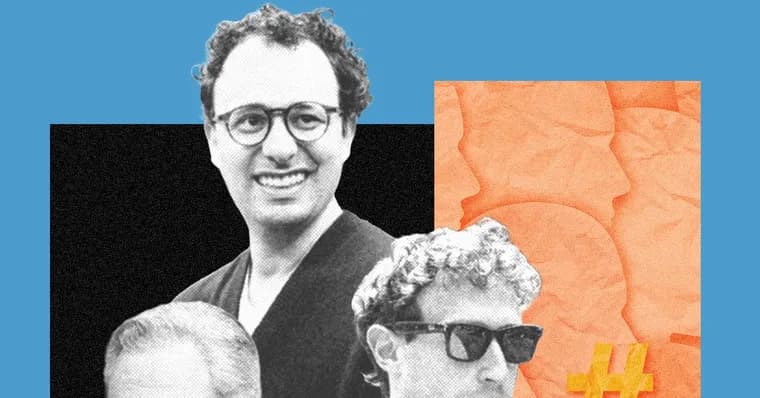
The piece then turns to two specific executives. Earlier this month, Meta CEO Mark Zuckerberg published a 6,500 word essay describing an optimistic vision in which everyone has a personalized AI assistant that knows them intimately and helps with career, hobbies and even raising children. Zuckerberg also took a jab at Anthropic CEO Dario Amodei, saying he was surprised that "discourse from many developing AI is so filled with doom." Tech investor Gavin Baker echoed the criticism on the All-In podcast, writing that "Dario's messaging has been massively helpful to efforts to ban data centers here in America," and White House AI adviser and All-In co-host David Sacks added that Anthropic's "narratives have done more than anything to shape public fear."
Amodei responded with a lengthy social media post, a rare public reply, rejecting the idea that his own messaging caused the backlash. He wrote, "I think it is fundamentally a crisis of trust," arguing that ordinary people do not trust companies, governments or the tech industry generally, and that AI is just the latest target of a distrust with decades-old roots. He also wrote that "the most accurate criticism of AI companies including Anthropic is that we haven't yet delivered on our big promises to benefit the world," citing the industry's promise to cure cancer, a goal he has previously said people should reasonably expect AI to achieve.
The author credits Amodei's opening diagnosis but argues both he and the industry broadly are missing the point: the backlash was not caused by CEOs' doom-laden warnings or by AI's failure so far to cure cancer, but by how AI is already reshaping everyday life in ways many Americans fear are for the worse. Despite years of effort to make data centers more publicly palatable through pledges on water use, clean energy and local investment, the buildout has become, in the author's view, a physical stand-in for public frustration with how tech companies treat communities generally. The piece closes by noting that rank-and-file employees at AI companies hear this backlash directly from their own families and friends, while industry leaders remain unprepared to address it, and argues Silicon Valley will need to confront these issues more directly if it wants the public to embrace its products.
Key facts
- More than half of Americans under 30 say they are more concerned than excited about AI, a figure up 24 percent over the last five years, per Pew Research Center.
- More than 70 percent of people polled across all age groups believe AI will lead to fewer jobs.
- Zuckerberg published a 6,500 word essay envisioning a personalized AI assistant for everyone and took an indirect swipe at Amodei over 'doom' messaging.
- Amodei responded publicly, calling the backlash 'fundamentally a crisis of trust' and admitting AI companies have not delivered on promises like curing cancer.
- A Searchlight Institute survey found that changing AI messaging barely moved public opinion, which the author cites as evidence the problem is not communications but the technology's real-world effects.
Why it matters
The piece captures a widening gap between how AI's most prominent executives explain public hostility toward their industry and what the polling data and cultural signals actually show. Zuckerberg frames the backlash as a messaging failure and paints an optimistic future; Amodei, after being singled out by Zuckerberg and allies including investor Gavin Baker and White House adviser David Sacks, counters that the real issue is a decades-old crisis of trust in institutions generally. The author argues both diagnoses miss that people are reacting to concrete, present-day effects of AI on jobs, relationships, creators and data center buildouts, not to warnings about the future.
Who it affects
The article names Meta CEO Mark Zuckerberg and Anthropic CEO Dario Amodei as the two executives whose public statements it examines directly. It also cites tech investor Gavin Baker and White House AI adviser David Sacks, both of whom criticized Amodei's messaging on the All-In podcast, and rank-and-file AI company employees who the author says hear about the backlash from their own families. More broadly, the piece speaks to the American public: under-30s worried about AI, workers across age groups who expect job losses, and creators seeking compensation for training data use.
How to use it
There is no product, price or feature here: this is a media commentary piece assessing public sentiment and executive rhetoric, not something to install or subscribe to. Readers tracking AI industry communications can use it as a snapshot of how two of the sector's most visible leaders are currently framing (and disputing) the public backlash, and as a pointer to the underlying Pew Research Center, Searchlight Institute and other polling data the author draws on.
How solid is it
The piece is an opinion newsletter (Model Behavior, by Wired's Maxwell Zeff), not a straight news report, and its central argument rests on the author's own reading of executive statements and cited polling. The Pew Research Center and Searchlight Institute survey figures are attributed but not independently detailed in the source beyond the headline numbers; no methodology, sample size or exact publication date is given for either. Amodei's and Zuckerberg's quotes come from their own public posts and an essay, which the author paraphrases and excerpts rather than linking to in full within the text.
Risks and caveats
The framing is explicitly the author's interpretation of a public dispute rather than a neutral summary: it credits Amodei's initial point about trust while criticizing his later remarks, and it characterizes Zuckerberg's essay and unnamed sources' views rather than quoting them at length. Several details are left vague in the source itself, including exact dates for the Pew survey, Zuckerberg's essay and Amodei's post, and the name of the Liquid Death creative lead quoted. Readers should treat this as a commentary on the state of the debate rather than as new data.
“I think it is fundamentally a crisis of trust. I think that ordinary people don't trust companies, governments, or the tech industry and always suspect that we are cooking up some new way to screw them over. The causes of this go back decades and AI is just the latest iteration of it.”
— Dario Amodei, Anthropic CEO