Wood Mackenzie expects sodium-ion cell costs to match LFP by late 2026
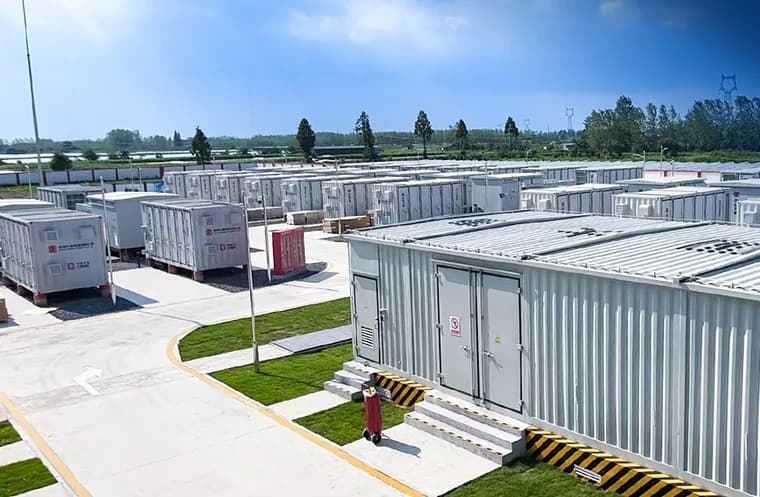
pv magazine reports on a Wood Mackenzie analysis of sodium-ion batteries for stationary energy storage. The study covers four markets: China, the United States, Germany and India. It names sodium-ion as the most promising emerging alternative to lithium-based technologies for stationary storage, and says supply agreements totaling more than 70 GWh are already in place.
On cost, the headline claim is that leading manufacturers are expected to reach cell-level cost parity with lithium iron phosphate (LFP) batteries by late 2026. Parity at the module and system levels is not expected until after 2030. Sodium-ion still costs more upfront today: the global average is $229/kWh, against about $200/kWh for LFP. Over a 20-year project lifetime, though, Wood Mackenzie estimates sodium-ion could achieve a 21% lower total cost of ownership. The difference is attributed mainly to the elimination of capacity expansion cycles and to lower operating costs. The economics stay relatively stable across storage durations of two to four hours.
China leads commercialization. BYD plans to reach 30 GWh of sodium-ion manufacturing capacity, and CATL aims to exceed 1 GWh of sodium-ion shipments by the end of 2026. Supply agreements exist in China, the US and Europe, while India is still in the early stages of commercial validation. For 2026 to 2035, Wood Mackenzie estimates a learning rate of 18% to 20% in China, reflecting the greater maturity of its industrial supply chain. Planned manufacturing capacity currently exceeds demand, though the growing number of supply agreements points to gradual adoption.
The study lists raw material supply security, service life and a wider operating temperature range as the key technical advantages. The wider temperature range could make sodium-ion suited to cold climates, where lithium-ion batteries may need additional thermal management systems.
Policy is shaping the contest between chemistries. In July 2026 China reintroduced a consumption tax on lithium-ion batteries while exempting sodium-ion batteries until the end of 2028. LFP batteries became subject to a 2% levy in September 2026, set to rise to 4% in September 2027. In the US, tariffs of about 58% on energy storage cells imported from China, combined with Section 45X production tax credits under the Inflation Reduction Act, encourage domestic sodium-ion manufacturing. In Europe, carbon footprint declaration requirements under the EU Battery Regulation could favor technologies whose supply chains depend less on certain critical raw materials. India supports domestic manufacturing through a $1.25 billion incentive program and tariff exemptions for certain manufacturing equipment.
Wood Mackenzie expects 2030 to 2035 to be the decisive period for sodium-ion to reach economic competitiveness. For storage projects now under development, LFP remains the most commercially mature option for durations of two to four hours.
Key facts
- Wood Mackenzie expects leading manufacturers to reach cell-level cost parity between sodium-ion and LFP by late 2026; module and system parity is not expected until after 2030.
- Supply agreements for sodium-ion batteries already total more than 70 GWh, in China, the US and Europe; India is still in early commercial validation.
- Sodium-ion costs more upfront today ($229/kWh global average vs. about $200/kWh for LFP), but Wood Mackenzie estimates a 21% lower total cost of ownership over a 20-year project lifetime.
- China reintroduced a consumption tax on lithium-ion batteries in July 2026 and exempts sodium-ion until the end of 2028; LFP faces a 2% levy from September 2026, rising to 4% in September 2027.
- BYD plans 30 GWh of sodium-ion capacity and CATL aims to exceed 1 GWh of shipments by end of 2026, but planned capacity currently exceeds demand.
Why it matters
Sodium-ion is moving from lab promise to commercial production for grid and stationary storage. The analysis puts cell-level cost parity with LFP at late 2026 for leading manufacturers. Supply agreements above 70 GWh show buyers are already committing. Wood Mackenzie also points to supply chain diversification and less dependence on certain critical raw materials as drivers, beyond price alone.
Who it affects
Battery manufacturers, led by BYD and CATL in China, and developers and buyers of stationary storage in China, the US, Germany and India, the four markets studied. The temperature range advantage is relevant to operators in cold climates, where lithium-ion batteries may need extra thermal management. Policy makers matter too: Chinese tax rules, US tariffs and tax credits, EU battery rules and Indian incentives all tilt the field.
How to use it
For planners of storage projects, the study's practical message is split. For projects currently under development, LFP remains the most commercially mature option for storage durations of two to four hours. Sodium-ion's case rests on lifetime cost: the 21% lower total cost of ownership estimate covers a 20-year project and is attributed mainly to avoiding capacity expansion cycles and lower operating costs. Its economics are relatively stable across two to four hour durations.
How solid is it
The figures are Wood Mackenzie's estimates and projections as relayed by pv magazine, not independent measurements. The article does not give the study's title or publication date, and it does not name the baseline for the 21% total cost of ownership saving. It also does not say who signed the 70 GWh of supply agreements or how they split by country. Cost parity is a forecast ('expected'), and it applies to cells for leading manufacturers only.
Risks and caveats
Sodium-ion is still dearer upfront, and parity at module and system level is not expected until after 2030. Planned manufacturing capacity currently exceeds demand, and adoption is described as gradual. India is still in early commercial validation. Part of the competitive picture depends on policy that can change, such as China's tax exemption for sodium-ion running only until the end of 2028. Wood Mackenzie sees 2030 to 2035 as the decisive period for economic competitiveness. The study concerns stationary storage, not electric vehicles.