Accel closes oversubscribed $550M India fund
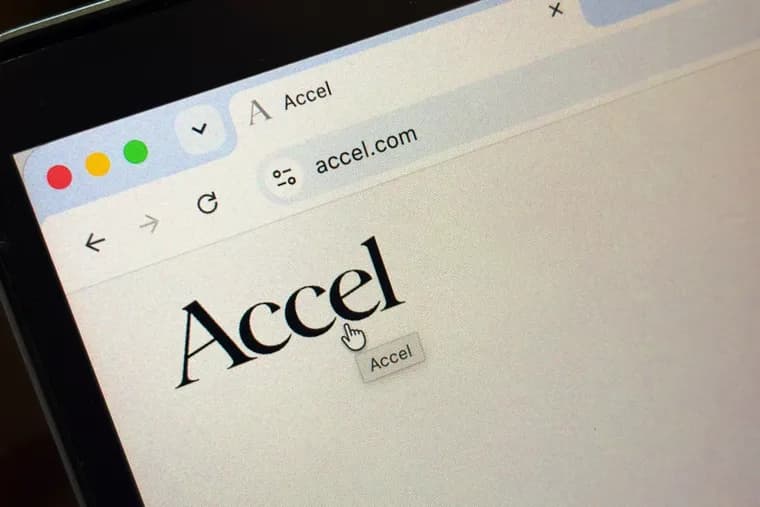
Accel has closed a new $550 million fund dedicated to India, less than two years after raising its previous India-focused vehicle. People familiar with the matter told TechCrunch the fund was oversubscribed and closed within weeks of launch, even though Accel still has more than 55% of its previous $650 million India fund left to invest.
The new fund is one of four Accel raised at the same time for the first time: dedicated funds for the US and Europe, the India fund, and a $1.35 billion growth vehicle that can back breakout companies from any of the regional funds, together forming a coordinated $3.5 billion global fundraising effort. Partner Shekhar Kirani said the combined process reflected investor preference to evaluate Accel's global platform in one round rather than through separate regional raises. Accel expects to start deploying the new India fund's capital in 2027; until then it will keep investing out of the previous fund, whose remaining balance Kirani declined to specify.
Accel is betting that India's next startup wave will be driven not only by AI but also by consumer internet, fintech and advanced manufacturing, treating AI as a horizontal technology that runs through all of them rather than a category on its own. Partner Prayank Swaroop said the early movers in AI have been on the large language model side, but the bigger opportunity now sits at the application layer, where Indian startups build on top of existing models instead of competing with OpenAI or Anthropic. As an example, Kirani pointed to Accel-backed RapidClaims, which automates medical coding for US healthcare providers and delivers about 95% accuracy, a market historically served by outsourced human labor in India and the Philippines. Partner Barath Shankar Subramanian added that rapid AI adoption among Indian consumers and businesses is building a domestic market for AI-native products alongside globally focused software companies. The piece also notes that OpenAI and Anthropic have each named India their largest market outside the US, and that Cursor recently called India one of its fastest-growing developer markets and its largest market for power users.
Accel is not alone in renewing its India bet despite a broader venture slowdown: Peak XV Partners, the former Sequoia Capital India business, recently raised $1.3 billion across new India and Southeast Asia funds; General Catalyst has committed to deploying $5 billion in India over five years; and Lightspeed Venture Partners is said to be exploring a $300-350 million India fund of its own. Kirani attributed the renewed interest to a jump in the quality of Indian founders and ideas compared with a few years ago.
Accel's approach stays rooted in early-stage bets: the firm writes the first institutional check in roughly 80% of the companies it backs, a strategy that has put it early into Flipkart, Swiggy, Freshworks and Zetwerk.
Key facts
- Accel closed a new, oversubscribed $550 million India fund within weeks of launch, less than two years after its previous $650 million India-focused fund.
- The India fund is one of four Accel raised simultaneously for the first time (US, Europe, India, and a $1.35 billion growth fund), together making up a $3.5 billion coordinated global raise.
- More than 55% of Accel's previous $650 million India fund remains uninvested; the new fund's capital is expected to start deploying only in 2027.
- Accel is targeting India's AI application layer, consumer internet, fintech and advanced manufacturing, citing Accel-backed RapidClaims, which automates US medical coding at about 95% accuracy, as an example.
- Rival firms are also doubling down on India: Peak XV Partners raised $1.3 billion, General Catalyst committed $5 billion over five years, and Lightspeed is exploring a $300-350 million India fund.
Why it matters
An oversubscribed close in weeks, while more than half of the prior fund sits uninvested, is a strong signal of investor appetite for India specifically, not just AI broadly. It also marks a shift in framing: Accel is betting on India's application layer, consumer internet, fintech and advanced manufacturing rather than trying to compete in foundation models, after the country largely missed that first wave. The move lands alongside similar bets from Peak XV Partners, General Catalyst and Lightspeed, suggesting a broader re-rating of India by global venture firms even as overall venture activity has slowed.
Who it affects
Early-stage founders in India building AI applications, enterprise software, fintech, consumer internet or advanced manufacturing products are the direct audience; Accel writes the first institutional check in roughly 80% of the companies it backs. The framing also matters to India's outsourcing-heavy services sector, since Accel points to startups like RapidClaims that combine AI with domain expertise to compete with markets that have long relied on outsourced human labor in India and the Philippines. It is also relevant to rival VCs and limited partners tracking how much capital is flowing into India-focused funds right now.
How to use it
Founders seeking early institutional capital in India can approach Accel now through its existing India fund, which still holds more than 55% of its $650 million; the new $550 million fund's capital will not start deploying until 2027. Accel's stated focus areas for new bets are AI, consumer, fintech, advanced manufacturing and deep tech, with a preference for backing founders at the earliest stage rather than chasing later trends.
How solid is it
The reporting comes from TechCrunch, based on people familiar with the matter for the fund's size, timing and oversubscription, plus on-the-record quotes from three Accel partners: Shekhar Kirani, Prayank Swaroop and Barath Shankar Subramanian. The comparison figures for Peak XV Partners, General Catalyst and Lightspeed are presented as established facts and a reported plan, respectively, rather than anonymously sourced claims.
Risks and caveats
The exact closing date is not given, only that the fund closed within weeks of launch. Kirani declined to disclose how much of the previous $650 million India fund remains beyond "more than 55%." No dollar figures are given for the separate US and Europe funds raised in the same coordinated process, and there is no timeline for how long it will take Accel to deploy the new fund's capital once it starts in 2027.
“We will continue to invest, looking for the best of the best local winners, where we can make them into global successes.”
— Shekhar Kirani, partner at Accel