AI data centers drive investment in solid-state power transformers
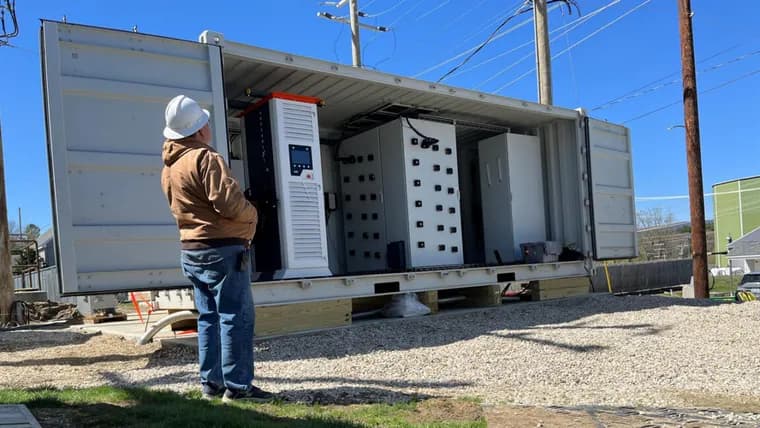
Data centers have become the largest driver of surging electricity demand that is straining US power grids, and the AI data center boom is now accelerating investment in a technology that could ease the strain: solid-state power transformers. Conventional transformers rely on a design dating back to the 1880s, painstakingly assembled by hand from two copper wire coils wound around a steel core to create the electromagnetic fields that step voltage up for long-distance transmission or step it down for homes and businesses. The largest of these units cannot be mass-manufactured; each one is custom-built for a specific utility's electrical substation. That manufacturing constraint, combined with the broader scramble to upgrade US power infrastructure, means utilities and other customers now wait up to several years for delivery of new transformers, which slows both grid expansion and the replacement of aging equipment. Solid-state transformers work differently. Instead of copper coils and a steel core, they use high-frequency semiconductor switching to perform voltage conversion, built from materials such as silicon carbide that allow mass manufacturing rather than custom, hand-built construction. They are physically smaller and lighter than conventional transformers, modular enough to allow easy upgrades or part replacement, and capable of handling multiple power-electronics tasks in a single device. The specific pull from AI data centers comes from power architecture. Tech companies building the largest AI data centers are moving toward direct current (DC) power to feed server racks packed with energy-hungry AI chips. Solid-state transformers can convert alternating current (AC) from a local grid's distribution network directly into that DC power, without a separate device to handle the AC/DC conversion step.
Key facts
- Data centers are the largest driver of the surging US electricity demand now straining power grids, and the AI data center boom is accelerating investment in solid-state power transformers.
- Conventional transformers use a design dating to the 1880s: two copper coils hand-wound around a steel core, custom-built per substation and unable to be mass-manufactured.
- Manufacturing constraints plus the broader US grid upgrade push mean utilities now wait up to several years for new conventional transformers, delaying both expansion and replacement of aging units.
- Solid-state transformers use high-frequency semiconductor switching (e.g. silicon carbide), are mass-manufacturable, smaller, lighter and modular compared to conventional units.
- AI data centers are drawn to solid-state transformers because they can convert AC grid power directly into the DC power that DC-architected, chip-dense server racks require, skipping a separate AC/DC conversion device.
Why it matters
US power grids are straining under electricity demand that data centers, especially AI data centers, now drive more than any other source. The bottleneck is not just generation capacity but the transformer supply chain itself: conventional transformers are hand-built one at a time per substation and cannot be mass-produced, so utilities already wait years for delivery. Solid-state transformers, built from mass-manufacturable semiconductor components, are one of the few technologies that could shorten that supply chain rather than just add more demand to it.
Who it affects
Utility companies that operate power grids and have been waiting years for conventional transformer deliveries stand to benefit from a mass-manufacturable alternative. Tech companies building the largest AI data centers are a direct driver of this shift, since their power-hungry, DC-architected server racks are what makes solid-state transformers specifically attractive rather than just conventional transformers at greater volume. By extension, any household or business relying on the same strained grid infrastructure has a stake in whether transformer supply can keep pace with demand.
How to use it
This is an infrastructure and manufacturing shift rather than a product available for purchase. There is nothing to buy or license here for an individual reader; the article names no vendor, price, or availability timeline for solid-state transformers. The practical takeaway is directional: DC-power data center architectures are pushing solid-state transformer development and deployment forward.
How solid is it
The article describes solid-state transformers' technical advantages and the DC-power rationale in concrete terms, including how they perform AC-to-DC conversion directly. It does not, however, name any specific company, utility, or manufacturer actually deploying the technology, nor does it give a delivery timeline, price, or performance figures comparing solid-state to conventional transformers. The claims about conventional transformer wait times are stated only as "up to several years," without a precise figure.
Risks and caveats
The piece is a description of a technology trend rather than a report on a specific deployment, so how quickly solid-state transformers actually reach utility grids at scale remains unstated. No cost comparison against conventional transformers is given, and no company or project is identified as having adopted the technology, so the extent of current real-world uptake versus early-stage investment is not established by the source.