Amazon says it no longer uses NDAs with government agencies on data centers
Amazon Web Services CEO Matt Garman said the company has stopped using nondisclosure agreements (NDAs) in its dealings with government agencies as it seeks approval to build new data centers. TechCrunch notes that the statement is a single sentence in a longer blog post, in which Garman pushes back on widespread suspicion of data centers and argues they are good for communities.
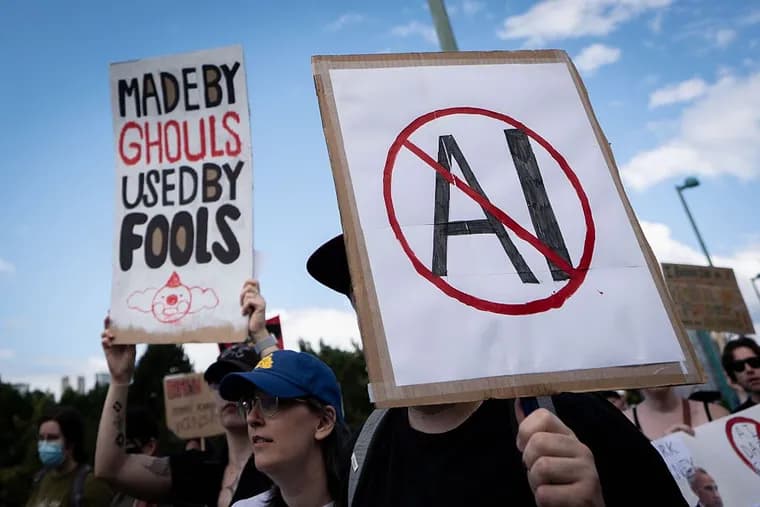
NDAs are a significant piece of the broader backlash. Environmental activist Erin Brockovich recently said the number one complaint she hears about data centers is transparency, and described a common pattern: "projects announced after permits are already secured, developers who don't return calls, local officials who signed NDAs before their neighbors knew a project was being considered." As a result of the backlash, New York announced a one-year moratorium on permits for large data centers. According to Garman, more than 100 data center moratoriums are currently being considered across the United States. He warned that if such measures are enacted, "the U.S. could be writing its own losing ticket to this race, and the consequences would last generations."
Garman also tried to puncture what he called four big myths: that data centers consume too much water, that they raise electricity costs, that they emit an enormous amount of pollution, and that they bring no benefits to their communities.
On water, he pointed to an Amazon report about its own usage and said direct data center water consumption accounts for only 0.5% of all industrial water usage in the United States, "orders of magnitude less than golf courses, almond farming, and many other industries." TechCrunch adds that Nvidia recently said its new cooling system eliminates "pretty much all water usage" inside the data center, but that such claims, like Amazon's, seem to ignore the broader water used in electricity generation and chip manufacturing. Scientists say they need to study data centers' water and energy use independently, because no federal or state rules require tech companies to report this data.
On electricity, Garman said rates have only gone up in some states with large numbers of data centers, while they have fallen or grown more slowly in others. Where rates are rising, he argued, it is primarily because the grid is old and was not invested in and expanded before demand arrived. TechCrunch counters that an independent watchdog recently said data centers were the main culprit behind a 76% year-over-year price increase on America's largest electrical grid.
On pollution, an issue behind the NAACP's current lawsuit against Elon Musk's SpaceX/xAI, Garman complained that critics focus on the maximum pollution allowed under data center permits. TechCrunch gives an example: a planned Amazon data center in Texas is permitted to release 33 million tons of carbon dioxide per year, more than any other power plant in the United States. Garman said generators almost never run: they are idle 99.9% of the time, running roughly 10 hours per year, mostly for required maintenance testing.
On community benefits, Garman wrote the NDA line, then added that over the past three years Amazon has contributed more than $1 billion to communities across the U.S. where it has a meaningful data center presence.
Whether this will calm community suspicion is, in TechCrunch's words, uncertain: "Perhaps not." Anthropic CEO Dario Amodei recently argued the AI backlash is "fundamentally a crisis of trust," in which people assume governments and tech companies are always "cooking up some new way to screw them over." Writer Jasmine Sun noted that when data center opponents hear the companies' arguments, their response is usually "I don't believe them."
Key facts
- AWS CEO Matt Garman says Amazon no longer uses NDAs with the government agencies it works with on data center projects; it is one sentence in a longer blog post.
- Garman says more than 100 data center moratoriums are being considered across the US; New York has announced a one-year moratorium on permits for large data centers.
- He rebuts four myths: water (0.5% of US industrial water use, per an Amazon report), electricity costs, pollution (generators idle 99.9% of the time), and community benefits (more than $1 billion over three years).
- TechCrunch pushes back: an independent watchdog blamed data centers mainly for a 76% year-over-year price rise on America's largest grid, and a planned Amazon data center in Texas is permitted to release 33 million tons of CO2 per year.
- TechCrunch doubts the post will quell suspicion, citing Dario Amodei's 'crisis of trust' and Jasmine Sun's observation that opponents mostly say they do not believe the companies.
Why it matters
Secret agreements between developers and local officials are one of the central complaints in the data center backlash. Erin Brockovich describes a pattern of projects announced after permits are secured, with officials bound by NDAs before neighbors know anything. With more than 100 moratoriums being considered in the US, per Garman, and a one-year permit moratorium already announced in New York, the head of AWS is now publicly dropping NDAs with government agencies and making a broader case for data centers. The shift is narrow, though: it covers government agencies, and TechCrunch notes it is a single sentence in a long post.
Who it affects
Communities and local officials weighing data center proposals, who may see more openness from Amazon projects. State and local lawmakers deciding whether to pass moratoriums. Amazon and AWS, which are seeking approvals for new sites, and other tech companies facing the same suspicion, including Nvidia, whose cooling claims TechCrunch mentions. Scientists who want independent data on data center water and energy use also have a stake.
How to use it
There is nothing to install or buy here. The practical takeaway is the claim itself: Amazon says it no longer uses NDAs with the government agencies it works with on its projects. Residents and officials following a data center proposal can check that statement against how a given project is actually announced and negotiated.
How solid is it
The NDA statement comes directly from Garman's own blog post, as relayed by TechCrunch, so it is a company claim rather than an independently verified fact. The source gives no date for the post and does not say when Amazon stopped using NDAs, whether they were used before, or with which agencies. The water figure of 0.5% comes from an Amazon report about its own usage. The 76% price rise is attributed by TechCrunch to an unnamed independent watchdog, and the grid is not named.
Risks and caveats
The pledge covers government agencies only; the source says nothing about NDAs with landowners, utilities, contractors or other private parties. The water claims, from Amazon and Nvidia alike, seem to ignore the broader water used in electricity generation and chip manufacturing, and with no federal or state reporting requirements, scientists say they cannot yet study this independently. The 33 million tons of CO2 for the Texas site is a permit maximum, not actual emissions, which is exactly the framing Garman objects to. TechCrunch also doubts the post will rebuild trust, citing Amodei's description of a crisis of trust.
“We no longer use nondisclosure agreements with the government agencies we work with on our projects.”
— Matt Garman, AWS CEO, in a blog post